
Repair Chevrolet Repair Toyota Repair Honda Repair AvtoVAZ Repair Mercedes-Benz Repair BMW Repair Opel
Home  |  Contacts  |  Sitemap  |    
English Русский
Български
Беларускі
Український
Српски
Hrvatski
Română
Polski
Slovenský
Magyar
AudiManual.ru


  • AUDI 80
  • AUDI 100
  • AUDI A3
  • AUDI A4
  • AUDI A6
  • AUDI A8
  • AUDI Q
  • OTHER
  • ARTICLES
C4 (1990-1994) C4 (1990-1994, petrol) C3 (1982-1990) C3 (1982-1990, petrol) C3 (1982-1990, diesel)

Compression measurement (Audi 100 C4)

  • Home
  • Audi 100
  • C4 (1990-1994)
  • Power unit
  • Engine repair
  • Compression measurement
            0
Table of contents: Compression pressure too low ↓ Pressure loss test ↓
Measuring the compression in the engine cylinders will provide information on the quality of the valve and piston ring seals. This affects the power, cold start conditions, and oil and fuel consumption.

Warm up the engine. When the oil is warm, the piston rings have a better seal.

On injection engines, disconnect the fuel pump relay. Otherwise, the engine will flood with fuel during the compression test, which can damage the catalytic converter. "Reserve" the ignition.

Remove all spark plugs.

Press the rubber cone of the compression tester into the spark plug hole of the 1st cylinder (first in the direction of travel) and screw the connector into the spark plug thread.

Note: The connection of the measuring device must be absolutely tight.
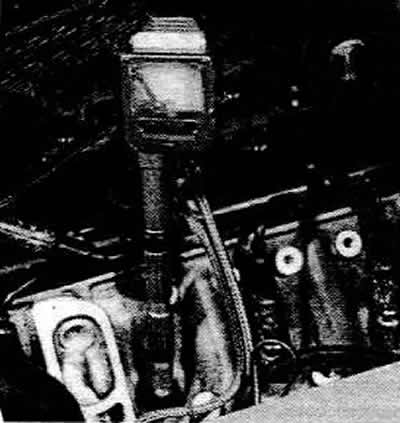

Note: The connection of the measuring device must be absolutely tight.


On diesel engines, screw in a compression gauge instead of glow plugs, after first disconnecting the wire from the injection pump electromagnetic valve.

Apply the handbrake, the gearshift lever should be in neutral. Set the automatic transmission selector to position "P".

Ask an assistant to turn the engine over with the starter. The accelerator pedal should be fully depressed (for better filling of cylinders).


When the pressure value stops increasing significantly, you should record the measured value and move on to the next cylinder.

Required compression value (gasoline engines): 9-14 bar.

Minimum compression value: 7 bar.

Maximum pressure difference between cylinders: 3 bar.

Compression pressure too low


Low but uniform compression is not always a cause for alarm - the cause may be differences between individual measuring devices. A more serious cause for concern is if, after taking measurements on four or five-cylinder engines, the difference between individual cylinders is more than 3 bar. This may mean the following:

Wear of pistons and piston rings.

Piston ring seizure due to carbon deposits.

Deposits on valve stems or seats due to carbon deposits.

Burnt valves due to small valve clearance. In most cases, valve leaks are the cause of insufficient compression, which leads to loss of engine power. The solution is either valve grinding or cylinder head repair.

To localize the fault if the compression is too low, you need to: drop a little motor oil into the spark plug hole and measure the compression again.

If the compression pressure is still bad, then the valves are the culprit.

If the pressure value increases, then the cause lies in the piston rings and possibly in the cylinders. The introduced oil can temporarily improve the tightness of the piston to the cylinder walls, so that the compressed gas will not find an outlet.

Note: The compression value should not be confused with the compression ratio. The compression ratio is determined by the design features, i.e. the piston stroke and the combustion chamber volume. In addition, the compression value and compression ratio can change depending on the engine condition.


Pressure loss test


More accurate information can be obtained by performing a pressure loss test. The measuring device consists of two chambers, one of which has the same pressure all the time. The second chamber is connected by a hose through the spark plug hole to the combustion chamber. A connection is made to the first chamber and to the measuring scale through the nozzle.

If the pressure in the chamber being tested drops, this is indicated on the scale. A serious leak can be detected by hearing:
  • A hissing sound in the exhaust tract indicates a leaky exhaust valve.
  • If compressed air comes out of the air filter housing, then there is a defect in the inlet valve.
  • If there is a defect in the cylinder head gasket or a crack in the cylinder head, pressurized gas will escape from the adjacent spark plug hole or from the open coolant expansion tank.
  • When the cylinder walls, piston working surfaces or piston rings wear out, gases penetrate into the engine crankcase and exit through the open oil filler neck or through the dipstick hole.
The article was checked by auto expert Georgy Rodionov
This article is available at russian, bulgarian, belarusian, ukrainian, serbian, croatian, romanian, polish, slovak, hungarian

Share information:
Previous articles
Audi 100 C4: Engine repair
Next articles

Running in a new engine
Visual inspection of the engine
Tools used in repairing the timing mechanism
Devices used in repairing the engine crank mechanism (CRM)
Engine cranking
Removal and installation the cylinder head
Cylinder Head Gasket Fault Diagnosis
Distinctive features of installation of cylinder head gasket of…


Similar articles on other Audi car models:
Compression — check Audi 80 B4 (1991-1996)
Checking the compression in the engine cylinders Audi A3 Type 8L (1996-2003)
Compression measurement and analysis of results Audi A4 B5 (1994-2001)
Compression check Audi A6 C5 (1997-2004)
Compression — check Audi Q5 Type 8R (2008-2017)
Checking the compression in the cylinders Audi A2 (1999-2005)
Link to this page in different formats


Visitor comments

No comments yet


How much will 27 + 34 =


100(C4, 1990-1994) 
  • General information
  • User manual
  • Power unit
  • Engine repair
  • Ignition system
  • Fuel system (gasoline)
  • Fuel system (diesel)
  • Lubrication system
  • Cooling system
  • Exhaust system
  • Transmission
  • Clutch
  • Car gearbox
  • Drive shafts
  • Chassis
  • Car suspension
  • Steering
  • Wheels and tires
  • Brake system
  • Body
  • Ventilation and heating
  • Body repair
  • Electrical equipment
  • Power devices
  • Lighting and appliances
  • Electrical circuits
 
100(C4, 1990-1994, petrol) 
  • General information
  • Operation and maintenance
  • Power unit
  • Engine repair
  • Exhaust system
  • Cooling system
  • Supply system
  • Air filter
  • Mono-Motronic injection system
  • Digifant injection system
  • KE-III-Jetronic and KE-Motronic
  • MPI and MPFI injection system
  • Transmission
  • Clutch
  • Car gearbox
  • Chassis
  • Suspension and steering
  • Brake system
  • Wheels and tires
  • Body
  • Exterior
  • Interior
  • Electrical equipment
  • Fuses and relays
  • Power devices
  • Ignition system
  • Lighting and signaling
  • Equipment and devices
  • Electrical circuits
 
100(C3, 1982-1990) 
  • General information
  • User manual
  • Maintenance
  • Specifications
  • Power unit
  • Engines 4-cylinder
  • Engines 5-cylinder
  • Diesel engine
  • Cooling system
  • Power system (carburetor)
  • Power system (injector)
  • Fuel system (diesel)
  • Transistor ignition system
  • Electronic ignition system
  • Transmission
  • Clutch
  • 4 speed gearbox 014
  • 5 speed gearbox 013 and 093
  • 5 speed gearbox 016 and 012
  • Shift mechanism KP 016
  • Automatic transmission
  • Front wheel drive
  • Chassis
  • Front suspension
  • Rear suspension
  • Steering
  • Brake system
  • Body
  • Body elements
  • Electrical equipment
  • Lighting and appliances
  • Power devices
  • Electrical circuits
 
100(C3, 1982-1990, petrol) 
  • General information
  • Maintenance and operation
  • 4 cylinder engine
  • Engine repair
  • Cooling and lubrication system
  • Supply system
  • Ignition system
  • 5 cylinder engine
  • Engine repair
  • Cooling and lubrication system
  • Supply system
  • Ignition system
  • Transmission
  • Clutch and drive shafts
  • 4 speed gearbox 014
  • 5 speed gearbox 013 and 093
  • 5 speed gearbox 016 and 012
  • Automatic gearbox
  • Chassis
  • Steering
  • Front suspension
  • Rear suspension
  • Brake system
  • Body
  • Body elements
  • Doors, locks and windows
  • Body repair
  • Electrical equipment
  • Equipment and devices
  • Power devices
  • Electrical circuits
 
100(C3, 1982-1990, diesel) 
  • General information
  • User manual
  • Maintenance
  • Troubleshooting
  • Power unit
  • Engine in a car
  • Engine removed
  • Cooling system
  • Fuel system
  • Exhaust system
  • Starting and charging
  • Preheating
  • Transmission
  • Clutch
  • Mechanical gearbox
  • Automatic gearbox
  • Drive shafts
  • Chassis
  • Brake system
  • Suspension
  • Steering
  • Body
  • Exterior
  • Interior
  • Electrical equipment
  • Equipment and devices
  • Electrical circuits
 
AudiManual.ru © 2017-2026 · Mobile version · Feedback · Sitemap: EN BG BY UA RS HR RO PL SK HU · Site search · News and articles
80 B2 · 80 B3 petrol · 80 B3 · 80 B4 · 100 C3 diesel · 100 C3 petrol · 100 C3 · 100 C4 petrol · 100 C4 · A3 Type 8L · A4 B5 petrol · A4 B5 · A4 B6 petrol · A4 B6 · A4 B7 · A4 B8 · A6 C4 · A6 C5 · A6 C5 Allroad · A8 D2 · Q5 Type 8R · Q7 Typ 4L · Audi A2 ·
This site uses cookies 🍪. Click the button to accept this fact.