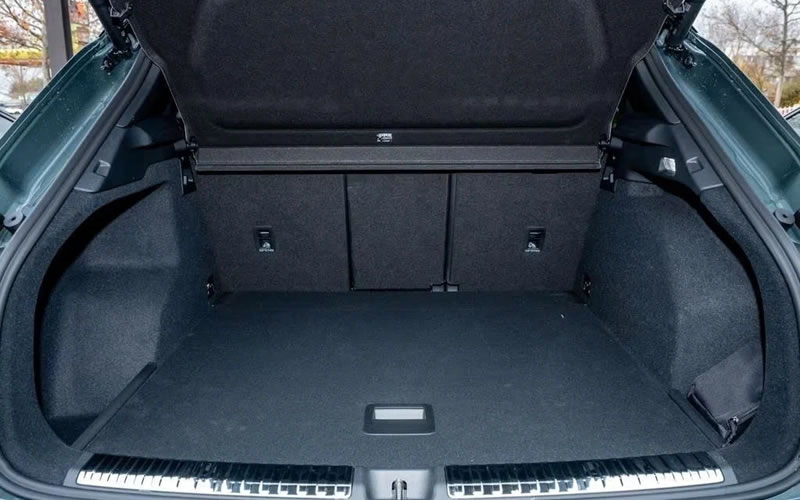
Audi Q7
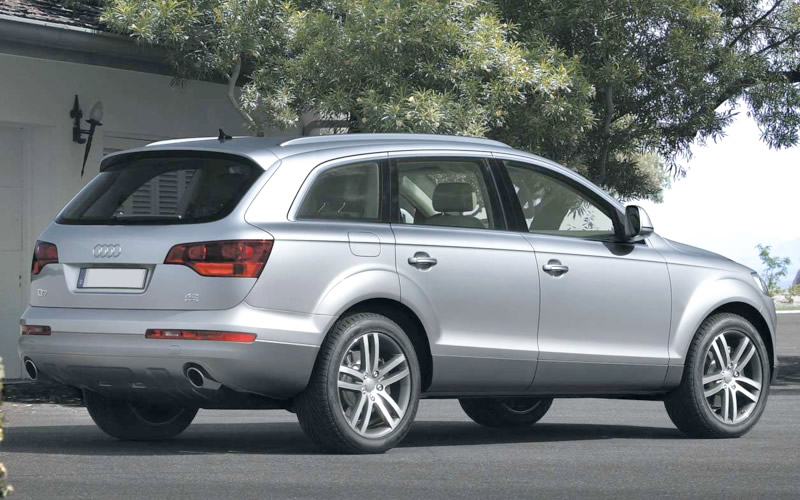
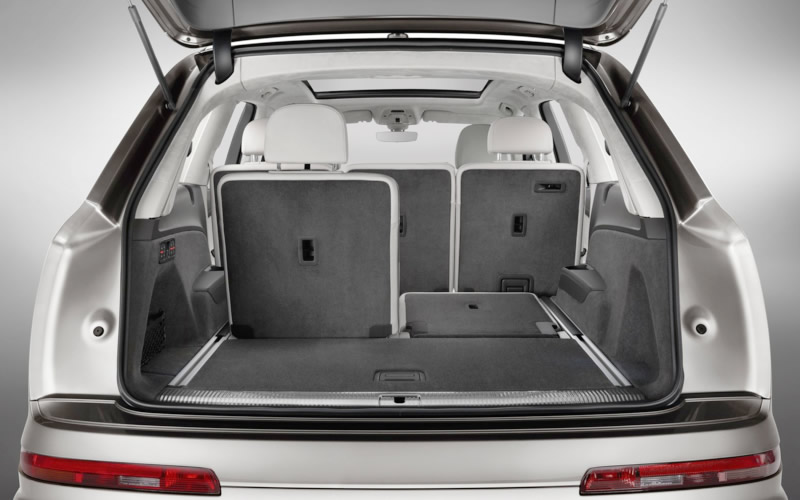
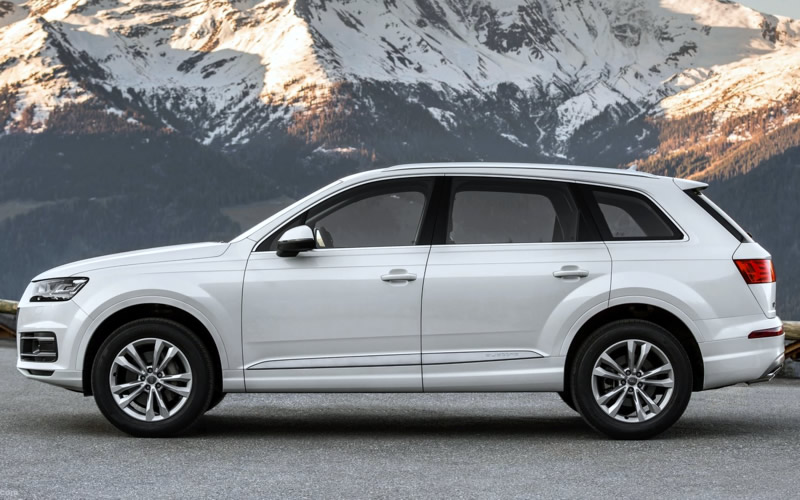
The Audi Q7 is a seven-seat, full-size luxury crossover SUV from the German manufacturer Audi, unveiled in September 2002 at the Frankfurt Motor Show. Production of the Q7 began in the fall of 2005 at the Volkswagen Bratislava plant in Slovakia and went on sale in 2005. It is Audi's first SUV. Since its inception, there have been two generations of this vehicle.
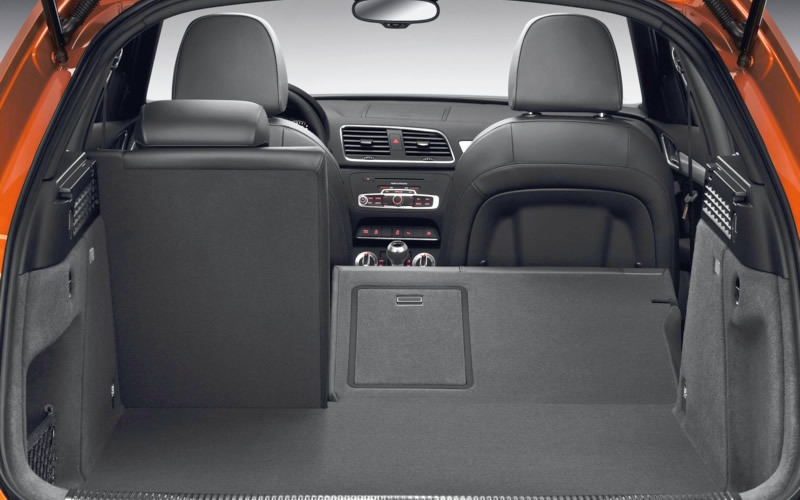
Later, the second Audi Q5 SUV was introduced as a 2009 model. Then, the third crossover model, the Audi Q3, was introduced, going on sale in the third quarter of 2011. All crossovers are designed as 5-door station wagons.
The main competitors of the Q7 are the following cars from other manufacturers: BMW X6, Chevrolet Tahoe, Land Rover Discovery, Lexus LX, Nissan Patrol, Porsche Cayenne, Jeep Grand Cherokee and Toyota Land Cruiser.
Q7 first generation (2005-2015)
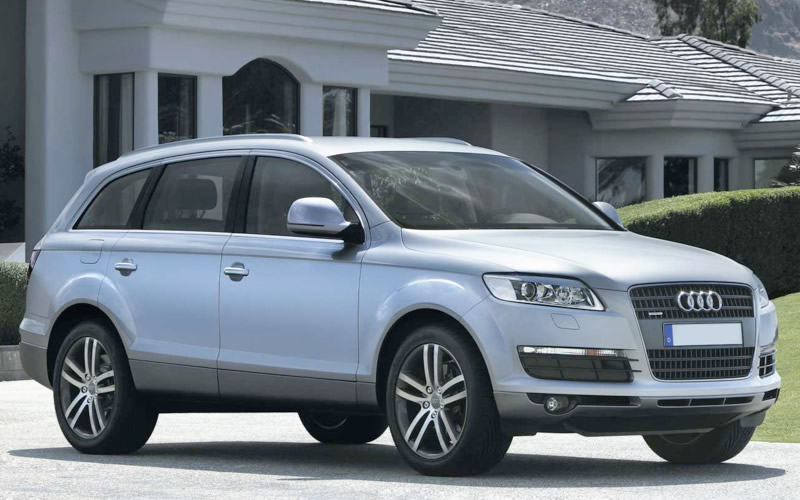
The first generation of Audi Q7 (Typ 4L), which was built on the Volkswagen Group PL71 platform, which is also used to create cars Volkswagen Touareg and the Porsche Cayenne. Development began in 2002 under the code AU 716, primarily focused on the Pikes Peak concept. The production project was frozen in late 2003, with production scheduled to begin in late 2005. Prototypes were tested in 2004, and development concluded in the first half of 2005.
Despite the lack of a low-range gearbox, there is all-wheel drive with a locking center differential and self-leveling air suspension, also known as active suspension, which helps with off-road driving.
Petrol engines were offered in four variants - 3.6 liters (FSI) with a capacity of 280 hp, 4.2 liters (FSI) with a capacity of 350 hp, 3.0 liters (TFSI) with a capacity of 280 hp and 3.0 liters (TFSI S-Line) with a capacity of 328 hp. There were also four diesel engines - two 3.0 liter V6 with a capacity of 230 and 237 hp, a 4.2 liter V8 with a capacity of 322 hp and the world's only V12 diesel for passenger cars with a volume of 6.0 liters with a capacity of 493 hp. There were two types of transmissions - a 6-speed automatic or an 8-speed automatic from ZF (8HP).
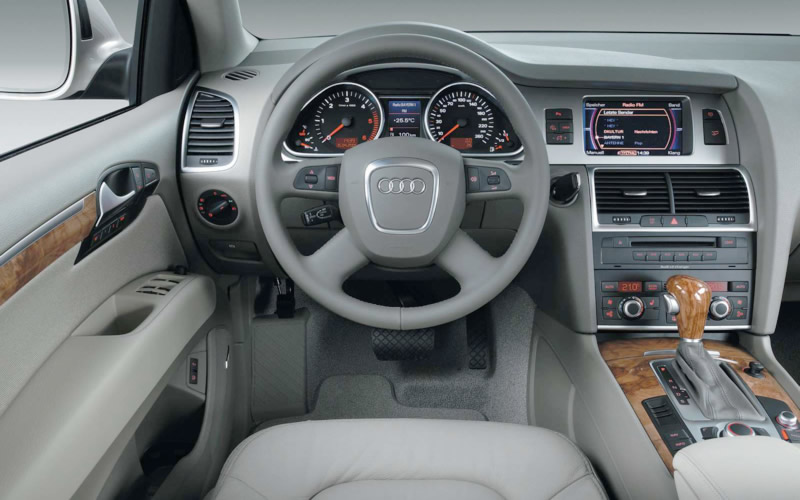
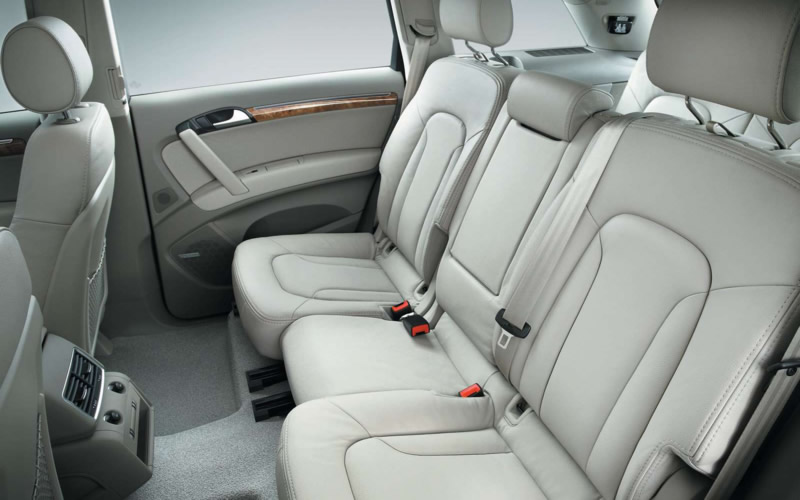
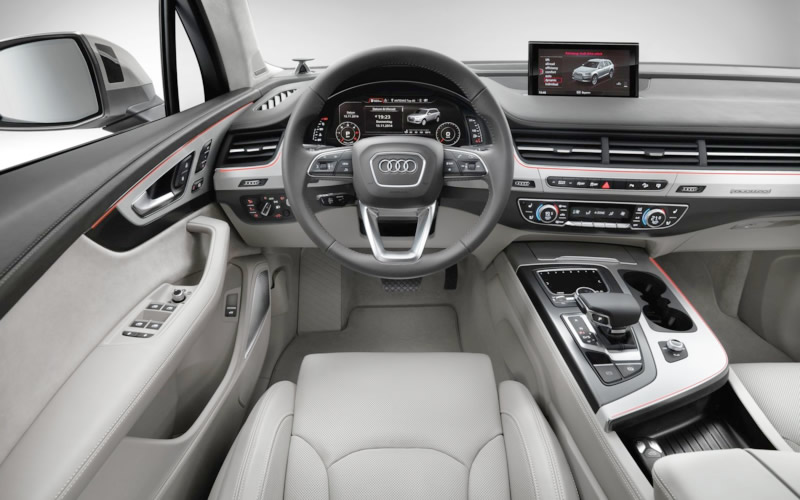
In 2010, the car underwent a facelift. The headlights and taillights were updated, the standard incandescent bulbs were replaced with LEDs, the wheel design was updated, and the front and rear body styling was updated. The interior has also undergone changes. The instrument panel has been updated, along with new leather seats, a third-generation multimedia system, and new interior trim.
Despite having multiple airbags and safety electronics such as ESP, the Q7 only received four out of five stars in Euro NCAP crash tests for adult occupant protection. Audi said it was caused by a design error and was then corrected in cars produced after the test, which is supposed to result in a five-star rating. The 2015 Q7 has a rollover risk of 18.5%. See the table for the 2015 vehicle test results.
Q7 second generation (2015–present)
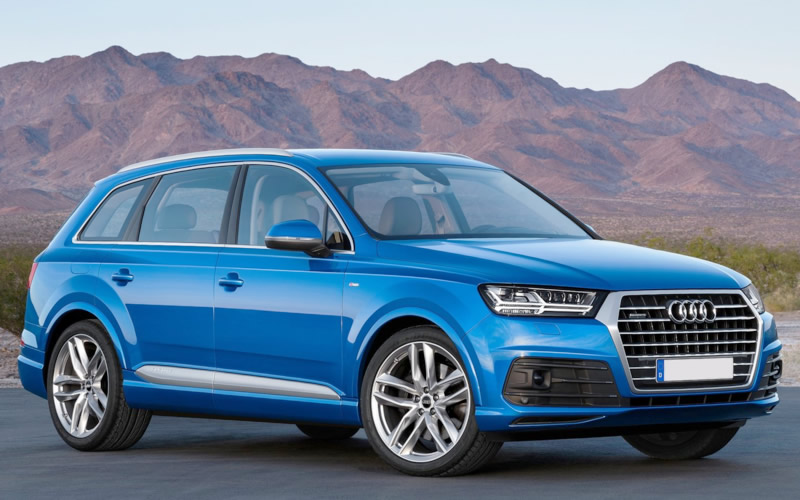
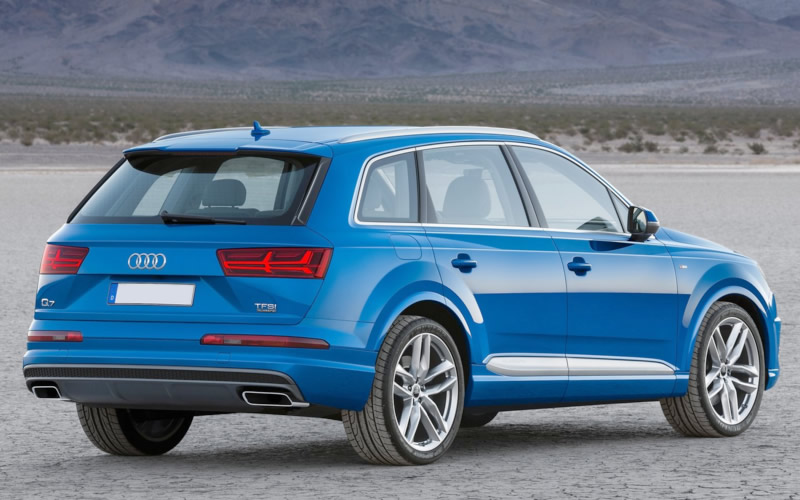
The second generation of Audi Q7 (Typ 4M) was unveiled in January 2015 at the North American International Auto Show in Detroit. Diesel and gasoline engine versions were released for retail sales in 2015, followed by a diesel hybrid version, which is sold in Europe and will be available in the United States. The car is built on the new Volkswagen Group MLBevo platform.
It is the first Audi SUV to use the high-speed FlexRay fibre optic data transfer technology, which connects all electronic systems, including the latest-generation multimedia interface, adaptive air suspension and a host of new driver assistance systems, all of which require very high data transfer rates. The Q7 has up to 4 Nvidia Tegra processors.
At the start of the second generation, there were only two petrol engines: 2.0 and 3.0 litres with 252 and 333 hp. There were four diesel engines: 3.0 TDI Ultra with 215 hp, 3.0 TDI with 272 hp, 4.0 SQ7 TDI with 435 hp, and the e-tron hybrid with a 3.0 TDI engine and a total output of 373 hp.
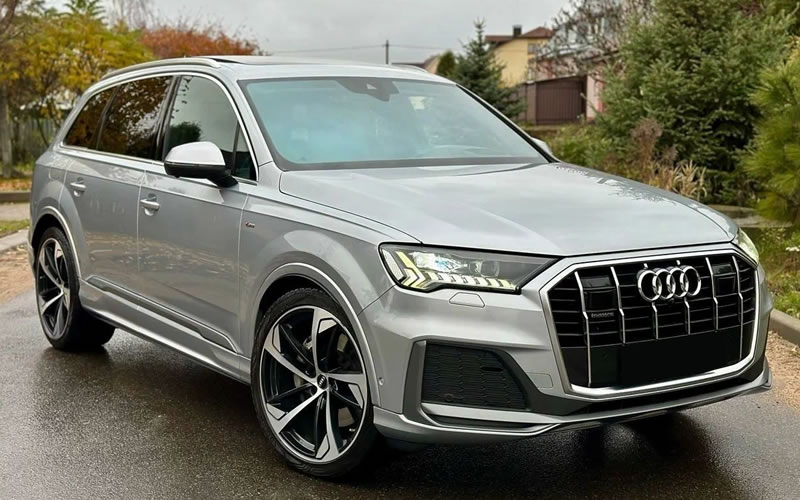
The 2020 model has undergone design changes - a new radiator grille, front and rear bumpers, side sills, exhaust pipes, and chrome door elements. The instrument panel and center console have been modified. The technical update added a range of mild hybrid powertrains and an improved chassis. The engines have also been updated. A high-performance version of the SQ7 has appeared with a 4.0-liter turbodiesel V8 engine producing 429 hp.
In January 2024, Audi unveiled a second update for the 2025 model, which included design refinements to the headlights and taillights. The update includes matrix HD LED headlights with laser high beam and multiple light signatures, as well as a new OLED taillight design.
Audi Q5
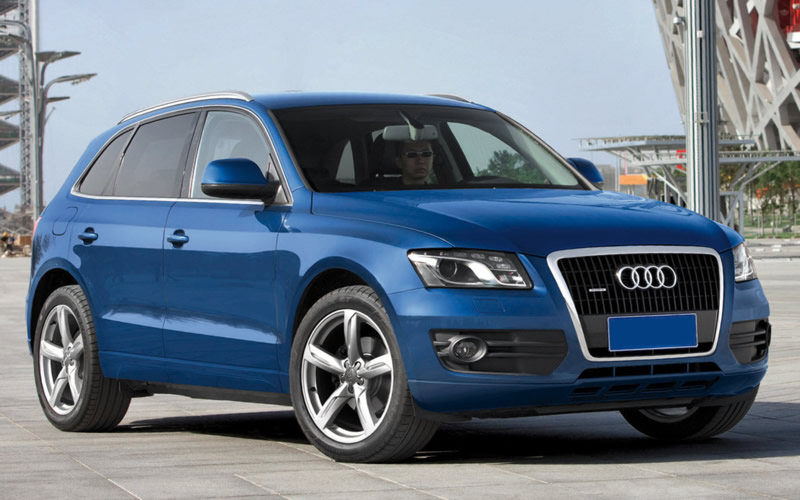
The Audi Q5 is a series of compact business-class crossovers produced by the German automobile manufacturer Audi since 2008 at factories in Germany (Ingolstadt), India (Aurangabad) and China (Changchun). The car was announced in 2008 at the Beijing Auto Show, and then in Los Angeles.
The main classmates of the Q5 are the following cars from other companies: BMW X3, Chevrolet Captiva, Honda CR-V, Hyundai Santa Fe, Kia Sorento, Land Rover Freelander, Mazda CX-9, Mitsubishi Outlander, Nissan Murano, Peugeot 5008, Suzuki Grand Vitara, Skoda Kodiaq and Toyota Highlander.
Q5 first generation (2008–2016)
First generation model (Typ 8R) was the third member of the B8 family and was released after the Audi A5 and Audi A4 fourth-generation, all based on the Volkswagen Group MLB platform. The engine is mounted longitudinally in the front, with a 40:60 all-wheel drive (front/rear axle).
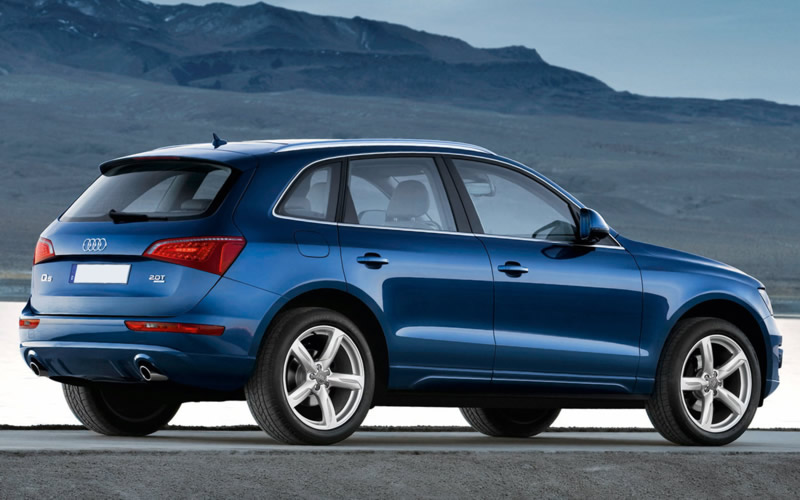
There were four petrol engines: three 4-cylinder 2.0-litre engines (TFSI) with outputs of 178, 208 and 222 hp, and one 3.2-litre V6 (FSI) with outputs of 266 hp. There were three diesel engines: two 4-cylinder 2.0-litre engines with outputs of 141 and 168 hp, and one 3.0-litre V6 with outputs of 237 hp, all turbocharged with direct injection. There is also a hybrid version of the Q5 with a 2.0-liter 4-cylinder gasoline engine producing 208 hp, a 40 kW electric motor and a total output of 242 hp.
There are 4 transmission options to choose from: a 6-speed manual, a 6-speed automatic "Tiptronic", an 8-speed automatic "Tiptronic" ZF 8HP and a 7-speed automated "S Tronic" gearbox with a dual clutch.
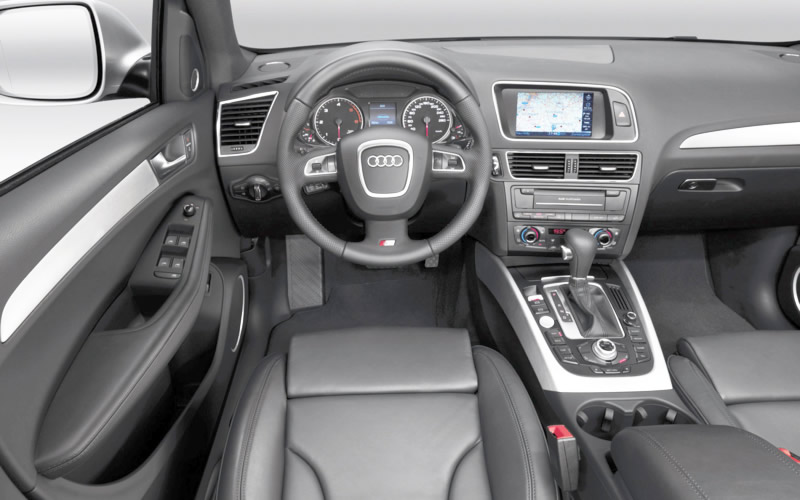
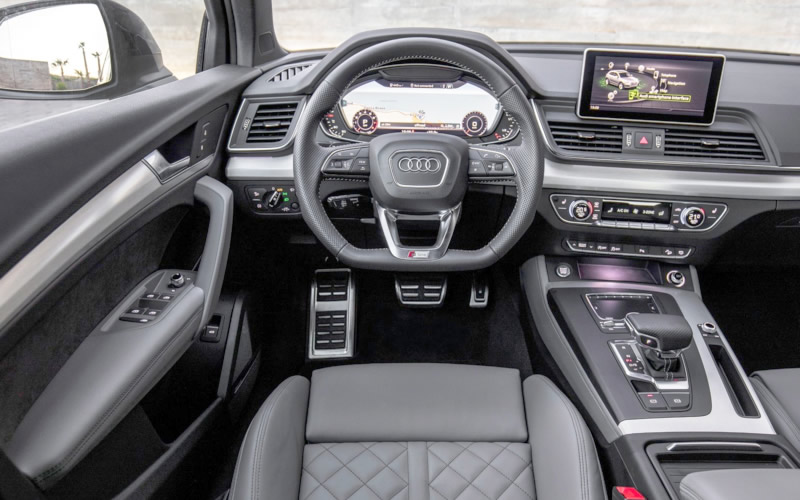
The Audi Q5 is equipped with modern electronic devices. The core of the control system is Audi's Multimedia Interface (MMI). The new system includes navigation, communication, and a widescreen display for watching movies and listening to music. The following storage media are included in this system: USB (iPod or MP3), satellite radio station and built-in quad-band GSM mobile phone with Bluetooth support.
Q5 second generation (2016–2025)
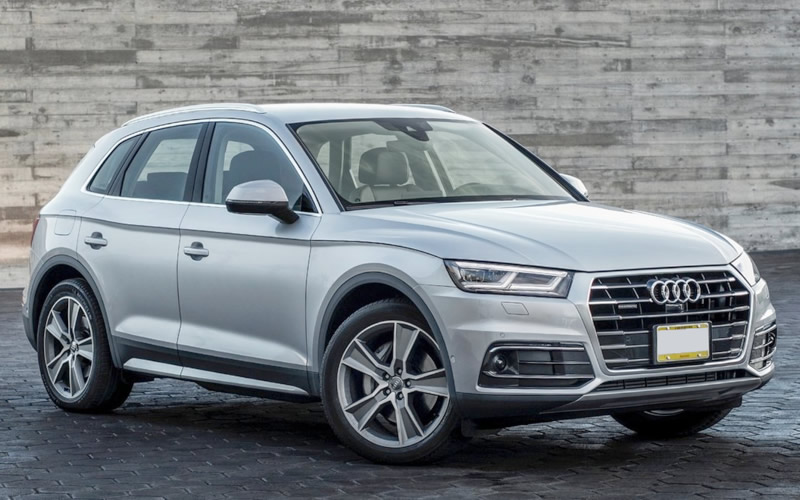
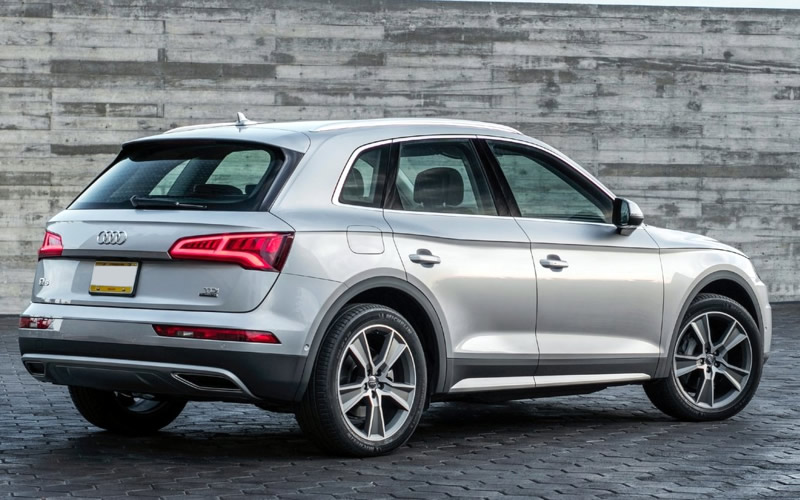
The second generation of Q5 (Typ FY) debuted in 2016 at the Paris Motor Show. The car is built on the Volkswagen Group MLBevo platform, which is also the basis for the A5 and A4 generation B9. Equipped with an all-wheel drive system "quattro ultra" with the function of automatic connection of the rear wheels depending on the road quality. The body is designed as a five-door SUV or coupe (Sportback) with a length of 4663 mm, a width of 1893 mm, a height of 1659 mm, a wheelbase of 2819 mm and a curb weight of 1795 kg.
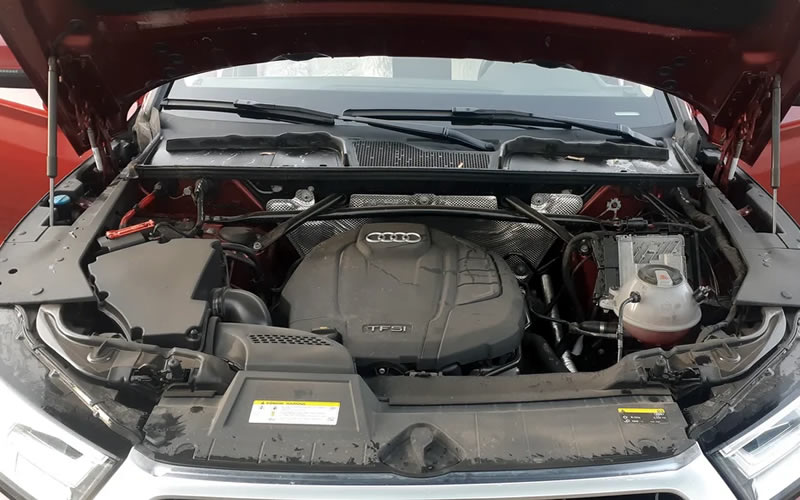
Gasoline engines were installed in the following volumes: 2.0 liters (1984 cm³, DAXA/DAXB, I4, 190/252 hp) and 3.0 liters (2995 cm³, CWGD, V6, 354 hp). There were also two 2.0-liter diesel engine models (1968 cm³, DEUA/DETB/DETA, I4, 150/163/190 hp) and 3.0 liters (2967 cm³, DCPC, V6, 286 hp). The gearbox was a 6-speed manual, 7-speed robotic DSG or 8-speed automatic. In May 2019, Audi announced a plug-in hybrid version, which is equipped with an electric motor and a gasoline engine. This car has an electric range of up to 40 kilometers and a total power of 367 hp.
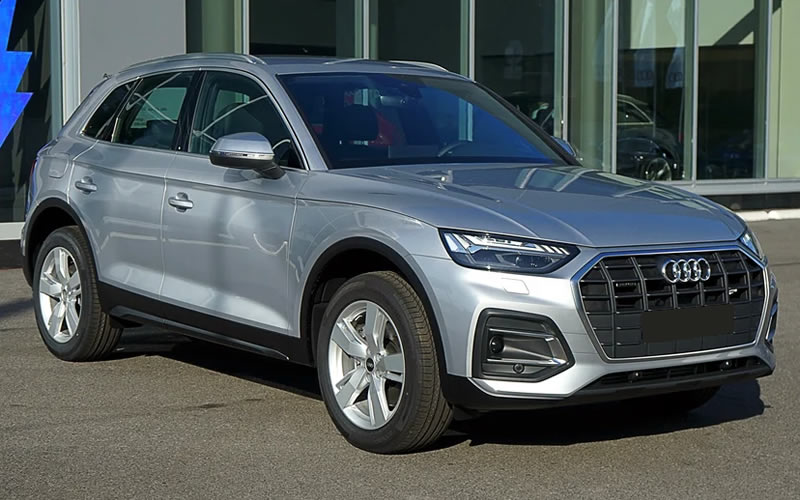
In 2020, the 2021 model year was restyled, introducing third-generation infotainment technologies, including a digital marketplace in the myAudi app. Exterior changes include updated grilles, side air intakes, side sills, and rear trim.
Third-generation Q5 (2025–present)
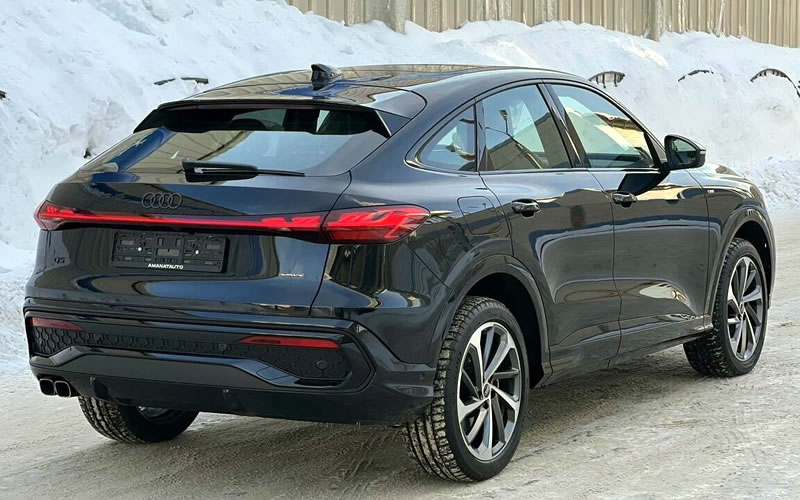
In September 2024, the third generation Q5 was presented (Typ GU), and in April 2025 the car went on sale. Based on a new platform "Volkswagen Group Premium Platform Combustion" (PPC), which is also used for the Audi A5 (B10) and Audi A6 (C9). The exterior became more similar to the larger Q7. In addition to the SUV bodystyle, a coupe called the Sportback was introduced. The body dimensions were: length 4717 mm, width 1900 mm, height 1647 mm, wheelbase 2819 mm. There was also an extended body called the Q5L, 4842 mm long and with a wheelbase of 2945 mm.
The car was equipped with two different models of 2.0-liter petrol engines (1984 cm³, VW EA888, I4, 272 hp) and 3.0 liters (2995 cm³, VW EA839, V6, 367 hp), as well as a 2.0-liter diesel engine (1986 cm³, VW EA288, I4, 204 hp). All variants are equipped with a 48-volt mild hybrid system "Mild Hybrid Plus" from Audi with an output of 18 kW, which can run on electric power alone at low speeds. The transmission was only a 7-speed automatic "S Tronic". In June 2025, plug-in hybrids "e-hybrid" appeared, with a 2.0-liter turbocharged gasoline engine paired with an electric motor and a 25.9 kWh battery, while the power reserve is 99 kilometers only on electricity according to the WLTP cycle.
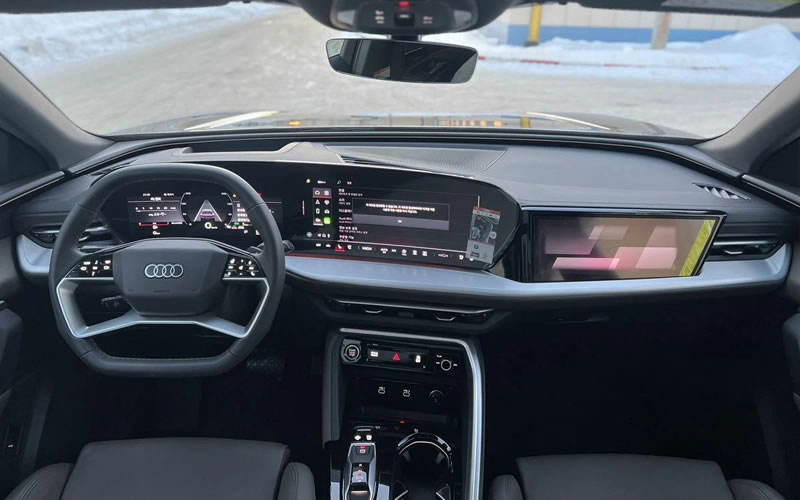
The interior is equipped with an 11.9-inch digital instrument panel and a 14.5-inch multimedia screen, while the Prestige version includes an additional display for the passenger. The interface is fast and boasts high-quality graphics, but personalization options have become fewer. Climate control has been completely transferred to the touchscreen, retaining the controversial move away from physical buttons. Key options include an audio system "Bang&Olufsen" with 16 speakers, interactive interior lighting and air suspension with adaptive shock absorbers, which is already available as standard for the Q5 Prestige and all versions of the SQ5.
Audi Q3
Q3 first generation (2011–2018)
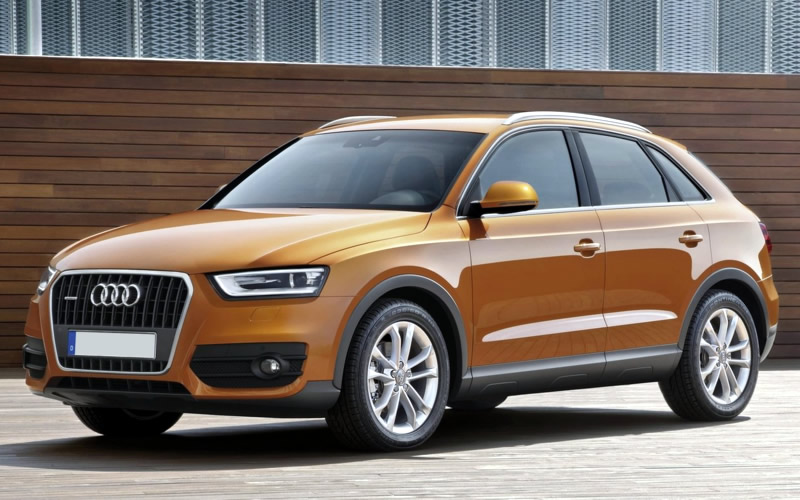
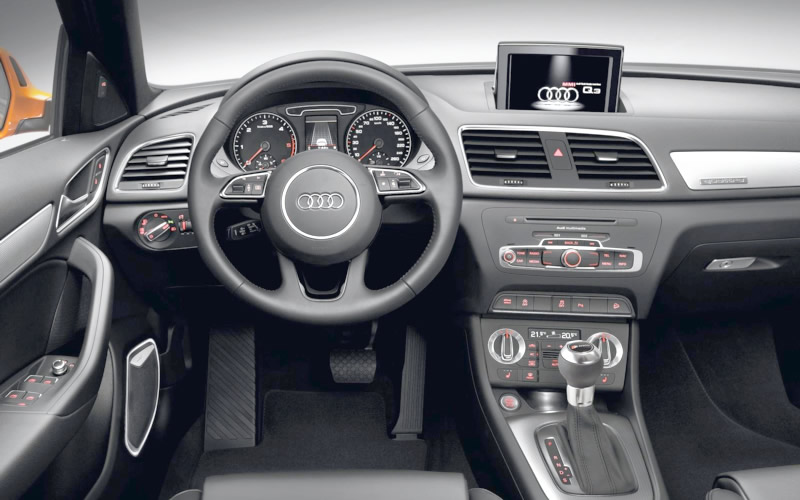
The Q3 is a compact crossover from the German automaker Audi, built on the Volkswagen Group A5 (PQ35) platform. This platform also underpins the following vehicles: Audi A3 Mk2, Volkswagen Golf Mk5 and Mk6, Volkswagen Tiguan, as well as some vehicles from Skoda and SEAT. Design and development began in the second half of 2007. Julian Hoenig's design was selected for production and frozen in 2009.
The first car (Typ 8U) was presented at the Shanghai Motor Show in 2011 and went on sale in June of the same year. Unlike the Q7 and Q5, this car is aimed at family use. In 2013, a version of the Audi RS Q3 appeared with increased engine power and sporty settings.
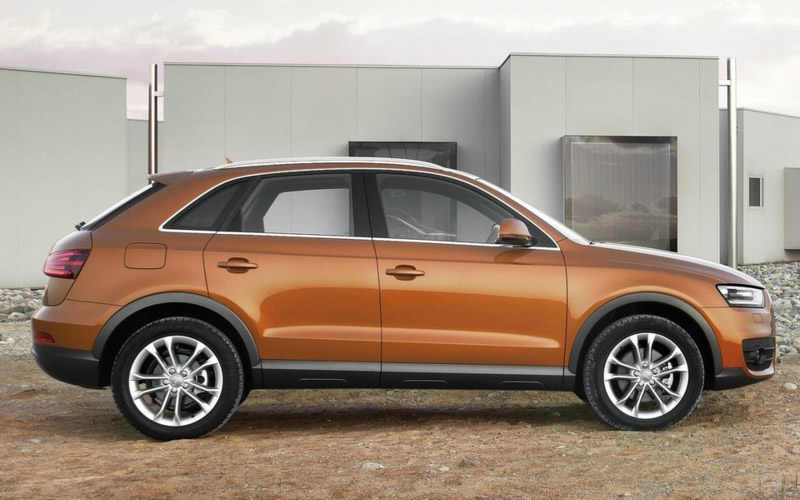
Petrol engines are available in 4-cylinder 1.4- and 2.0-liter (TFSI) configurations with outputs ranging from 148 to 217 hp. The RS Q3 is equipped with 5-cylinder 2.5-liter engines with outputs of 306, 335, and 362 hp. Diesel engines are 4-cylinder and produce outputs ranging from 118 to 181 hp, all turbocharged with direct injection.
There are four transmission options to choose from: 6-speed manual, 6-speed automatic, 6- or 7-speed automated "S Tronic" gearbox.
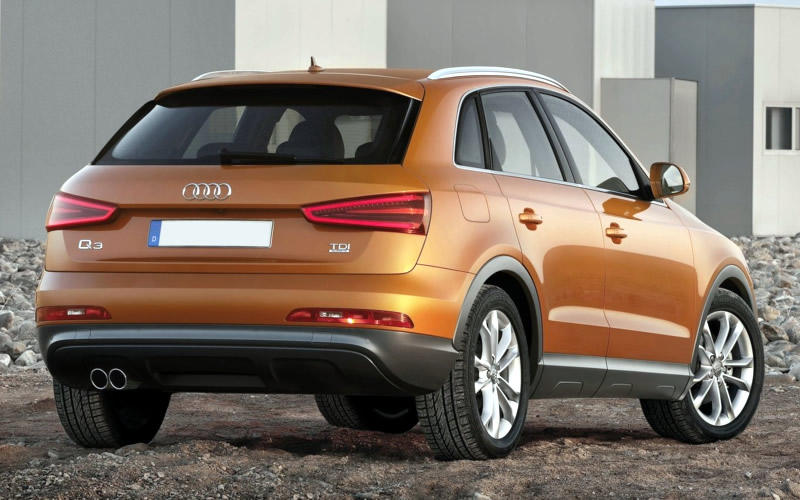
The first restyling was carried out in 2014 - the design of the front bumper, radiator grille, and rear bumper were updated. Fog lights were integrated into the headlights. The rear LED lights also have a new look. The range of petrol engines has been updated. The settings of the robotic gearbox have also been changed, and new options have appeared. It has become possible to disable the exchange rate stability control.
Second-generation Q3 (2018–2025)
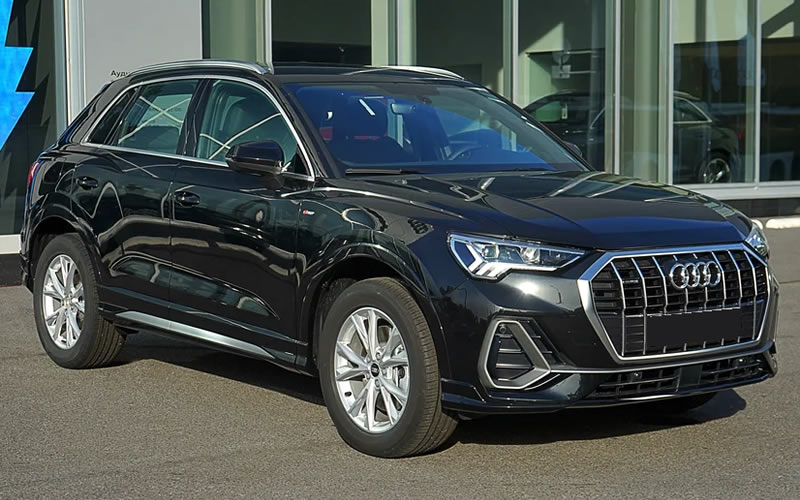
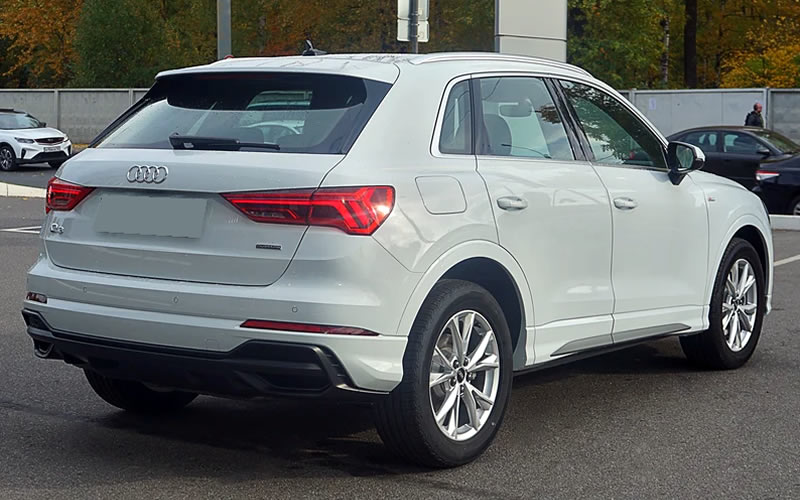
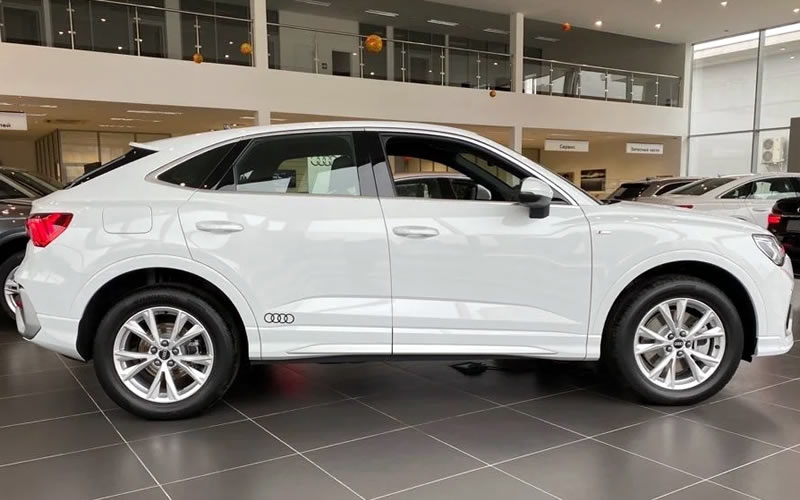
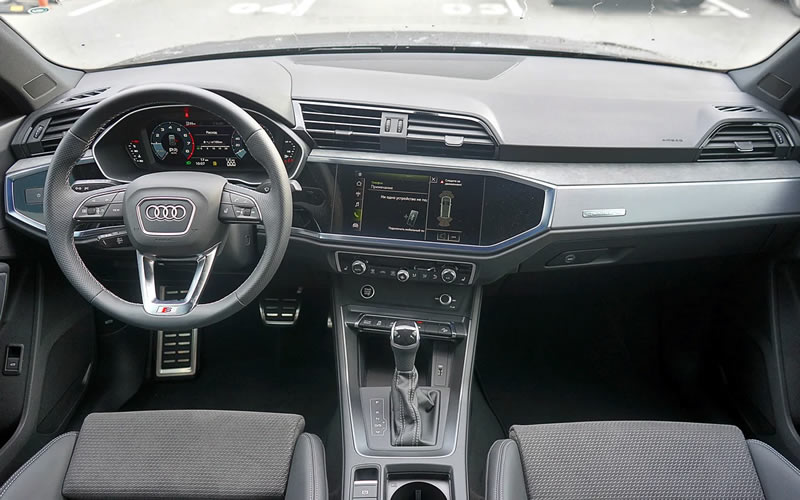
This is the generation with the code Typ F3 was officially presented in July 2018. The car is based on the Volkswagen Group's MQB A2 platform, which is also used for the VW Jetta VS7, SEAT Tarraco, Skoda Kodiaq, VW Tayron, VW Tiguan, VW Viloran of the same years of production. At the 2019 IAA Motor Show in Frankfurt, a new coupe version of the model, called the Audi Q3 Sportback, was unveiled. The SUV measured 4,484 mm in length, 1,849 mm in width, 1,585 mm in height, with a wheelbase of 2,680 mm and a curb weight of 1,570 kg. The Sportback's dimensions varied: length (4,500 mm), width (1,840 mm), and height (1,560 mm).
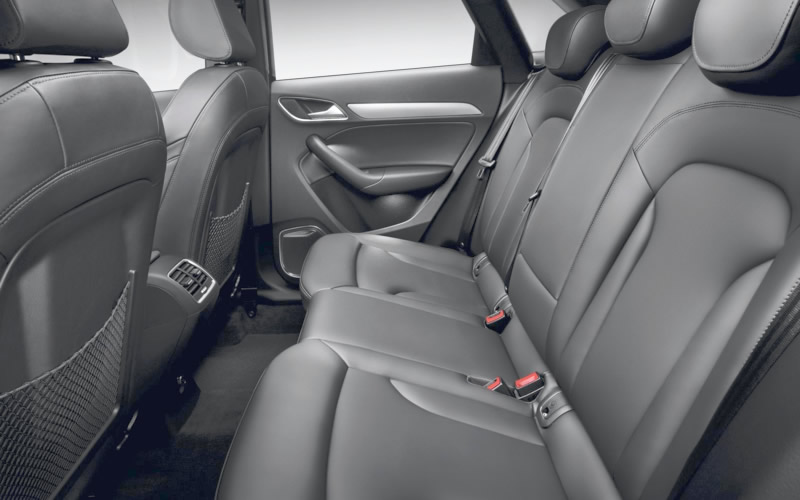
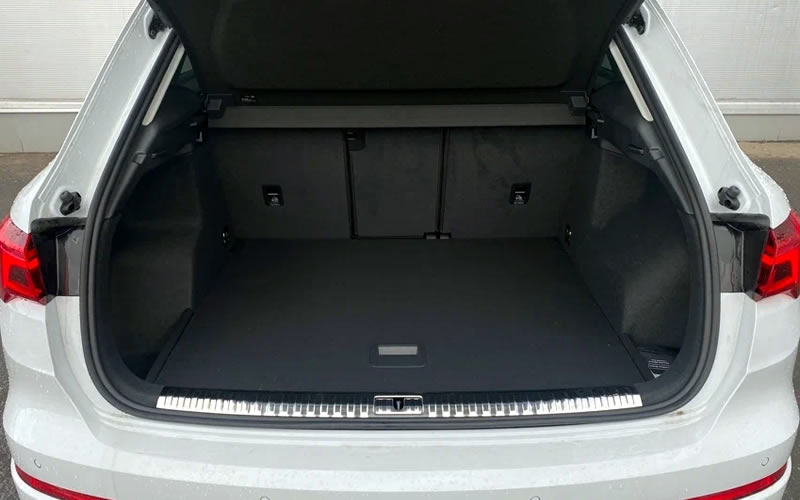
The front axle has a McPherson suspension, the rear axle has a four-link suspension. Adjustable dampers are available as an option. Steering is electromechanical progressive. Standard headlights include LED daytime running lights, low and high beams, and an LED number plate light. Full LED headlights, matrix LED headlights and LED taillights are available at extra cost. The rear seats can be moved up to 150 millimetres and their angle can be adjusted to seven positions. The car received five stars in the 2018 Euro NCAP crash test.
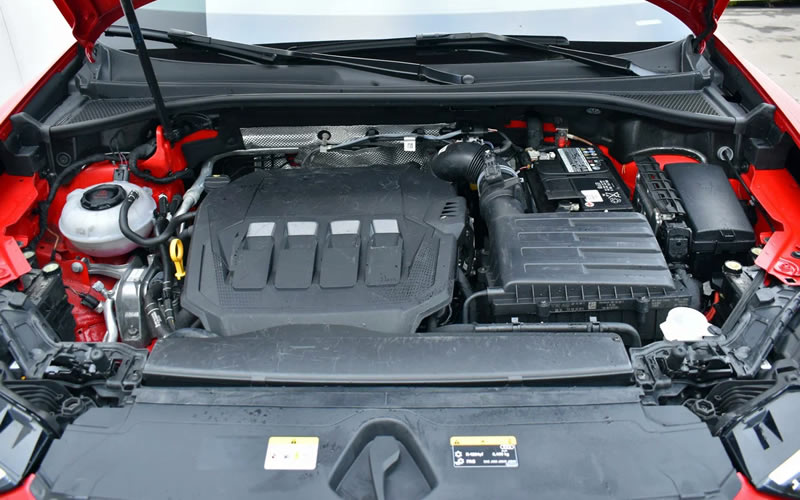
The range of petrol engines consists of the following models: 1.4 liters (1395 cm³, EA111, I4, 150 hp), 1.5 liters (1498 cm³, EA211, I4, 150 hp) and 2.0 liters (1984 cm³, EA888, I4, 180/190 hp). There was only one diesel engine with a capacity of 2.0 liters (1968 cm³, CRBC, I4, 150/190 hp). There were two types of gearboxes: a 6-speed manual or a 6-speed robotic S-tronic with a double clutch.
The Q3 RS variant was unveiled in September 2019. It has the same engine as the first-generation Q3 RS, but with more power.
Q3 third generation (2025–present)
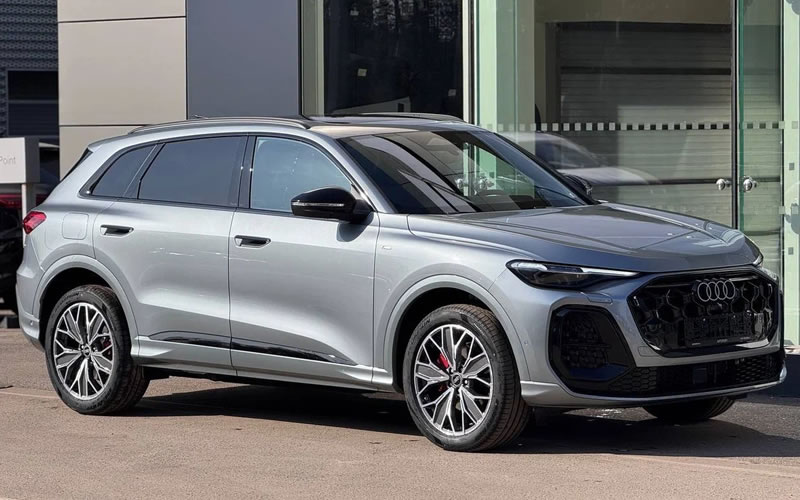
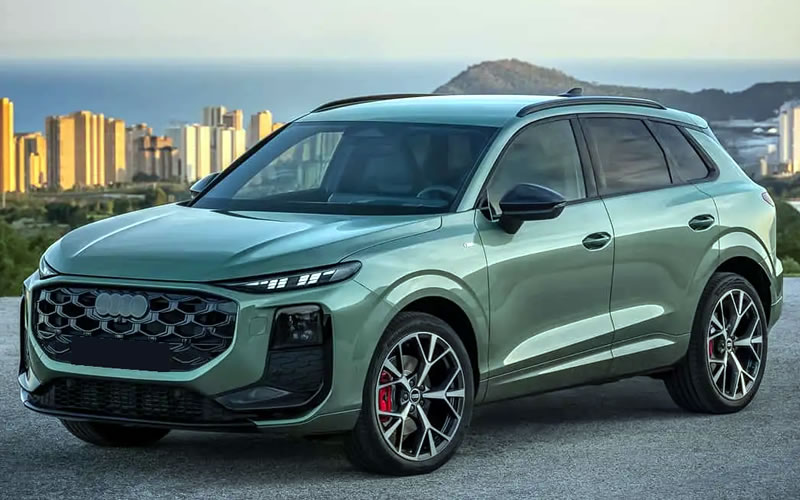
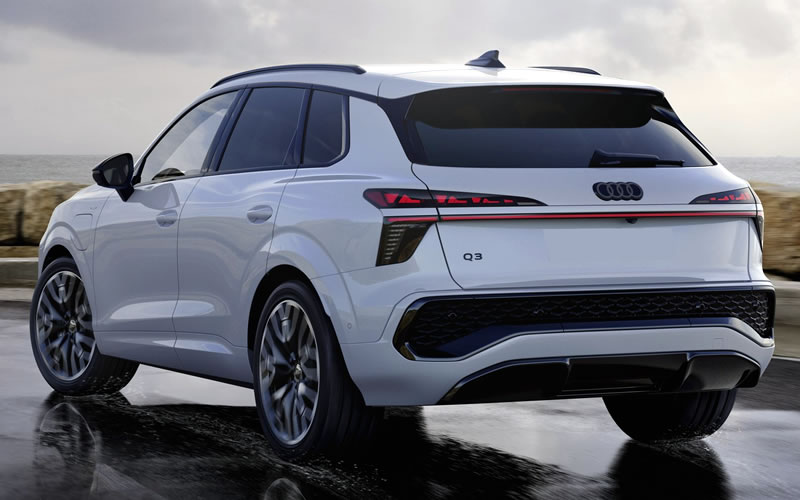
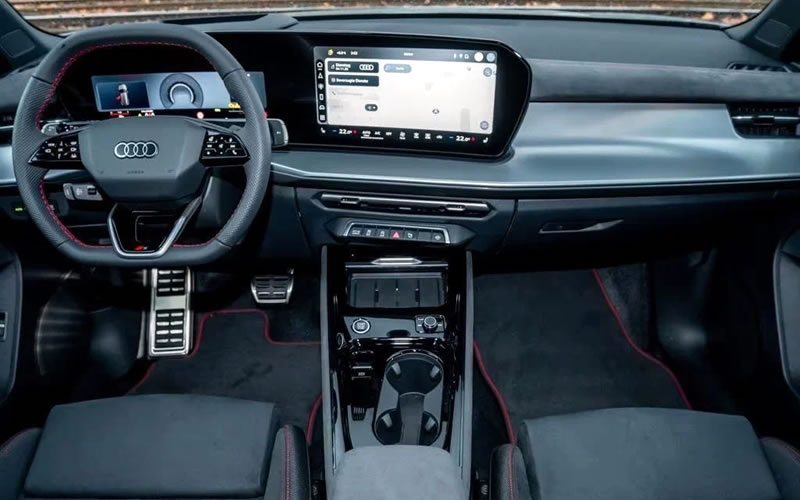
In June 2025, the third generation of the Audi Q3 was presented with the code Typ FJ. The car is built on the modular MQB Evo platform, also used in the Volkswagen Tiguan of the same years. The model is targeted at the premium compact crossover segment and competes with the BMW X1, Mercedes-Benz GLA, and Volvo XC40. It was available as a classic five-door SUV, as well as a five-door coupe called the "Sportback." The car measured 4,531 mm in length, 1,859 mm in width, 1,600 mm in height, and had a 2,682 mm wheelbase. It featured a digital instrument cluster with an 11.9-inch screen, a 12-inch central multimedia touchscreen, a head-up display, and ambient lighting. Of course, there are driver assistance systems such as adaptive cruise control, lane keeping, automatic parking, matrix LED headlights, and others.
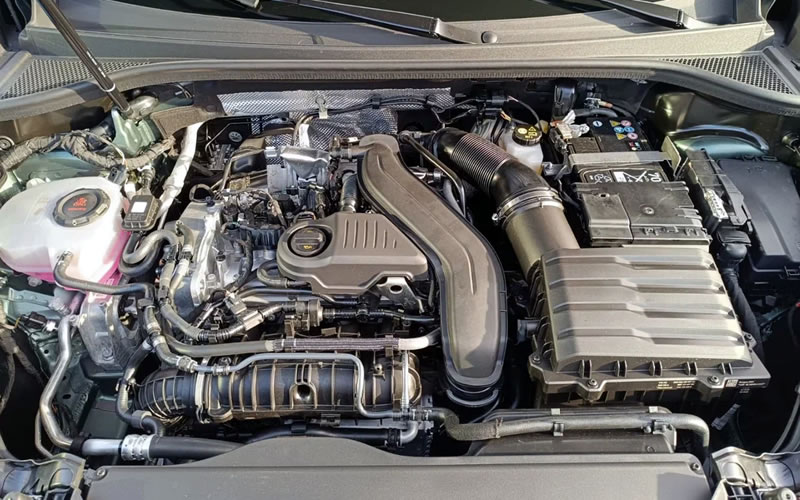
There were two petrol engine models, all four-cylinder in-line, front-wheel drive with mild hybrid or all-wheel drive "Quattro", with a capacity of 1.5 liters (1498 cm³, TFSI, I4, 150 hp) and 2.0 liters (1984 cm³, TFSI, I4, 205/255 hp). 2.0-liter diesel engine (1968 cm³, TDI, I4, 150/193 hp), also with front-wheel drive or all-wheel drive "Quattro". There was also a plug-in hybrid with a 1.5 TFSI petrol engine and a total output of 272 hp, with an electric power reserve of up to 120 km according to WLTP. The transmission is the same as the Q5 7-speed automatic "S Tronic".