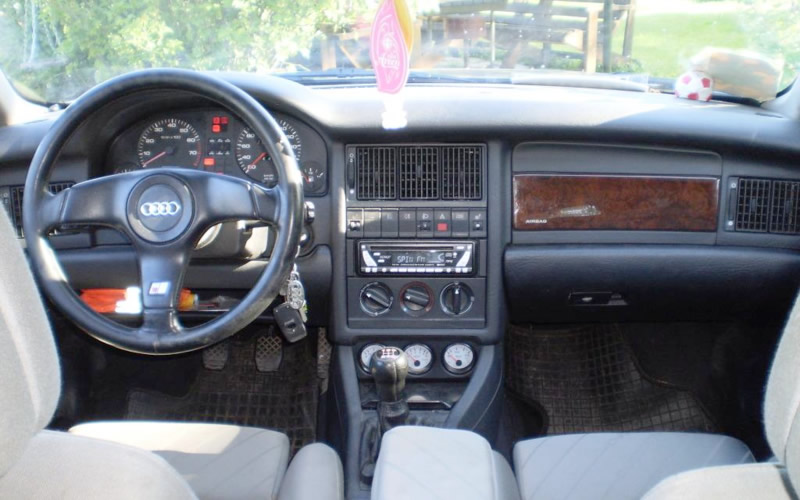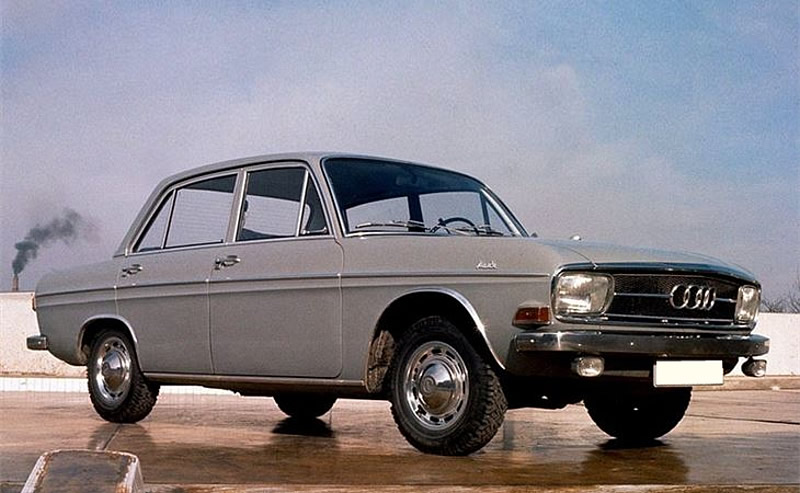
The engines were petrol carburetor and fuel injection, as well as diesel naturally aspirated and turbocharged with front-mounted and front-wheel drive. The bodies were initially a sedan and station wagon (Avant), and then a coupe and convertible appeared. There was also an "older" brother - Audi 90 - a more expensive version with more powerful engines and a large number of options.
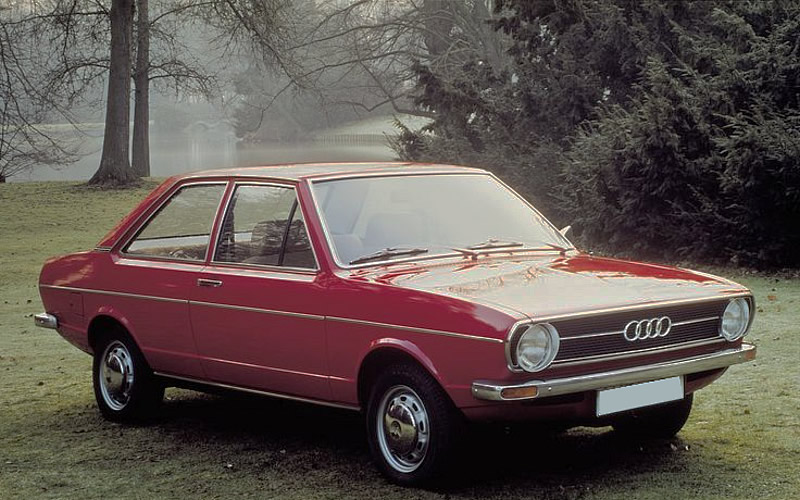
Audi B1 (1973-1978)
Until 1973, the car was called the Audi F103, based on the DKW F102. It differed from the base by a four-stroke engine. In 1972, the Audi 80 was introduced in Europe, the following year in North America and Australia, creating worthy competition for the Opel Ascona and Ford Taunus. A total of about 1.1 million units were produced.
The car was available as a sedan with two or four doors, as well as a station wagon with five doors. There were 3 engine options - 1.3 and 1.5 liters with a capacity of 55 to 85 hp and 1.6 liters with a capacity of 100 hp. All engines are 4-cylinder, located in the front with a drive to the front wheels. The transmission is automatic 3-speed or mechanical 4-speed.
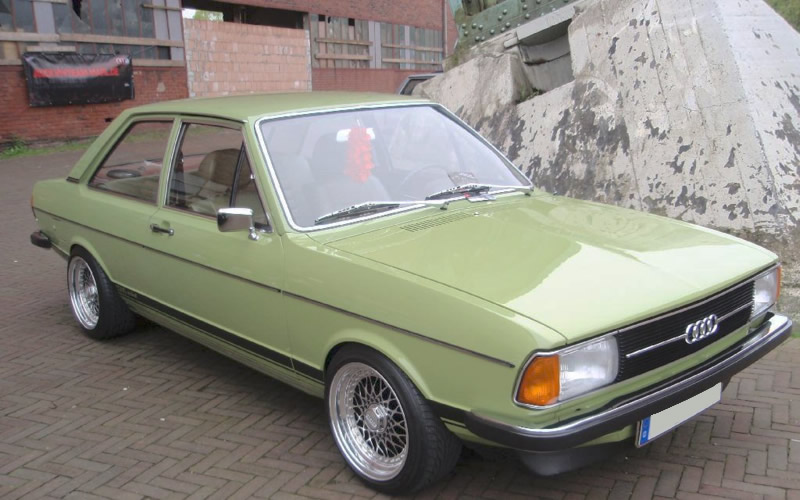
The front suspension is MacPherson type, and the rear fixed beam is of C-shaped section with longitudinal arms and a Panhard rod, using springs and telescopic shock absorbers.
In the fall of 1976, the appearance of the front of the car was changed - the round headlights were made square. A 1.6-liter engine with a capacity of 75/85 hp was also added. A new model was also released - Audi 80 GTE with a 1.6-liter injection engine (110 hp).
Audi B2 (1978-1986)
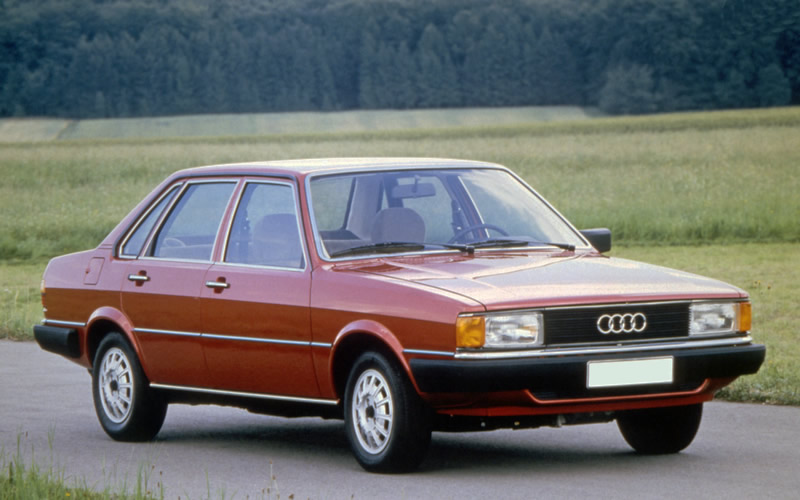
In September 1978, Audi introduced a redesigned 80 model on the new B2 platform (Typ 81). In the US, the model was called the Audi 4000. The body design was created by the famous Italian designer Giorgetto Giugiaro. A total of about 1.7 million cars were produced.
The station wagon body had to be abandoned because this niche was firmly occupied by the Volkswagen Passat. Only the 2- and 4-door sedan and coupe remained.
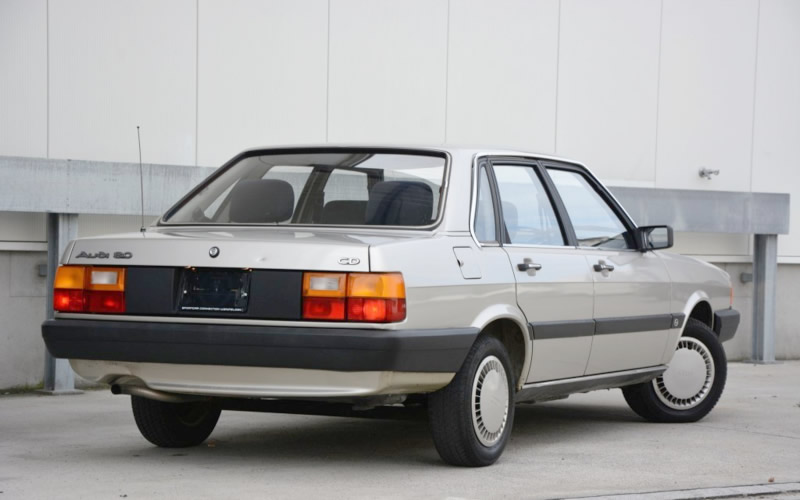
The number of engine options has increased significantly: petrol 4-cylinder engines with a capacity of 1.3 to 1.8 liters (60-93 hp), 5-cylinder with a volume of 1.9 to 2.2 liters (115-136 hp), and also a 1.6-liter diesel engine appeared, both naturally aspirated (54 hp) and turbocharged (70 hp). Transmission 4- and 5-speed manual and 3-speed automatic.
In 1983, the all-wheel drive Audi 80 model first appeared. The model turned out to be heavier and more expensive than the front-wheel drive Audi 100.
In 1984, a light facelift was made, which affected the rear and front lights, both bumpers, the instrument panel and the steering wheel; moved the fuse box under the hood; for the first time, a catalytic converter appeared to reduce the toxicity of exhaust gases.
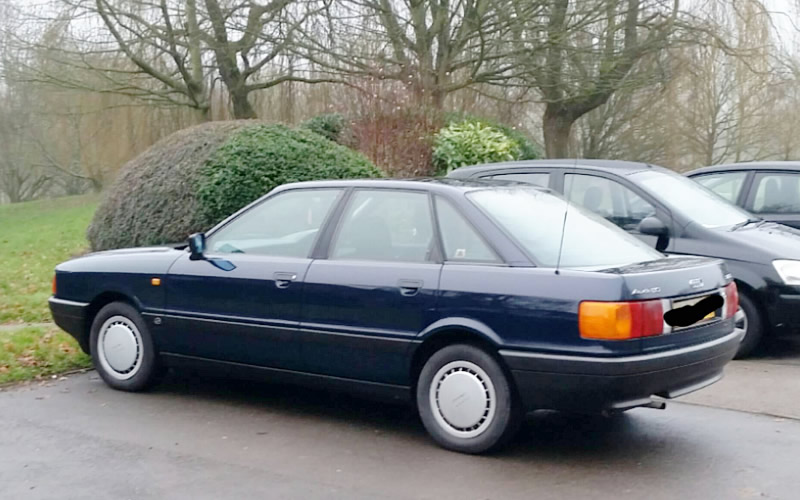
Audi B3 (1986-1991)
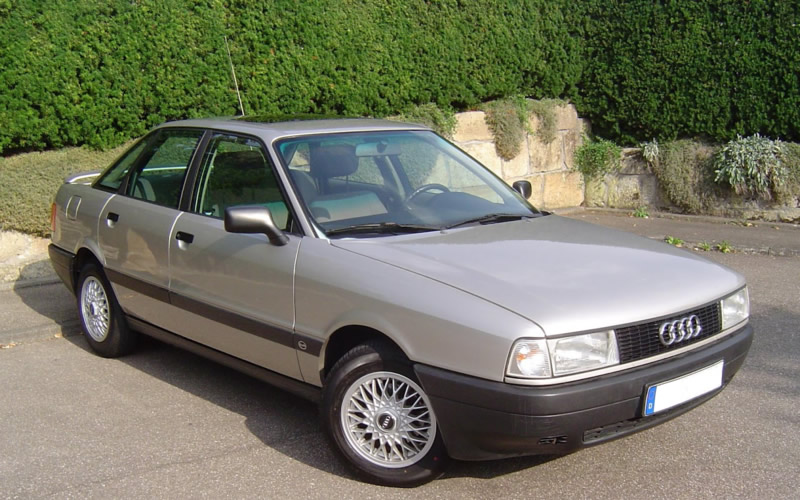
In September 1986, the third generation Audi 80 (B3, Typ 89). This platform had nothing in common with the B3 VW Passat platform and was completely independent. The car body became more rounded: if the previous modification was popularly called a "chisel", then this one was called a "barrel". For the first time, the body became completely galvanized to protect against corrosion, which led to an increase in the warranty against corrosion to 12 years. All other names of the model in other countries were removed, only the names Audi 80/90 remained. About 1.6 million cars were produced in total.
the 80th model had four 4-cylinder petrol engines with a capacity of 1.4, 1.6, 1.8 and 2.0 liters with a power of 64 to 135 hp, both carburetor and injection, and also three 4-cylinder diesel engines of 1.6 and 1.9 (atmospheric) and 1.6 (turbine) with power from 50 to 79 hp.
The 90th model had more powerful engines. Two petrol 5-cylinder engines with a capacity of 2.0 and 2.3 liters (from 113 to 170 hp) and one 1.6-liter 4-cylinder turbodiesel with 79 hp.
The body was available in two versions - a 4-door sedan and a 2-door coupe. Three transmission options - 4- and 5-speed manual transmission and a 3-speed automatic.
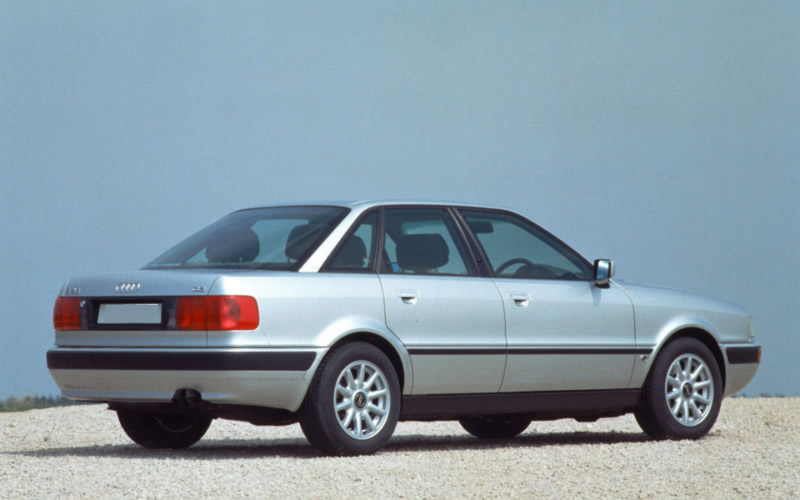
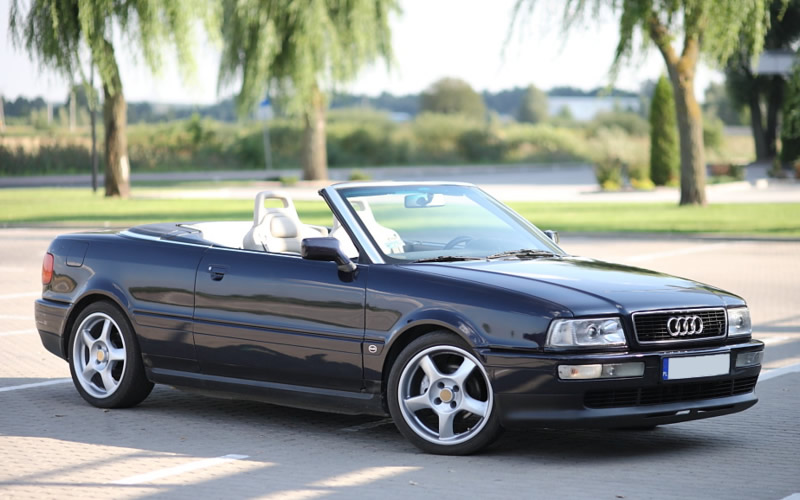
Audi B4 (1991-1996)
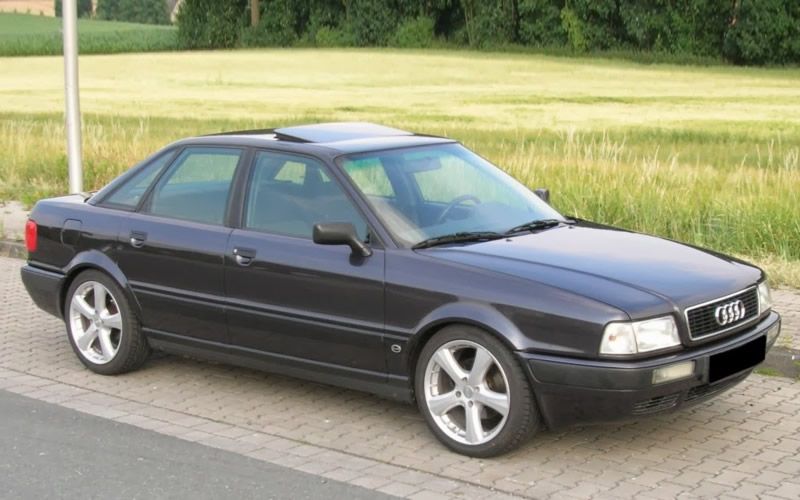
A major update to the previous generation resulted in the B4 upgrade (Typ 8C) in 1991. The wheelbase was increased, the fuel tank and rear axle were completely changed, which allowed the use of folding rear seats, new bumpers, higher quality materials began to be used for interior trim, people got into the car better and more conveniently. In general, a serious step was made into the premium segment, where only cars from companies competed with each other BMW and Mercedes-Benz.
In Europe, the model name "90" was abandoned, all cars were sold under the brand "80". In the USA, the opposite is true - all models were sold under the brand "90". Over the 5-year production period, about 1.1 million cars were produced. B4 was the last modification with the name "80". In 1994, the successor of this class appeared - Audi A4.
The B4 was produced in 4 bodies: 4-door sedan, 5-door station wagon, 2-door coupe and 2-door convertible. Front-wheel drive or permanent all-wheel drive called "quattro". Gearbox in two versions: 5-speed manual or 4-speed automatic.
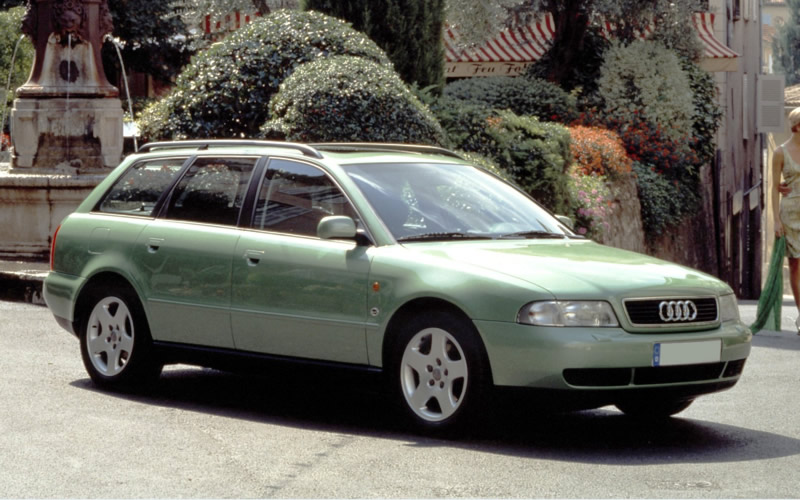
The range of petrol engines has been expanded. In-line 4-cylinder engines with a capacity of 1.6 and 2.0 liters (from 71 to 140 hp). In-line 5-cylinder 2.3-liter (133 hp). V-shaped 6-cylinder 2.6- and 2.8-liter engines with 150 and 174 hp, respectively. Two diesel engines, 1.9 liters each, turbocharged (75 and 90 hp), the more powerful one began to use direct injection. Also, for the S2 and RS2 models, 2.2-liter gasoline engines with a capacity of 230 and 315 hp were used.