



Vehicle braking system Audi 80 B3, petrol

Brake system specifications
System type - Front disc, rear drum or disc, double diagonal chain, with vacuum or hydraulic booster. Rear brake pressure regulator. Handbrake on the rear...
System type - Front disc, rear drum or disc, double diagonal chain, with vacuum or hydraulic booster. Rear brake pressure regulator. Handbrake on the rear...
General description of the braking system
The braking system has two circuits, with front disc brakes and rear drum or disc brakes. The double chain is diagonal, in case of breakage of one chain, the...
The braking system has two circuits, with front disc brakes and rear drum or disc brakes. The double chain is diagonal, in case of breakage of one chain, the...
Maintenance of the brake system
Perform the following procedures at the intervals given in " Technical maintenance " at the beginning of the guide. Checking the wear of the brake shoe lining...
Perform the following procedures at the intervals given in " Technical maintenance " at the beginning of the guide. Checking the wear of the brake shoe lining...

Front brake pads — inspection, removal and installation
1. Apply the parking brake, then jack up the front of the vehicle and support it on axle stands. 2. The thickness of the outer front brake pads can be checked...
1. Apply the parking brake, then jack up the front of the vehicle and support it on axle stands. 2. The thickness of the outer front brake pads can be checked...
Front Brake Caliper — Removal and Installation
1. Apply the parking brake, then jack up the front of the vehicle and support it on axle stands. 2. Remove the affected front wheel. Install a clamp on the...
1. Apply the parking brake, then jack up the front of the vehicle and support it on axle stands. 2. Remove the affected front wheel. Install a clamp on the...

Front Brake Caliper — Overhaul
1. Clean the outer surface of the caliper, make sure that no foreign objects enter the hydraulic hose hole. 2. Clamp the caliper in a vice. 3. Remove the dust...
1. Clean the outer surface of the caliper, make sure that no foreign objects enter the hydraulic hose hole. 2. Clamp the caliper in a vice. 3. Remove the dust...

Brake discs — inspection, removal and installation
1. Jack up the car from the front or rear and support it on axle stands. Remove the wheel. 2. Rotate the disc to examine its condition. Light wear is...
1. Jack up the car from the front or rear and support it on axle stands. Remove the wheel. 2. Rotate the disc to examine its condition. Light wear is...

Rear Brake Shoes — Checking and Replacing
1. The thickness of the rear drum brake linings can be checked without removing the brake drums. Remove the rubber plug located above the handbrake cable entry...
1. The thickness of the rear drum brake linings can be checked without removing the brake drums. Remove the rubber plug located above the handbrake cable entry...

Rear wheel cylinder — removal, overhaul and installation
1. Remove the brake shoes as described in Chapter 7 . 2. Remove the filler cap of the brake fluid reservoir, cover the filler neck with a piece of polyethylene...
1. Remove the brake shoes as described in Chapter 7 . 2. Remove the filler cap of the brake fluid reservoir, cover the filler neck with a piece of polyethylene...
Brake drum — inspection and restoration
1. Whenever the brake drums are removed, they should be checked for wear and damage. Slight wear of the friction surface is acceptable, but if it is excessive...
1. Whenever the brake drums are removed, they should be checked for wear and damage. Slight wear of the friction surface is acceptable, but if it is excessive...

Rear brake pads — checking, removal and installation
1. Block the front wheels, then jack up the rear of the car and support it on axle stands. 2. The thickness of the rear outer brake pads can be checked through...
1. Block the front wheels, then jack up the rear of the car and support it on axle stands. 2. The thickness of the rear outer brake pads can be checked through...

Rear Brake Caliper — Removal and Installation
1. Block the front wheels, then jack up the rear of the car and support it on axle stands. Remove the corresponding rear wheel, release the handbrake. 2....
1. Block the front wheels, then jack up the rear of the car and support it on axle stands. Remove the corresponding rear wheel, release the handbrake. 2....

Rear Brake Caliper — Overhaul
1. Clean the outside surface of the caliper. Do not allow foreign objects to enter the hydraulic hose hole. 2. Clamp the caliper in a vice, piston facing up....
1. Clean the outside surface of the caliper. Do not allow foreign objects to enter the hydraulic hose hole. 2. Clamp the caliper in a vice, piston facing up....

Master cylinder — removal and installation
1. Press the brake pedal several times to remove the vacuum from the vacuum booster, or release the pressure in the hydraulic booster unit (depending on the...
1. Press the brake pedal several times to remove the vacuum from the vacuum booster, or release the pressure in the hydraulic booster unit (depending on the...
Master Cylinder — Bulkhead
1. The master cylinder is sealed, so it cannot be disassembled. If it is defective, replace it with a new one. 2. The reservoir can be removed by simply...
1. The master cylinder is sealed, so it cannot be disassembled. If it is defective, replace it with a new one. 2. The reservoir can be removed by simply...

Brake pressure regulator — checking and adjustment
1. The brake pressure regulator is located on the rear axle on the right side and moves up and down as a result of the movement of the rear axle (photo). 2. To...
1. The brake pressure regulator is located on the rear axle on the right side and moves up and down as a result of the movement of the rear axle (photo). 2. To...

Brake system tubes and hoses — removal and installation
1. Before removing the brake pipe or hose, unscrew the filler cap of the reservoir, cover the neck with a piece of polyethylene to reduce fluid loss....
1. Before removing the brake pipe or hose, unscrew the filler cap of the reservoir, cover the neck with a piece of polyethylene to reduce fluid loss....

Hydraulic system — bleeding
1. If any components in the brake system have been removed or disconnected, or if the fluid level in the master cylinder has dropped noticeably, air will...
1. If any components in the brake system have been removed or disconnected, or if the fluid level in the master cylinder has dropped noticeably, air will...

Anti-lock braking system (ABS) — general description
Anti-lock braking system (ABS) is factory-installed on some models upon request. The system is maintenance-free. The system prevents the wheels from locking,...
Anti-lock braking system (ABS) is factory-installed on some models upon request. The system is maintenance-free. The system prevents the wheels from locking,...

Anti-lock braking system (ABS) parts — removal and installation
Note: After performing any of the procedures described in this chapter, it is recommended that you have the anti-lock brake system completely checked by your...
Note: After performing any of the procedures described in this chapter, it is recommended that you have the anti-lock brake system completely checked by your...
Anti-lock braking system (ABS) — pressure check
Note: This test requires a pressure gauge capable of measuring liquid pressures up to 50 bar. 1. Apply the handbrake, then lift the front of the vehicle and...
Note: This test requires a pressure gauge capable of measuring liquid pressures up to 50 bar. 1. Apply the handbrake, then lift the front of the vehicle and...
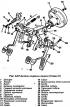
Brake pedal — removal and installation
1. From inside the vehicle, disconnect the return spring from the brake pedal and the booster pushrod clamp. Remove the lower instrument panel if necessary. 2....
1. From inside the vehicle, disconnect the return spring from the brake pedal and the booster pushrod clamp. Remove the lower instrument panel if necessary. 2....

Handbrake lever — removal and installation
1. From inside the car, remove the plastic covering from the front of the tray under the handbrake lever. Unscrew the screw. 2. Remove the rear ashtray,...
1. From inside the car, remove the plastic covering from the front of the tray under the handbrake lever. Unscrew the screw. 2. Remove the rear ashtray,...
Handbrake — adjustment
1. Usually there is no need to adjust the handbrake, since the rear brakes (drum and disc) - self-adjusting. Adjustment will only be required after replacing...
1. Usually there is no need to adjust the handbrake, since the rear brakes (drum and disc) - self-adjusting. Adjustment will only be required after replacing...
Vacuum booster — description and testing
1. The vacuum booster is located between the brake pedal and the master cylinder, and makes it easier for the driver to press the brake pedal. Except for the...
1. The vacuum booster is located between the brake pedal and the master cylinder, and makes it easier for the driver to press the brake pedal. Except for the...

Vacuum booster — removal and installation
1. Remove the master cylinder as described in Chapter 13 . 2. Remove the one-way valve and vacuum hose from the booster unit. 3. From inside the vehicle,...
1. Remove the master cylinder as described in Chapter 13 . 2. Remove the one-way valve and vacuum hose from the booster unit. 3. From inside the vehicle,...

Vacuum Pump (with Automatic Transmission) — Removal and Installation
1. If necessary, disconnect the high tension wires and the crankcase ventilation hose to access the vacuum pump, which is located on the left side of the...
1. If necessary, disconnect the high tension wires and the crankcase ventilation hose to access the vacuum pump, which is located on the left side of the...

Hydraulic booster unit — description
The 1990 2309cc model has a hydraulic booster instead of a vacuum booster. The system uses pressure from the power steering system. The gas-filled accumulator...
The 1990 2309cc model has a hydraulic booster instead of a vacuum booster. The system uses pressure from the power steering system. The gas-filled accumulator...

Hydraulic booster unit — removal and installation
1. Relieve all pressure from the feedback hydraulic system by depressing the brake pedal with the engine off about twenty times. 2. Remove the master cylinder...
1. Relieve all pressure from the feedback hydraulic system by depressing the brake pedal with the engine off about twenty times. 2. Remove the master cylinder...
Hydraulic booster pressure accumulator — removal and installation
1. Release all pressure from the feedback hydraulic system by depressing the brake pedal with the engine off about twenty times. 2. Loosen the connecting bolt...
1. Release all pressure from the feedback hydraulic system by depressing the brake pedal with the engine off about twenty times. 2. Loosen the connecting bolt...
Hydraulic booster system — check
1. To check for leaks from the power steering unit, turn off the engine, then disconnect the return pipe from the unit. Only a few drops of fluid should come...
1. To check for leaks from the power steering unit, turn off the engine, then disconnect the return pipe from the unit. Only a few drops of fluid should come...

Brake light switch — removal and installation
1. From inside the vehicle, disconnect the wiring from the switch on the pedal hanger (photo). 2. Remove the switch from the special bracket. If necessary,...
1. From inside the vehicle, disconnect the wiring from the switch on the pedal hanger (photo). 2. Remove the switch from the special bracket. If necessary,...

Handbrake cables — removal and installation
1. Block the front wheels, then jack up the rear of the vehicle and support it on axle stands. Remove the heat shield where used. 2. Unscrew the fastening nut...
1. Block the front wheels, then jack up the rear of the vehicle and support it on axle stands. Remove the heat shield where used. 2. Unscrew the fastening nut...
Detecting brake system faults
Excessive pedal travel Air in the hydraulic system Brake fluid leak Uneven braking and pulling to one side Brake disc pads or brake shoes are contaminated with...
Excessive pedal travel Air in the hydraulic system Brake fluid leak Uneven braking and pulling to one side Brake disc pads or brake shoes are contaminated with...
This section is available on russian, bulgarian, belarusian, ukrainian, serbian, croatian, romanian, polish, slovak, hungarian
Similar sections of other Audi car models:
Chassis: Brake system Audi 100 C3 (1982-1990)
Chassis: Brake system Audi A3 Type 8L (1996-2003)
Chassis: Brake system Audi A4 B6 (2000-2006)
Chassis: Brake system Audi A6 C4 (1994-1997)
Chassis: Brake system Audi A8 D2 (1994-2002)
Chassis: Brake system Audi Q5 Type 8R (2008-2017)
Chassis: Brake system Audi A2 (1999-2005)
Chassis: Brake system Audi 100 C3 (1982-1990)
Chassis: Brake system Audi A3 Type 8L (1996-2003)
Chassis: Brake system Audi A4 B6 (2000-2006)
Chassis: Brake system Audi A6 C4 (1994-1997)
Chassis: Brake system Audi A8 D2 (1994-2002)
Chassis: Brake system Audi Q5 Type 8R (2008-2017)
Chassis: Brake system Audi A2 (1999-2005)
Share information:
- General information
- User manual
- Maintenance
- Troubleshooting
- Power unit
- Engine
- Cooling system
- Heating and ventilation
- Petrol injection
- Diesel fuel system
- Fuel system
- Exhaust systems
- Ignition system
- Transmission
- Clutch
- Car gearbox
- Chassis
- Brake system
- Suspension and steering wheel
- Body
- Body and trim
- Electrical equipment
- Electrical system
- Electrical circuits
- General information
- Repair characteristics
- Maintenance
- Power unit
- Gasoline engine
- Diesel engine
- Engine lubrication system
- Fuel system (gasoline)
- Injection system (gasoline)
- Fuel system (diesel)
- Ignition system
- Cooling system
- Heater
- Exhaust system
- Transmission
- Clutch and gearbox
- Chassis
- Steering
- Brake system
- Car suspension
- Body
- Body elements
- Electrical equipment
- Power devices
- Lighting and appliances
- Electrical circuits
- General information
- User manual
- Maintenance
- Power unit
- Engine 4-cylinder
- Engine 5-cylinder
- Cooling system
- Fuel and exhaust systems
- Ignition system
- Transmission
- Clutch
- Mechanical transmission
- Automatic transmission
- Drive shafts
- Chassis
- Brake system
- Suspension
- Steering
- Body
- Exterior
- Interior
- Electrical equipment
- Equipment and devices
- Electrical circuits