The Audi 200 is a more expensive version of the "hundred", which was distinguished by higher quality finishing and materials, more options and more powerful 5 - cylinder engines.
Engineer Ludwig Kraus developed the car in secret, despite Volkswagen's management, represented by Heinrich Nordhoff, who planned to use the production facilities to produce the then popular "Beetle". But the "hundred" was developed just in time and allowed the Volkswagen group to flourish.
This model was very popular both around the world and in Russia in the 90s. After the collapse of the USSR, they were imported in huge quantities from Germany, the vast majority of them used.
Audi C1 (1968-1976)
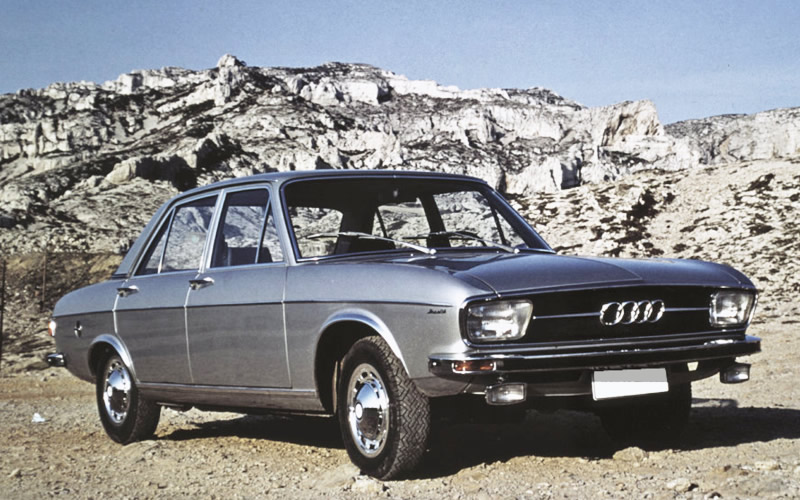
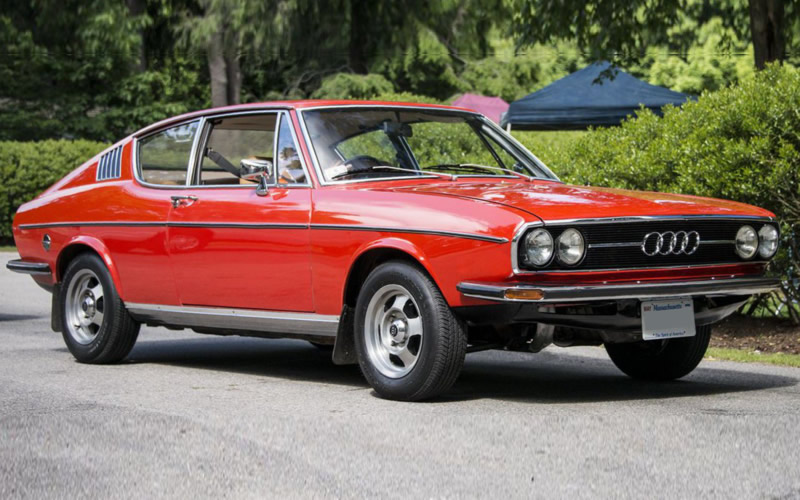
On November 26, 1968, the first Audi 100 was shown to the press for the first time as a four-door sedan on the Volkswagen Group C1 platform (F104). "100" meant the engine's horsepower. It was the largest car of the Audi brand revived in 1965 and the first with a water-cooled engine. The following year, a two-door sedan appeared, and a year later, a two-door coupe.
The first Audi 100 was in great demand and could not satisfy it at first. In the summer of 1970, a new production line had to be introduced at the Volkswagen Wolfsburg factory for its production. Over an 8-year period, 827 thousand cars were produced.
There were only two petrol engines with a capacity of 1.8 liters (80, 90 and 100 hp) and 1.9 liters (115 hp). In 1972, the 80 and 90 hp engines were replaced by a new one of the same volume and 85 hp, which ran on low-octane gasoline. The gearbox was only a 4-speed manual, but since 1970 it was possible to order a 3-speed automatic.
Audi C2 (1976-1982)
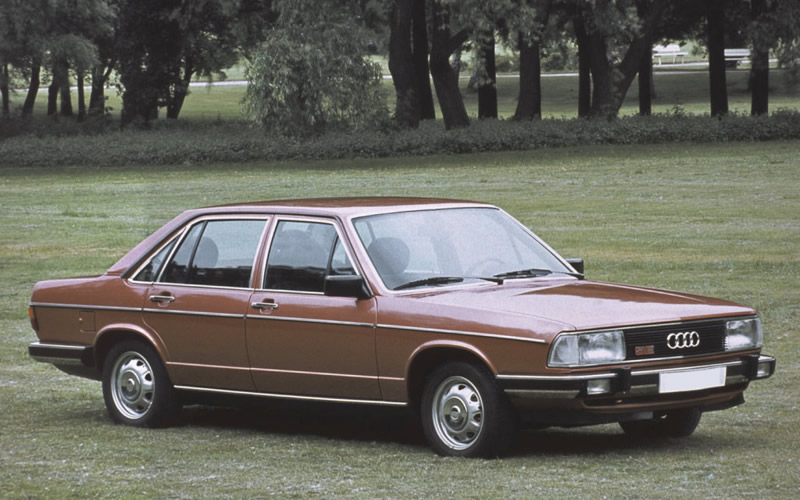
In 1976, the second generation of the Audi 100 was introduced on the Volkswagen Group C2 platform (Type 43) with a new and rare at that time 5-cylinder engine. The body design was similar to the contours of the car with the rotary piston engine NSU Ro 80. Over a 6-year period, about 1 million cars were produced.
There were three types of body styles left - 2- and 4-door sedans, the coupe was abolished, instead of it a hatchback (Avant) appeared. Basically (90%) of the cars were 4-door sedans. Two-door sedans were sold in units. In 1979, a more expensive version of the car appeared - Audi 200. In the USA, the car was called Audi 5000.
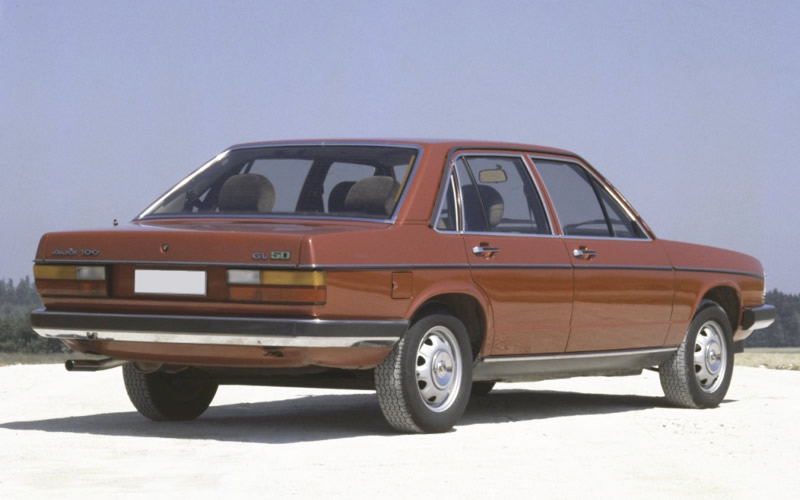
Petrol engines are represented by the following models: 4-cylinder 1.6 and 2.0 liters with 84 and 113 hp, 5-cylinder 1.9 liters (100 hp), 2.1 liters (115 hp), 2.1 liters with fuel injection (134 hp) and 2.1 liters with fuel injection and turbocharging (170 hp). For the first time, two 5-cylinder diesel engines with a volume of 2.0 liters appeared - naturally aspirated and turbocharged with 70 and 84 hp, respectively. Two gearbox options were available - a 3-speed automatic and a 5-speed manual.
Audi C3 (1982-1991)
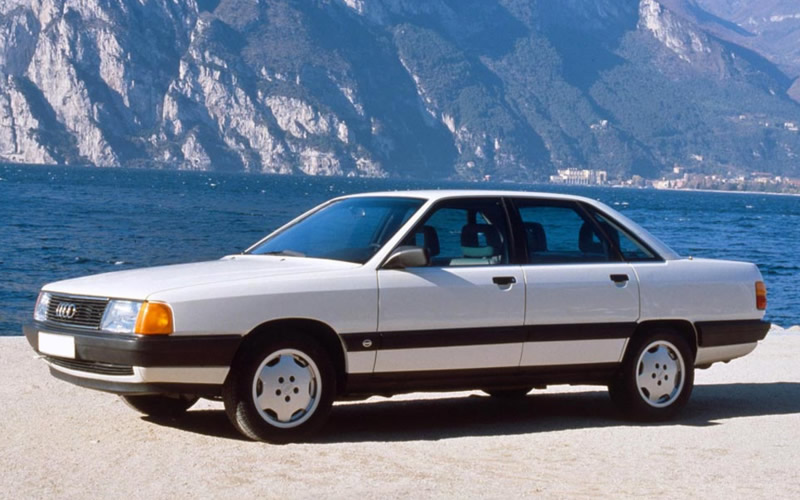
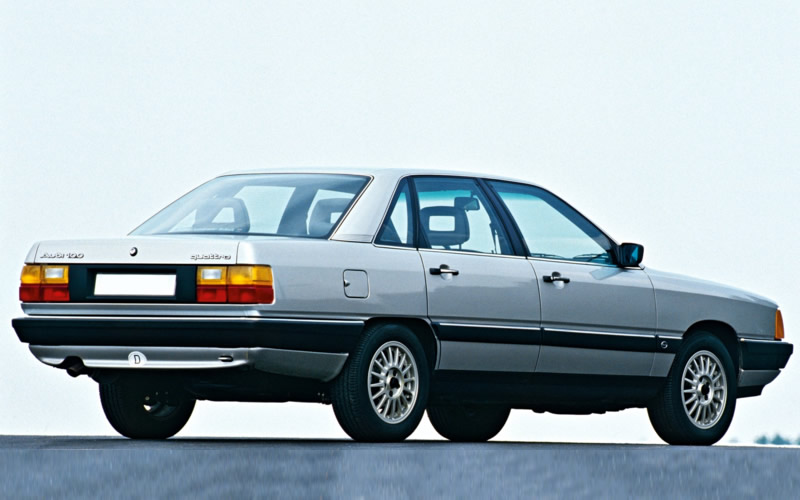
In 1982, the world saw the third generation of the Audi 100 on the Volkswagen Group C3 platform (Type 44). This car had an aerodynamic appearance, providing an outstanding drag coefficient of 0.3 for the base model, which resulted in fuel economy and an increase in top speed. The rounded shape of the body influenced the 1986 American sedan Ford Taurus and made a trend in the shape of cars in the 90s. The Procon-ten safety system was first used, which pulled the steering wheel forward during a frontal impact and removed the slack in the seat belts.
The two-door sedan models were completely removed, leaving only 4-door sedans and 5-door station wagons, which had the option of installing a third row of seats. In 1985, the body began to be completely galvanized and there were some experiments with aluminum alloy bodies. The more expensive Audi 200 model began to be produced in 1983. A total of about 1.08 million cars were produced.
In the US, the car remained under the name Audi 5000. In 1991, there was a strong (6 times) drop in sales of Audi cars in the US due to the scandal about "unintended acceleration" in the mid-1980s. Buyers complained that cars with an automatic transmission started moving by themselves, which led to emergency situations with 6 deaths and more than 700 accidents. Most likely, this was caused by errors of drivers who mixed up the pedals, but the reputation was spoiled. Sales recovered only after 15 years and they had to abandon the name Audi 5000 and return to the European "100" and "200".
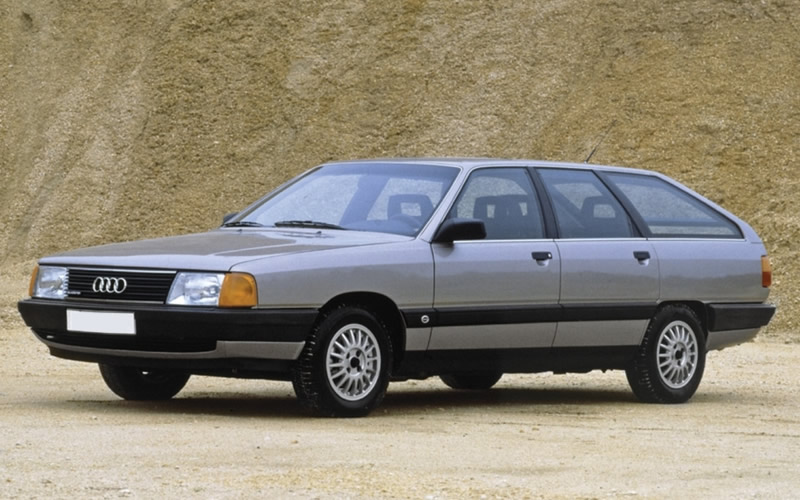
The third generation of Audi 100 has a huge selection of engines. There is only one 4-cylinder 1.8-liter gasoline engine with a capacity of 75 and 90 hp. The rest are all 5-cylinder engines with volumes of 1.9, 2.0, 2.1, 2.2 and 2.3 liters, both carburetor and with fuel injection, with a capacity of 100 to 165 hp. Diesel engines are also quite widely represented - with a volume of 2.0, 2.4 and 2.5 liters, both naturally aspirated and turbocharged, with a capacity of 70 to 120 hp. Only gasoline engines with fuel injection of 2.1 and 2.2 liters with a capacity of 136 to 220 hp were installed on the Audi 200.
Choice of one of four types of gearboxes: 4- or 5-speed manual and 3- or 4-speed automatic.
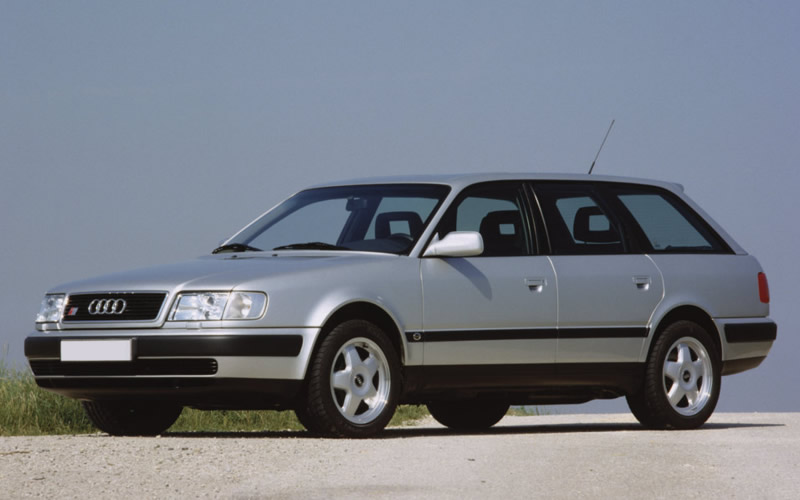
Audi C4 (1990-1994)
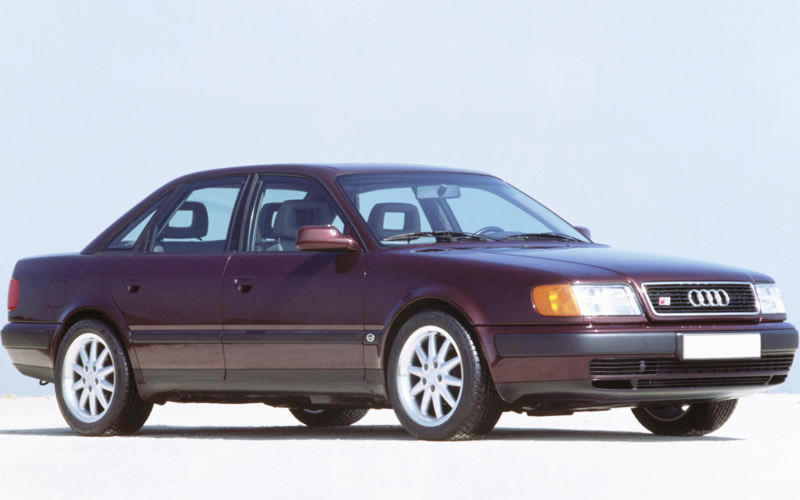
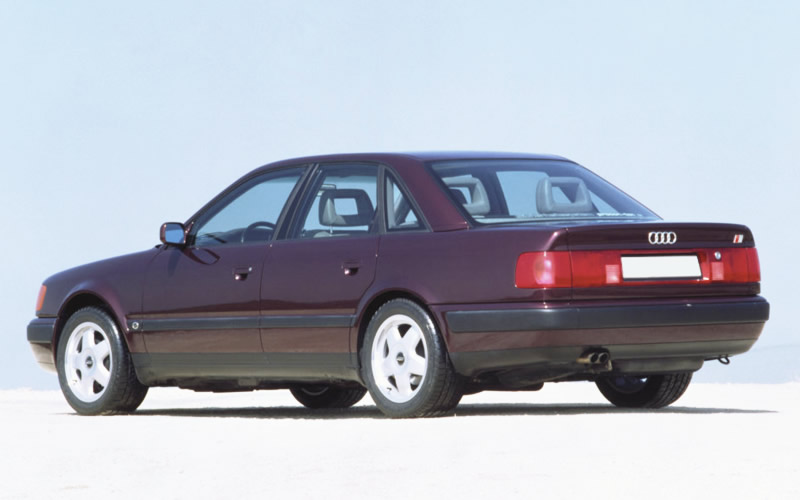
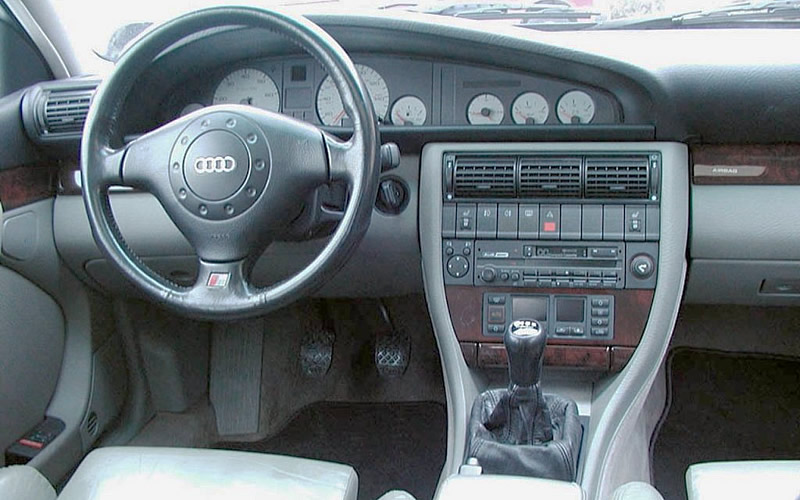
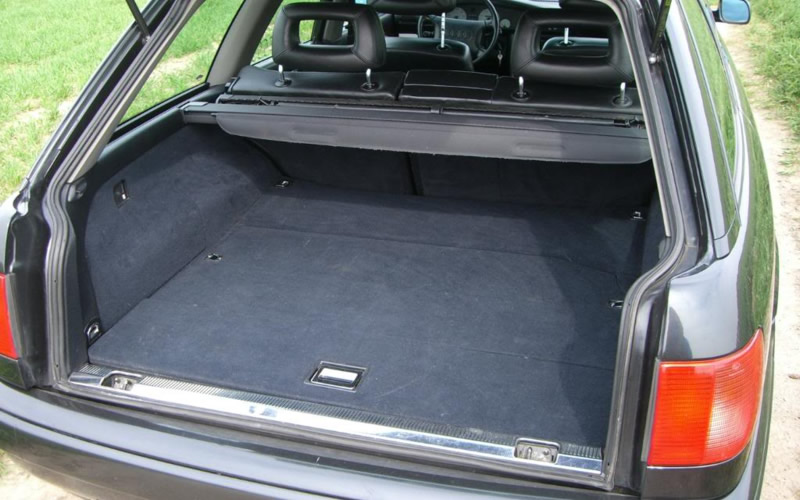
At the end of 1990, a heavily modified fourth modification of the Audi 100 was presented on the Volkswagen Group C4 platform (Type 4A). The bodies remained the same - only 4-door sedans and 5-door station wagons. The all-wheel drive option became available for the entire model range. This is the last modification with the name Audi 100. Since 1994, this model has been renamed Audi A6. The Audi V8 on the C3 platform continued to develop in parallel until 1994 and was renamed Audi A8.
Petrol engines are presented very widely. 4-cylinder 2.0-liter engines with power from 99 to 138 hp, two 5-cylinder 2.2-liter (227 hp) and 2.3-liter (131 hp), two 6-cylinder V-shaped engines with power of 2.6-liter (148 hp) and 2.8-liter (172 hp), and one 8-cylinder V-shaped engine with power of 4.2-liter with power of 276 hp. There are two diesel engines - 5-cylinder 2.4-liter (80 hp) and 2.5-liter (114 hp). There are three transmissions to choose from - 4-speed automatic, 5- and 6-speed manual.