
Repair Chevrolet Repair Toyota Repair Honda Repair AvtoVAZ Repair Mercedes-Benz Repair BMW Repair Opel
Home  |  Contacts  |  Sitemap  |    
English Русский
Български
Беларускі
Український
Српски
Hrvatski
Română
Polski
Slovenský
Magyar
AudiManual.ru


  • AUDI 80
  • AUDI 100
  • AUDI A3
  • AUDI A4
  • AUDI A6
  • AUDI A8
  • AUDI Q
  • OTHER
  • ARTICLES
C4 (1990-1994) C4 (1990-1994, petrol) C3 (1982-1990) C3 (1982-1990, petrol) C3 (1982-1990, diesel)

Checking the oil level in transmission units (Audi 100 C4)

  • Home
  • Audi 100
  • C4 (1990-1994)
  • Power unit
  • Lubrication system
  • Checking the oil level in transmission units
            0
Table of contents: Checking the gearbox for leaks ↓ Choosing the Right Oil (transmission… ↓ Checking the ATF transmission fluid… ↓ Main gear on automatic transmission ↓ Transmission fluid replacement ↓ Checking the fluid level in a… ↓

Checking the gearbox for leaks


In the gearbox, oil is not consumed as in the engine, but can leak out in loose bridges. If the gearbox housing is not visible in the engine, but can leak out in loose bridges. If the gearbox housing is not visible
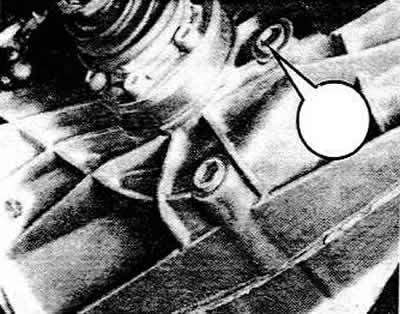
Manual gearbox (early models)
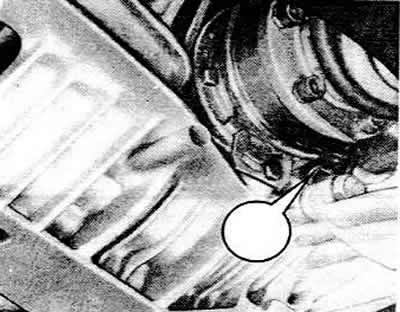
Manual gearbox (early models)


Automatic transmission
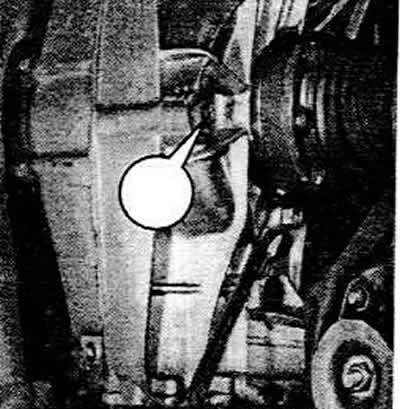
Automatic transmission


Five-cylinder engine
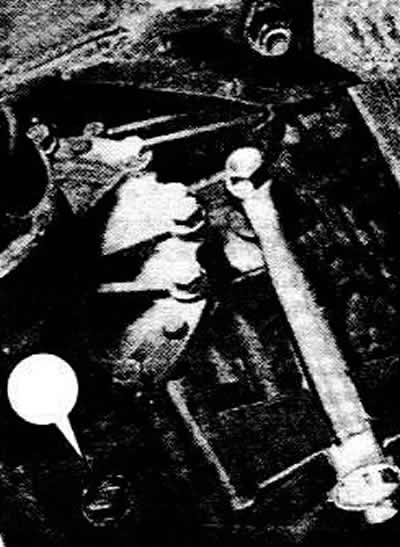
Five-cylinder engine


Four-cylinder engine

Four-cylinder engine


Support the car in a horizontal position.


Remove the 17mm Allen screw.

If some oil leaks out, the level is normal.

Otherwise, insert your index finger into the hole and check if the oil level reaches the hole. If yes, then the level is OK.

If there is not enough oil, the workshop should top up with the specified type of oil to the required level.

Note: It is not recommended to pour oil yourself using a funnel and a long hose due to its high viscosity.


Choosing the Right Oil (transmission fluid)


Transmission fluid is poured into the gearbox for long-term operation. Metal particles are collected using a magnet.

Audi recommends using the following types of transmission fluid:
  • Gearboxes - only synthetic oil of viscosity grade SAE75 W-90.

Checking the ATF transmission fluid level in an automatic transmission


The automatic transmission is filled with synthetic ATF fluid (Automatic Transmission Fluid). It serves as a lubricant and to regulate the pressure in the gearbox. ATF fluid should be marked Dexron and then a number. Using the wrong type of fluid can cause gearbox malfunctions.

To check, the ATF fluid must be warmed up to the warmth of your hand, for this you should drive for five to ten minutes. The volume of the fluid changes depending on the temperature. When cold, the level is lower, after a long drive - higher.

Apply the handbrake, move the selector lever to position "P", and start the engine at idle speed.

The dipstick is located on the engine at the rear left in the direction of travel and is equipped with a plastic flag, it should be wiped with a clean, thread-free cloth.


Insert the dipstick and pull it out again. The amount of liquid between the upper and lower marks is 0.66 l for a dipstick with a plastic flag and 0.23 l for a dipstick without a flag.

The level should be between the marks. The lower mark of the dipstick without a flag is used to fill in new fluid when replacing it.

Until mid-1985, ATF fluid was produced in pink and transparent colors. Later, dark brown fluid was produced.

If liquid (no matter what brand) it smells burnt, which means it's spoiled.

If the fluid level is low, you should not only top it up, but also check the gearbox for leaks. If there is a leak, contact a workshop.

If the fluid level is too high, it may indicate damage to the gasket between the planetary gear and the final drive.

Check the fluid level in the final drive.

If there is too little fluid, you should contact a workshop for repair and replacement of the fluid.

If the level in the main gear is normal, excess fluid from the gearbox should be drained, as this may cause damage to the gearbox.

Main gear on automatic transmission


The final drive of an automatic transmission uses a different type of fluid than the manual transmission. It must have a viscosity of SAE 9 and be designated API GL5 or MIL-L-2105B.

Checking the level is necessary in the following cases:
  • If the main gear housing is contaminated on the outside with transmission fluid.
  • If the fluid level in the automatic transmission has dropped or risen, and leaks are not visible from the outside. In this case, there may be an exchange of fluid between the planetary gear and the main gear, as described above.


Transmission fluid replacement


Under normal operation, the transmission fluid should be replaced every 45,000 km. If the vehicle was driven mainly on short trips or in poor road conditions, the transmission fluid should be replaced after 3,000 km. To do this, drain the old fluid and clean the oil pan and mesh filter at the same time (in the workshop).

Checking the fluid level in a neutral hydraulic device


Vehicles with power steering and/or adjustable ride height are equipped with a central hydraulic unit. Hydraulic fluid level (type AOE 041 0201 or Aral 1010) it is checked in a transparent tank at the rear of the engine compartment.

To check the fluid level, start the car at idle speed.

Cars without adjustable ground clearance are equipped with a cylindrical expansion tank. When the cap is removed, the float of the fluid level control device is visible. The fluid level should be between two marks. When topping up, add fluid up to the "Max" mark.
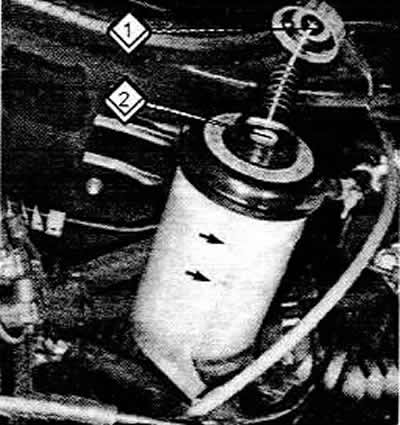
Cars without adjustable ground clearance are equipped with a cylindrical expansion tank. When the…


Vehicles with adjustable ride height are equipped with a larger expansion tank, which has two pairs of marks for unladen and fully laden vehicle.

If the car is empty, the fluid level should be between the two upper marks. If it is fully loaded, between the two lower marks.
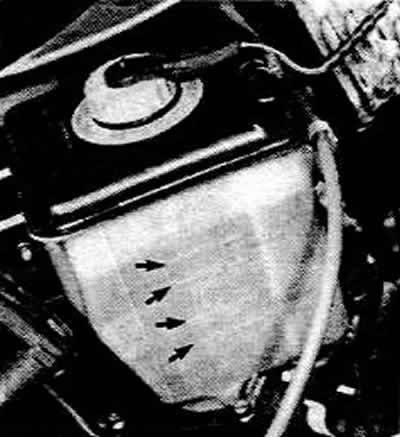


If the car is empty, the fluid level should be between the two upper marks. If it is fully loaded,…


When topping up, add fluid up to the "Max" mark. Usually, a lack of fluid indicates a leak in the system. In this case, you should not just top up the fluid, but first find the leak points.
The article was checked by auto expert Georgy Rodionov
This article is available at russian, bulgarian, belarusian, ukrainian, serbian, croatian, romanian, polish, slovak, hungarian

Share information:
Previous articles
Audi 100 C4: Lubrication system
Next articles

Engine oil change
Checking the oil level (Continuous monitoring)
Lubrication of the ignition distributor
Lubrication of rods, hinges and locks
Operation of the lubrication system
Removal and installation the oil pan


Similar articles on other Audi car models:
Manual transmission — checking the oil level Audi 80 B4 (1991-1996)
Checking the transmission oil level of the manual transmission Audi A3 Type 8L (1996-2003)
Checking the oil level in a manual transmission Audi A4 B5 (1994-2001, petrol)
Checking the automatic transmission fluid level Audi A6 C4 (1994-1997)
Checking the oil level in a manual transmission Audi A8 D2 (1994-2002)
Checking the transmission oil level in the manual transmission Audi Q5 Type 8R (2008-2017)
Engine — Checking Oil Level Audi A2 (1999-2005)
Link to this page in different formats


Visitor comments

No comments yet


How much will 24 + 33 =


100(C4, 1990-1994) 
  • General information
  • User manual
  • Power unit
  • Engine repair
  • Ignition system
  • Fuel system (gasoline)
  • Fuel system (diesel)
  • Lubrication system
  • Cooling system
  • Exhaust system
  • Transmission
  • Clutch
  • Car gearbox
  • Drive shafts
  • Chassis
  • Car suspension
  • Steering
  • Wheels and tires
  • Brake system
  • Body
  • Ventilation and heating
  • Body repair
  • Electrical equipment
  • Power devices
  • Lighting and appliances
  • Electrical circuits
 
100(C4, 1990-1994, petrol) 
  • General information
  • Operation and maintenance
  • Power unit
  • Engine repair
  • Exhaust system
  • Cooling system
  • Supply system
  • Air filter
  • Mono-Motronic injection system
  • Digifant injection system
  • KE-III-Jetronic and KE-Motronic
  • MPI and MPFI injection system
  • Transmission
  • Clutch
  • Car gearbox
  • Chassis
  • Suspension and steering
  • Brake system
  • Wheels and tires
  • Body
  • Exterior
  • Interior
  • Electrical equipment
  • Fuses and relays
  • Power devices
  • Ignition system
  • Lighting and signaling
  • Equipment and devices
  • Electrical circuits
 
100(C3, 1982-1990) 
  • General information
  • User manual
  • Maintenance
  • Specifications
  • Power unit
  • Engines 4-cylinder
  • Engines 5-cylinder
  • Diesel engine
  • Cooling system
  • Power system (carburetor)
  • Power system (injector)
  • Fuel system (diesel)
  • Transistor ignition system
  • Electronic ignition system
  • Transmission
  • Clutch
  • 4 speed gearbox 014
  • 5 speed gearbox 013 and 093
  • 5 speed gearbox 016 and 012
  • Shift mechanism KP 016
  • Automatic transmission
  • Front wheel drive
  • Chassis
  • Front suspension
  • Rear suspension
  • Steering
  • Brake system
  • Body
  • Body elements
  • Electrical equipment
  • Lighting and appliances
  • Power devices
  • Electrical circuits
 
100(C3, 1982-1990, petrol) 
  • General information
  • Maintenance and operation
  • 4 cylinder engine
  • Engine repair
  • Cooling and lubrication system
  • Supply system
  • Ignition system
  • 5 cylinder engine
  • Engine repair
  • Cooling and lubrication system
  • Supply system
  • Ignition system
  • Transmission
  • Clutch and drive shafts
  • 4 speed gearbox 014
  • 5 speed gearbox 013 and 093
  • 5 speed gearbox 016 and 012
  • Automatic gearbox
  • Chassis
  • Steering
  • Front suspension
  • Rear suspension
  • Brake system
  • Body
  • Body elements
  • Doors, locks and windows
  • Body repair
  • Electrical equipment
  • Equipment and devices
  • Power devices
  • Electrical circuits
 
100(C3, 1982-1990, diesel) 
  • General information
  • User manual
  • Maintenance
  • Troubleshooting
  • Power unit
  • Engine in a car
  • Engine removed
  • Cooling system
  • Fuel system
  • Exhaust system
  • Starting and charging
  • Preheating
  • Transmission
  • Clutch
  • Mechanical gearbox
  • Automatic gearbox
  • Drive shafts
  • Chassis
  • Brake system
  • Suspension
  • Steering
  • Body
  • Exterior
  • Interior
  • Electrical equipment
  • Equipment and devices
  • Electrical circuits
 
AudiManual.ru © 2017-2026 · Mobile version · Feedback · Sitemap: EN BG BY UA RS HR RO PL SK HU · Site search · News and articles
80 B2 · 80 B3 petrol · 80 B3 · 80 B4 · 100 C3 diesel · 100 C3 petrol · 100 C3 · 100 C4 petrol · 100 C4 · A3 Type 8L · A4 B5 petrol · A4 B5 · A4 B6 petrol · A4 B6 · A4 B7 · A4 B8 · A6 C4 · A6 C5 · A6 C5 Allroad · A8 D2 · Q5 Type 8R · Q7 Typ 4L · Audi A2 ·
This site uses cookies 🍪. Click the button to accept this fact.