



Four-cylinder engine
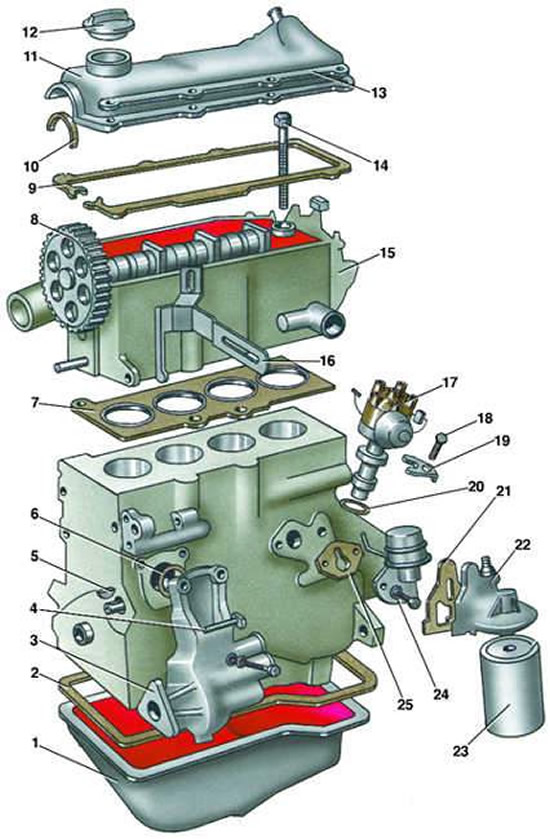
- 1 - oil pan;
- 2 - crankcase gasket;
- 3 - water pump;
- 4 - generator mounting bolt;
- 5 - key;
- 6 - water pump sealing ring;
- 7 - cylinder head gasket;
- 8 - gear camshaft wheel;
- 9 - cylinder head cover gasket;
- 10 - gasket;
- 11 - cylinder head cover;
- 12 - oil filler cap;
- 13 - pressure plate;
- 14 - cylinder head mounting bolt;
- 15 - cylinder head;
- 16 - Generator mounting bracket;
- 17 - ignition distributor;
- 18 - ignition distributor mounting bolt;
- 19 - Ignition distributor holder;
- 20 - distributor sealing ring;
- 21 - filter gasket;
- 22 - Oil filter cover;
- 23 - oil filter;
- 24 - fuel pump;
- 25 - Fuel pump gasket
The four-cylinder engines installed in the Audi 100 cars have a cast-iron cylinder block with a block head cast from aluminum alloy. The block head contains a camshaft, which is driven by a toothed belt from the crankshaft. The same belt drives the intermediate shaft, which in turn is the drive for the ignition distributor, oil and fuel pumps.
The crankshaft is a steel forged five-bearing. The central main bearings can be with flanges that act as thrust rings, or without flanges, but with thrust rings. The pistons are cast from an aluminum alloy with steel inserts. Two compression rings and one oil scraper ring are installed on the piston.
The valves are actuated by the camshaft via tappets, with hydraulic tappets being installed since September 1985. The valve guides are made of special brass and are pressed into the cylinder head.
The engine is equipped with a gear oil pump mounted in the crankcase and a full-flow oil filter on the left side of the cylinder block.
The original article is posted on the resource AudiManual