



Fuel tank ventilation system in Audi-100
The fuel tank ventilation line is connected to the fuel level sensor. A pressure valve is mounted in this line. The line is then connected to the activated carbon tank. If there is excess pressure, (from 0.2-0.3 bar) the valve closes and prevents fuel from entering the activated carbon tank during refueling.
After passing this valve, the ventilation pipe does not lead directly outside, however, but ends in a tank with activated carbon in the right front wheel arch. Its purpose is to catch the fuel vapors passing through this pipe (caused, for example, by heating the contents of a fuel tank). When the engine is running, these gases are sucked out of the activated carbon tank again at a certain engine load. When this should happen is determined by a load-controlled electromagnetic valve.
The activated carbon tank also needs ventilation from below. The following valve regulates this process and also prevents water splashes from penetrating.
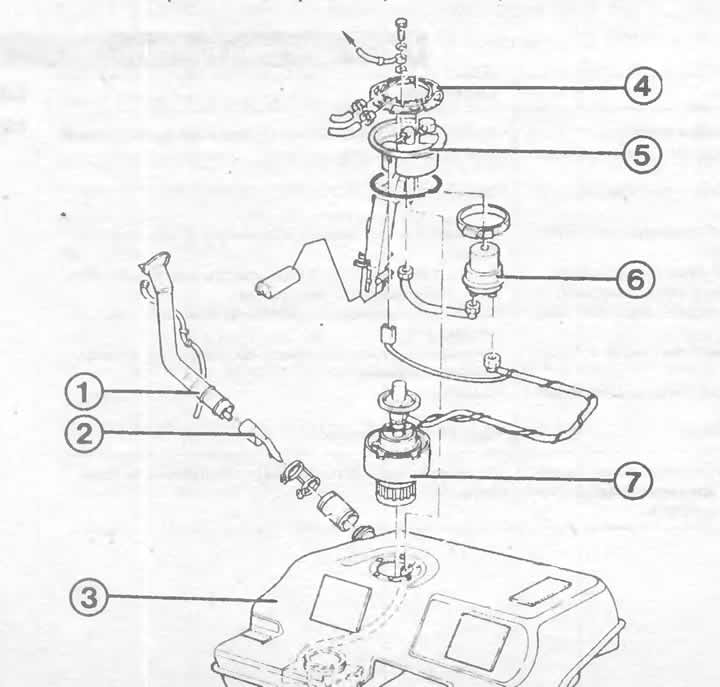
The illustration shows individual parts from the inside and outside of the fuel tank:
1 - filling pipe;
2 - nozzle for filling pipe;
3 - fuel tank;
4 - retaining ring;
5 — fuel level sensor (with locking flange);
6 - fuel accumulator (only in vehicles with KE-lll-Jetronic or KE-Motronic injection system);
7 — fuel pump with air intake housing.
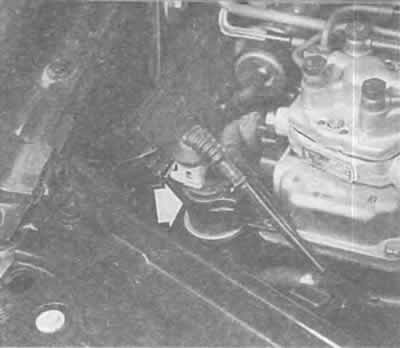
The electromagnetic valve of the activated carbon tank is located in vehicles with the KE-lll-Jetronic or KE-Motronic injection system at the front on the fuel dispenser.
Independently of the above-mentioned fuel tank ventilation system, there is an emergency ventilation line directly in the filler pipe. It only prevents fuel from spilling out when refueling.
The original text is available on the website AUDIMANUAL.RU