



Table of contents: Thermostat fault diagnostics ↓ Removal the thermostat ↓ Checking the Thermostat ↓
In simple terms, the thermostat ensures the circulation of the coolant through a small or large cooling circuit, i.e. bypassing the radiator or including it. The choice of circuit depends on the temperature of the liquid. This is due to the container filled with a low-melting substance and a valve plate connected to it. When heated, the substance melts, expands and opens the valve plate. When the temperature of the coolant increases, the thermostat opens, increasing the flow of cold coolant from the radiator. If the temperature drops, the thermostat pushes the valve plate to the "closed" position and blocks the flow of cold coolant.
Thermostat fault diagnostics
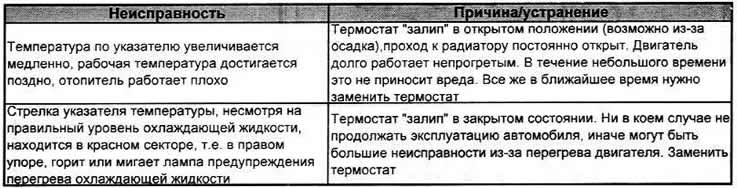
Note: If the engine "boils" due to a faulty thermostat, the only thing that can help is towing or replacing the thermostat on the spot. If you decide to replace it, you need to wait until the coolant temperature drops.
Use a suitable container to collect the coolant.
Removal the thermostat
Removing the thermostat on the road is problematic. It is located quite far down, so you will have to drain almost all the coolant. Also, with a hot engine, it will take quite a while before you can start working without the risk of burning your hands. When installing a new thermostat, you will need to replace the O-ring on the thermostat housing or on the water pump housing.
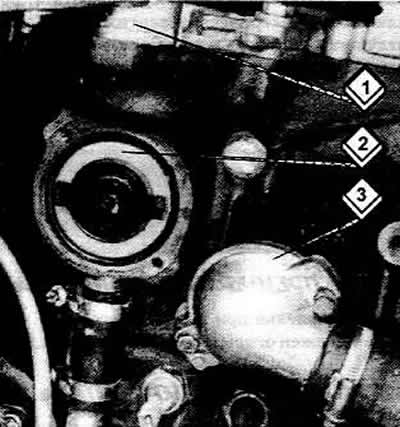
Removal the thermostat on a five-cylinder engine
1 Water pump housing
After unscrewing the housing cover (3) on the left side of the engine, access to the thermostat (2) is opened.
Drain the coolant completely, support the vehicle from the front with a four-cylinder engine and secure it.
Unscrew the hose flange from the bottom of the water pump housing or thermostat housing and push it to the side.
When installing a new thermostat, its small sealing plate should face the engine.
Tighten the bolts on the thermostat housing or on the water pump housing to 1 Nm.
Remove the thermostat.
Place the thermostat in a container of water and heat the water.
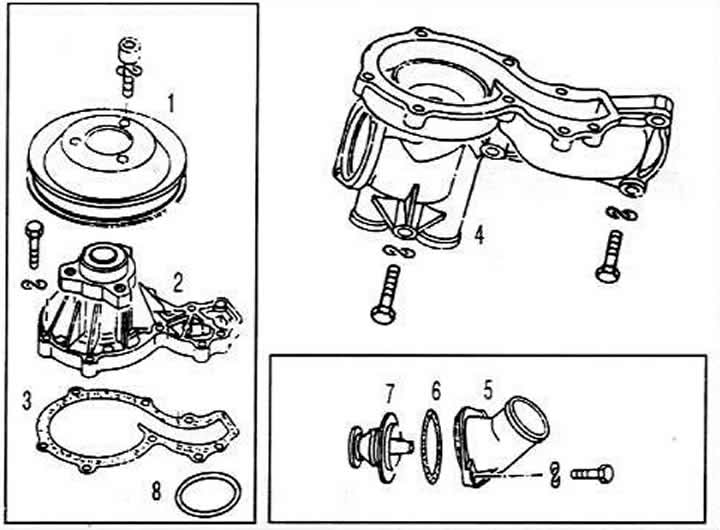
Removal the thermostat on a four-cylinder engine
1 V-belt pulley
2 Water pump bearing housing
3 Gasket
4 Water pump housing
5 Cover with hose flange
6 Sealing ring
7 Thermostat
Checking the Thermostat
Using a thermometer, you can independently check whether the thermostat opens at the required temperature. The data for its opening are given in the table and depend on the engine type.
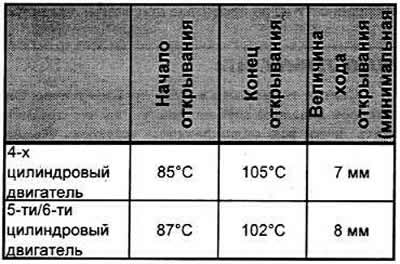
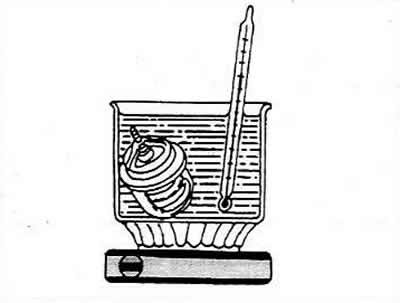
Check if the valve plate lifts out of its place (opens completely).
Check the full opening stroke.
[This publication is borrowed from the resource: AUDIMANUAL.RU]