



Removal
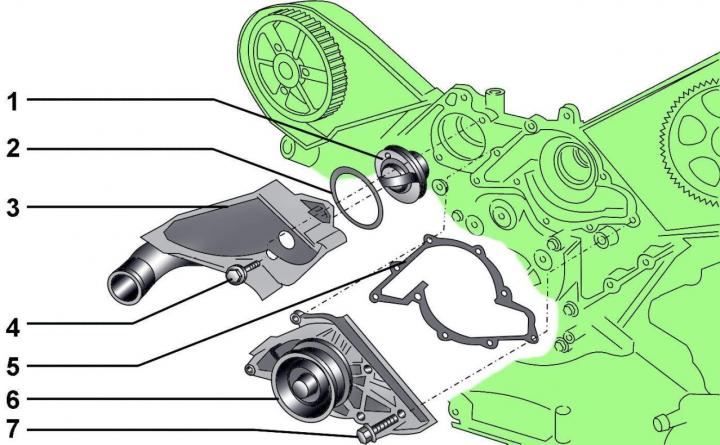
Fig. 7–1. Water pump and thermostat for vehicles with 2.8L gasoline engines: 1 – thermostat; 2 – sealing ring; 3 – thermostat housing; 4 – bolt, 10 Nm; 5 – gasket; 6 – water pump; 7 – bolt, 10 Nm
The thermostat is located in the housing (Fig. 7–1), installed on the engine cylinder block.
Drain the coolant.
Remove the poly V-belt and its tensioning mechanism.
Remove the left and right timing belt covers.
Using a marker, chalk or paint, mark the direction of rotation of the timing belt.
Loosen the timing belt tension. Turn the crankshaft slightly in both directions to loosen the timing belt tension and remove the timing belt from the tension roller and the right camshaft pulley.
To protect the timing belt from coolant, cover it with polyethylene.
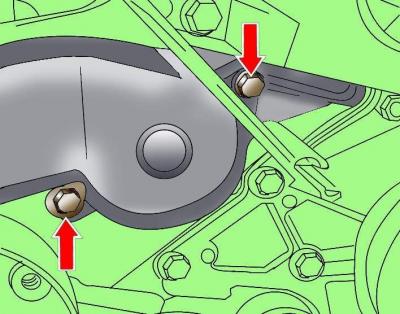
Fig. 7–2. Location of thermostat housing mounting bolts
Remove the two bolts and remove the thermostat housing from the front of the cylinder head (Fig. 7-2).
Remove the sealing ring and thermostat from the cylinder head. Check the thermostat for proper operation.
Installation
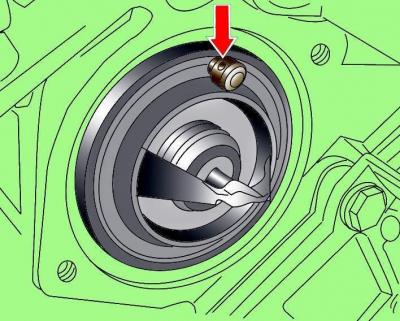
Fig. 7-3. Correct thermostat location on 2.8L gasoline engines
Install the thermostat into the cylinder head with the air bleed valve facing up (Fig. 7-3).
Install the thermostat housing with a new sealing ring and secure with bolts, tightening them to a torque of 10 Nm.
Install the timing belt onto the camshaft pulley.
Install the poly V-belt.
Fill the cooling system with coolant.
Start the engine and check the cooling system for leaks.
Checking the functionality of the thermostat
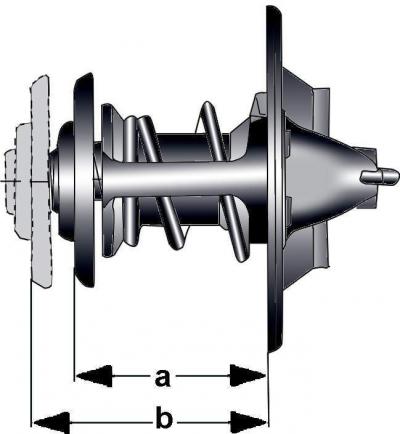
Fig. 7–4. Operating positions of the thermostat valve: a - valve closed; b - valve open
Measure the length a closed thermostat (Fig. 7–4).
You can roughly check the thermostat's functionality this way: hang it on a thread in a glass vessel filled with water and heat the water to boiling. When the water boils, the thermostat valve should open. Otherwise, replace it.
The opening temperature of the thermostat valve is indicated on its body.
When the thermostat is heated to the boiling point of water, the length b the open thermostat with the open valve must be greater than the length a with the valve closed by 7 mm (see Fig. 7–4).
The thermostat, the valve of which does not close when the water cools, also needs to be replaced.