



Warning! To disassemble the rear suspension strut, you will need a compressor to compress the springs (spring releaser). Be careful even if you have a compressor - the spring is compressed with great force and can shoot out.
1. After removing the rack, clean it from any dirt and clamp it in a vice with soft (aluminum or wood) jaws to avoid damaging the lower strut support. Make alignment marks between the strut supports, spring and shock absorber housing to facilitate reassembly.
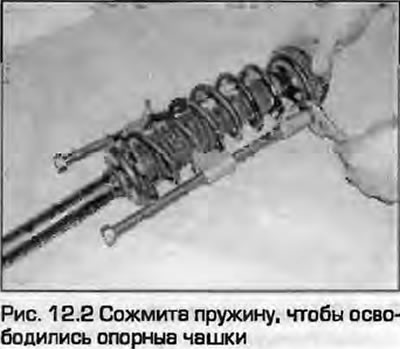
2. Install the spring compressors and compress the spring so that the lower coil moves away from the support cup (Fig. 12.2).
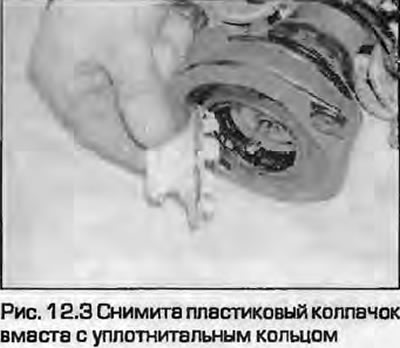
3. Remove the plastic cap together with the sealing ring (Fig. 12.3).
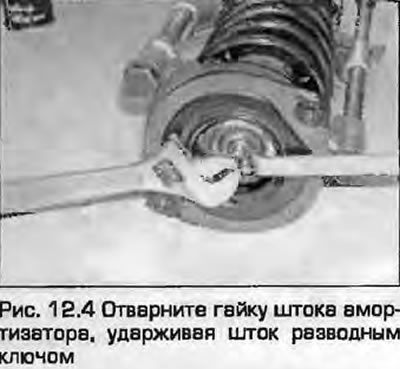
4. Unscrew the nut at the top of the rack, holding the rod with a hex key (Fig. 12.4).
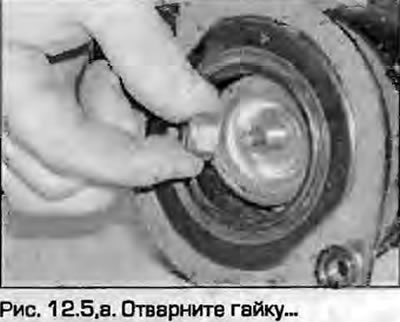
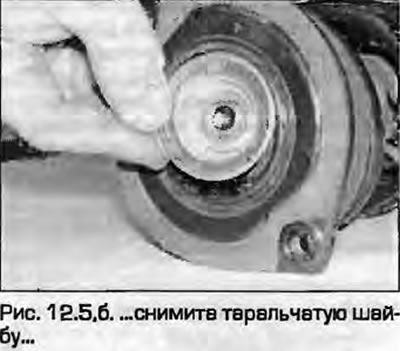
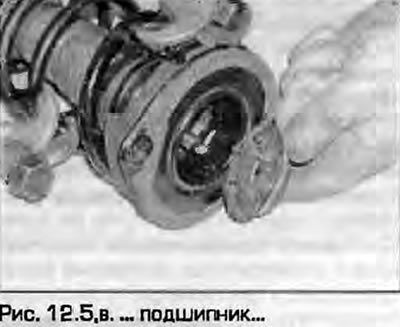
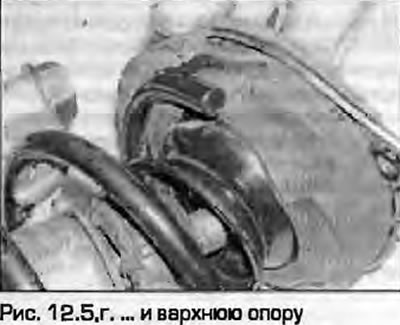
5. After unscrewing the nut, remove the disc washer, bearing, upper spring cup and support (fig. 12.5, a-g).
 |
 |
 |
 |
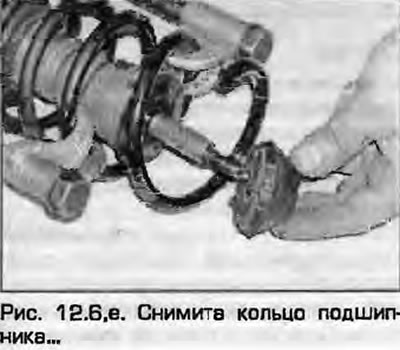
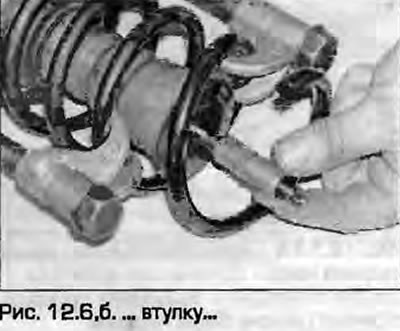
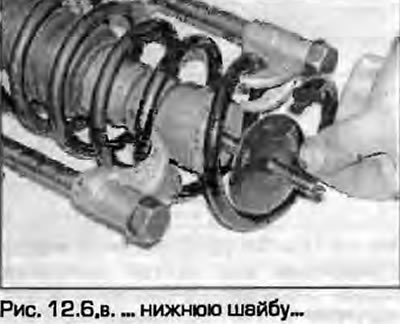
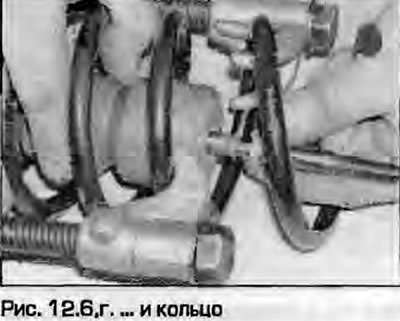
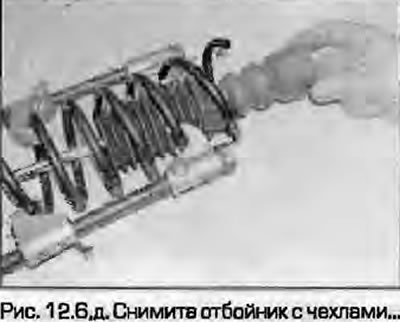
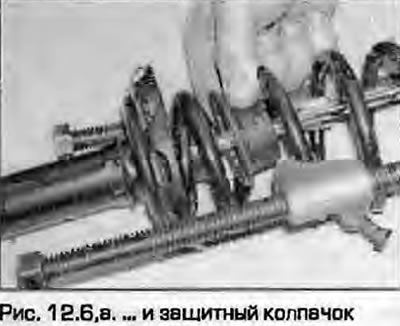
6. Remove the bushing (if provided), bearing ring, lower washer and ring. Remove the bump stop with the lower ring and plastic covers with a protective cap. Remove the spring with compressors, remove the ring and lower spring support from the shock absorber housing (fig. 12.6, a-c).
 |
 |
 |
 |
 |
 |
7 Check for shock absorber leaks. Check for wear or other damage to the rod along its entire length and for corrosion or other damage to the shock absorber body. Holding the shock absorber vertically, check the shock absorber for operability by moving the rod up and down at full stroke, then at short strokes of 50...100 mm. In both cases, the resistance to movement should be soft and continuous. If the rod moves unevenly or is damaged, it must be replaced.
Note: Shock absorbers are replaced in pairs not of one axle, to maintain the suspension characteristics. Different models are installed on different cars - the purchased shock absorbers must fit your model.
8. Inspect all components of the rack and replace any that are defective.
9. Install the lower spring cup with the ring, making sure that the spring stops are installed at an angle of 90° to the axis of the lower strut mounting bolt.
10. Place the protective cap on the shock absorber rod, then the plastic dust boots, lower ring, bump stop, thrust ring, lower washer, bearing ring and bushing.
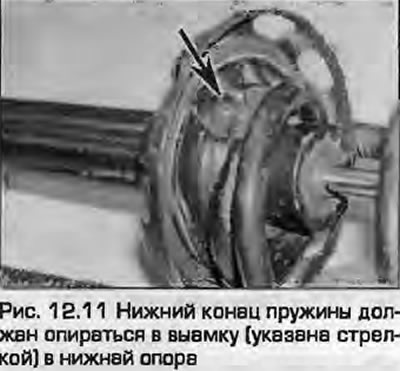
11. Install the compressed spring on the lower support cup. Make sure that the end of the lower coil of the spring rests against the protrusion on the spring support (fig. 12.11).
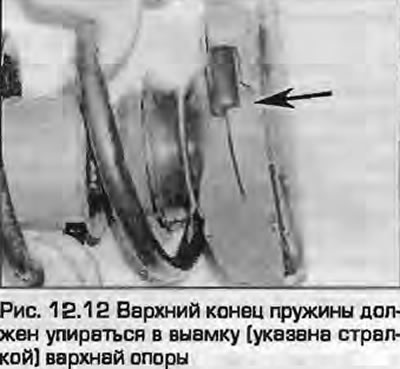
12. Lubricate the upper spring support with talc and install it on the upper spring coil, resting its end against the support protrusion (mark "Federanfang") (Fig. 12.12).
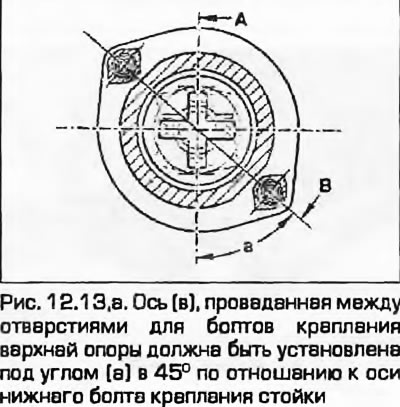
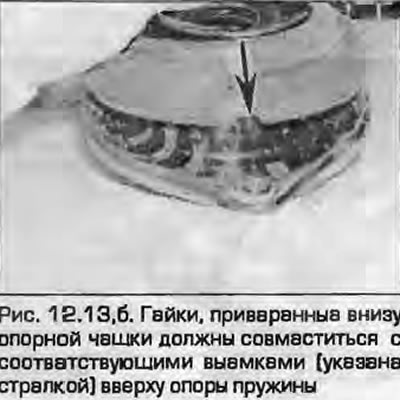
13. Install the upper support cup, observing the previously applied marks. The holes for the upper support mounting bolts were at an angle of 45° to the axis of the lower mounting bolt. Make sure that the nuts welded to the bottom of the cup enter the corresponding recesses in the spring support (fig. 12.13, a, b).
 |
 |
14. Install the bearing, then the disc washer. Install a new gasket on the upper spring cup.
15. Extend the shock absorber piston rod completely and screw on a new piston rod nut. Using the method used for removal, hold the piston rod and tighten the nut to the specified torque.
16. Make sure the unit is assembled correctly (both ends of the spring should rest against the protrusions on the supports).
17. Press the cup into place in the upper spring cup. The cross-shaped protrusions must be installed perpendicular to the axis of the lower strut mounting bolt (see Fig. 12.13, a).
18. Once again make sure that the strut is assembled correctly and carefully remove the spring compressors.
19. Install the stand on the vehicle as described in paragraph 11.
20. Install the stand on the vehicle as described in paragraph 3.
[This article was copied from the website AUDIMANUAL.ru]