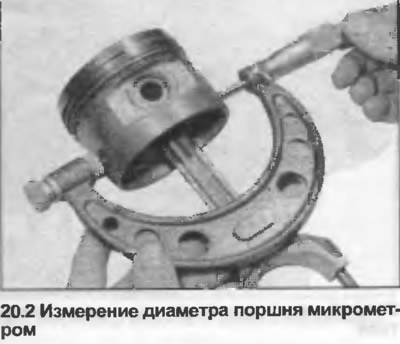
2. Measure the piston diameter at a distance of 10 mm from the lower edge of the skirt, and at an angle of 90° to the axis of the piston pin. Compare the obtained value with the information in the Specifications (photo). Permissible maximum wear is 0.04 mm.
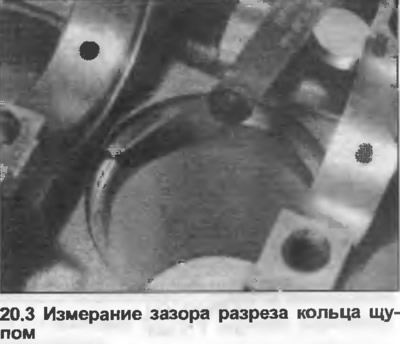
3. Insert the piston ring into the cylinder bore and use the piston to push it down the bore until it is approximately 15 mm from the base of the cylinder. Measure the ring gap with a feeler gauge (photo). If the gap is greater than the specified limit, look for visible signs of bore wear, or if a new piston ring is available, measure the gap of the new ring in the cylinder bore.
4. To measure the cylinder bore diameter directly, a bore gauge is required. If the specified tool is available, measure the diameter of each cylinder bore at six points and compare the data with the specified wear limit. The cylinder bore diameter should be measured at 10 mm from the top, 10 mm from the base, and in the middle. At each of the three specified distances, measure the diameter parallel and perpendicular to the crankshaft axis. If the cylinder bore wear is outside the specified limit, the cylinders must be bored and new pistons installed.
5. If one bore needs to be reamed, all four cylinders must be reamed and a new set of pistons must be used, otherwise the engine will not be balanced. Connecting rods must be installed as complete sets.
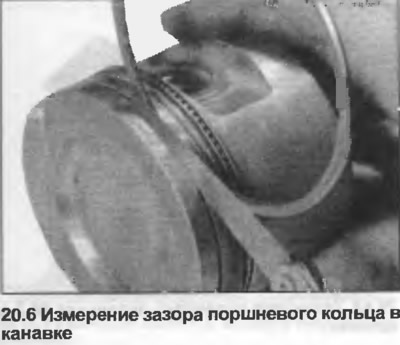
6. Measure the gap between each piston ring and the groove side as shown in the photo. If there is excessive clearance, the groove is probably worn, not the ring, so a new piston will be needed. If new piston rings are being installed, the wear ridge at the top of the cylinder bore will need to be removed, or the top ring will need to be stepped off.