



Table of contents: Oil pan and oil. pump ↓ Oil pan - sequence, tightening ↓ Upper part of the oil. pallet -… ↓ Oil separator - aftertightening ↓ Removal and installation the oil… ↓ Removal and installation of oil.… ↓ Removal and installation of oil. pump ↓ Removal and installation of oil.… ↓ Oil filter, oil cooler ↓ Removal and installation the oil… ↓ Checking oil pressure ↓
Oil pan and oil. pump
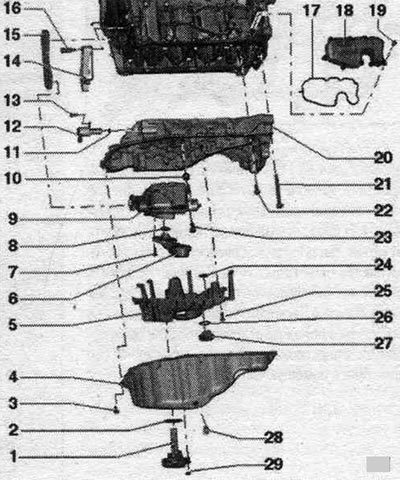
1. Oil level and temperature sensor "G266". 2. Gasket: replace. 3. Bolt: replace. 4. Oil pan. 5. Oil separator: replace. 6. Suction line: clean the filter if dirty. 7. Bolt: 9 Nm. 8. Sealing ring: replace, lubricate with oil. 9. Oil pump. 10. Centering sleeve. 11. Sealing ring: replace. 12. Oil pressure regulating valve "N428". 13. Bolt: 9 Nm. 14. Chain tensioner. 15. Oil drive chain. pump: mark the direction of movement before removing. 16. Bolt: 9 Nm. 17. Gasket: replace. 18. Oil separator. 19. Bolt. 20. Upper part of oil. pallet. 21/22. Bolt: replace. 23. Bolt: 20 Nm. 24. Gasket. 25. Bolt: 9 Nm. 26. Gasket. 27. Check valve. 28. Oil drain plug: replace, 30 Nm. 29. Nut: 9 Nm.
Oil pan - sequence, tightening
Tighten bolts "1...19" in 2 stages as follows.
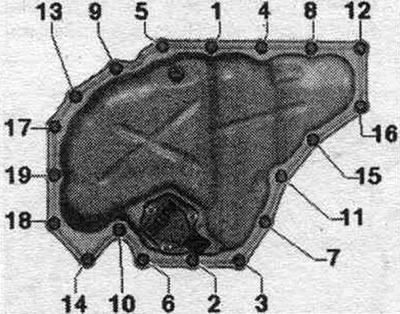
1. Tighten the bolts to 8 Nm; 2. Tighten the bolts by 45°.
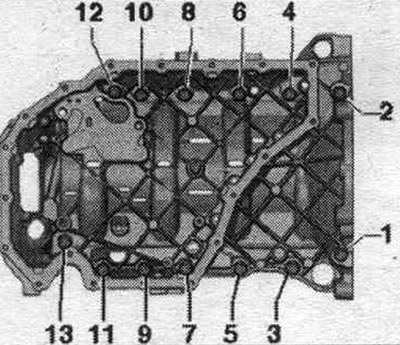
Upper part of the oil. pallet - sequential tightening
Tighten bolts "1...13" in 2 stages as follows.
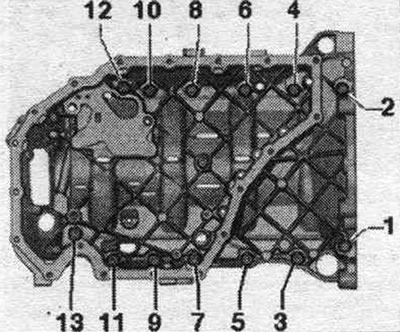
1. Tighten the bolts to a torque of 15 Nm; 2. Tighten the bolts by 90°.
Oil separator - aftertightening
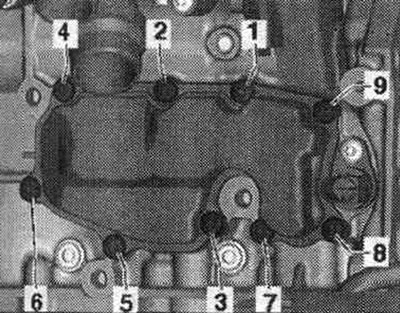
Tighten the bolts in sequence. "1...9" with a torque of 9Nm.
Removal and installation the oil pre-cleaning sump
Support the engine. Loosen the "arrow" hose clamps and remove the air duct hose.
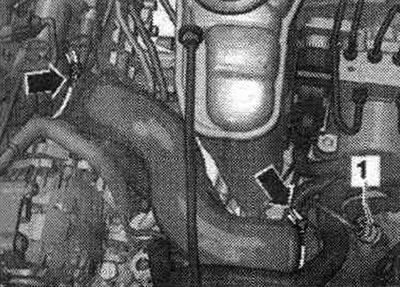
Remove the front left wheel. Remove sound insulation. Remove the left wheel arch liner. Unscrew bolt "1" of the engine mount on the left. Remove the left engine mount.
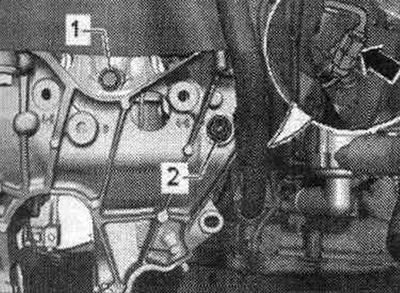
Remove the oil pre-cleaning sump "1".
Installation in reverse order.
Removal and installation of oil. crankcase
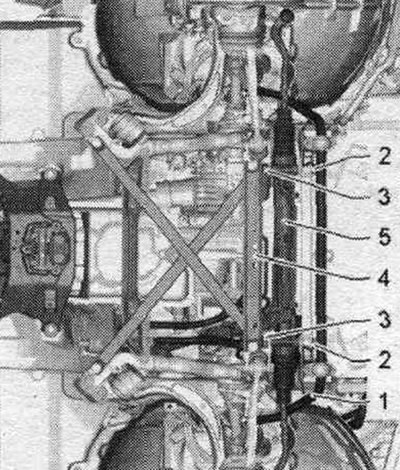
Remove sound insulation. Remove the subframe crosspiece "4", Remove the stabilizer "1". Unscrew the bolts "2" and remove the nuts "3". Slightly move the steering gear "5" to the right, lower it approx. by 10 cm and secure at the top.
Caution! Do not overtighten, bend, or kink oil lines and hoses. If the powertrain mount, steering gear, or subframe crosspiece is incorrectly installed, do not place the vehicle on its wheels! Do not support the vehicle by the subframe or subframe crosspiece (for example, with a jack, etc.)!
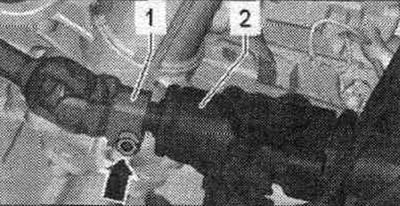
Remove the "arrow" bolt. Remove the steering column "1" from the steering gear "2". Place an oil drainer under the engine and drain the oil.
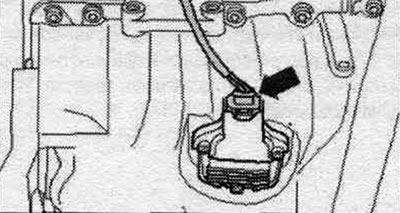
Remove the oil level and temperature sensor connector "G266" "arrow". Remove the oil level and temperature sensor "G266".
Unscrew bolts "1...19". Remove the oil pan, if necessary, dismantle it by lightly tapping with a rubber hammer.
Installation
Pay attention to the expiration date of the silicone sealant. The oil pan must be installed within 5 minutes of applying the silicone sealant. Replace bolts that were tightened with additional tightening. Replace all seals, gaskets and self-locking nuts. Spray the seating surface with sealant remover and allow time for it to take effect. Remove any remaining sealant from the top of the oil. pallet with a flat scraper. Remove any remaining sealant from the bottom of the oil. pallet using a drill with a rotating plastic brush attachment. Clean the seating surfaces; there should be no oil or grease on them. Cut off the tip of the tube along the front mark (hole diameter is about 3 mm). Apply silicone sealant as shown to the clean sealing surface of the bottom of the oil pan. tray. Sealant strip thickness: 2 - 3 mm.
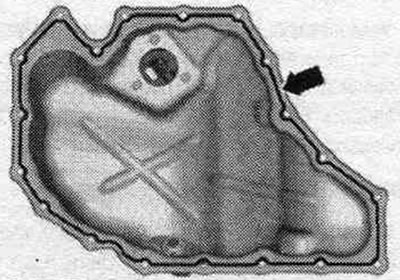
The oil pan must be installed within 5 minutes of applying the silicone sealant. The sealant strip must not be thicker than the specified width, otherwise excess sealant may get into the oil pan and clog the mesh filter in the oil intake pipe. Install the lower part of the oil immediately. pallet and tighten the bolts. After installation of oil. allow the sealant to dry for about 30 minutes. Only then can you add oil. Fill with oil and check its level. Install the steering gear. Install the stabilizer. Install the subframe crosspiece. Install soundproofing. Installation in reverse order.
Removal and installation of oil. pump
Removing the lower part of the oil. crankcase. Remove the oil separator "arrows".
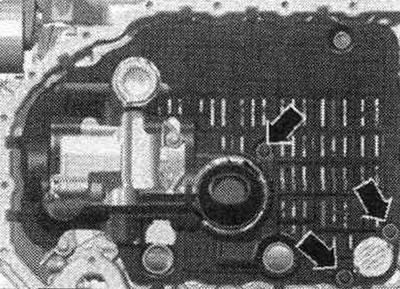
Unscrew the "arrow" bolts and remove the oil. pump.
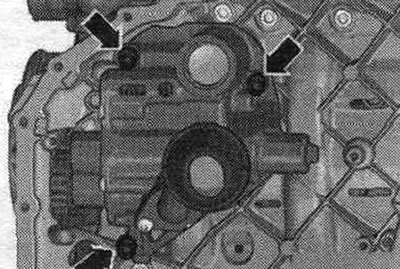
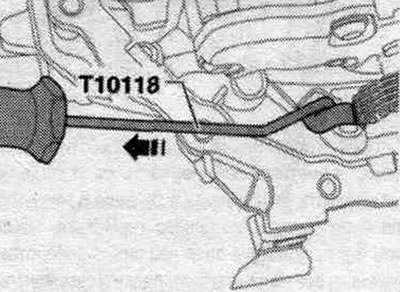
Pull the chain tensioner with the assembly tool "T10118" in the "direction of the arrow" and remove the oil. star pump.
Installation
Installation in reverse order. Replace the oil separator. Check the presence of both oil pan centering bushings. pump. Install the lower part of the oil pump. pan. Fill with oil and check its level.
Removal and installation of oil. pallet
Remove the gearbox. Removing the lower part of the oil. crankcase. Remove the rear seal. flange. Remove the oil pump. Disconnect connector "1".
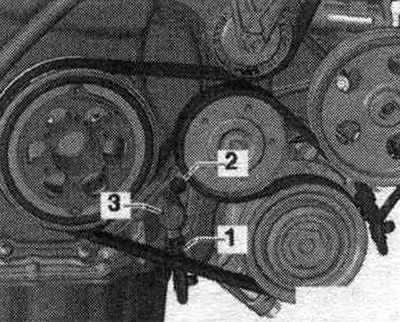
Unscrew the arrow bolts.
Caution! When removing the top part of the oil. oil pan chain tensioner spring drive oil. the pump bounces off the top of the oil. pan to the lower timing chain cover. When removing the upper part of the oil. the pan should not be held between the top of the oil. pan and lower timing chain cover.
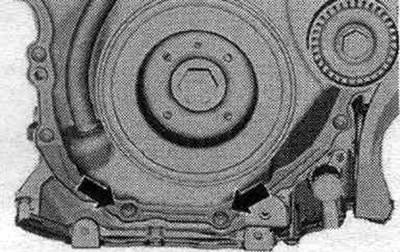
Unscrew bolts "1...13" and remove the upper part of the oil. pan. First, unfasten the top part of the oil pan. the oil pan is located on the transmission side. When removing it, proceed with caution to avoid deforming the timing chain cover.
Installation
Pay attention to the expiration date of the silicone sealant. Upper part of the oil. the tray must be installed within 5 minutes after applying the silicone sealant. Replace bolts that were tightened with additional tightening. Replace all seals, gaskets and self-locking nuts. Take the mounting tool "T10118" and use it to pull the oil drive chain tensioner spring. pump in the direction of the damper bar "arrow". Fix the spring by inserting the brake wear check tool. "VW 136" linings, as shown in the figure, into the hole in the damper bar. Remove any remaining sealant from the cylinder block using a flat scraper.
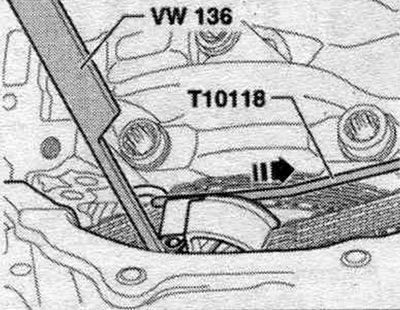
Remove any remaining sealant from the top of the oil. sump, for example, using a drill with a rotating plastic brush attachment. Make sure the timing chain cover is not deformed. To do this, first install the upper part of the oil pan. pump without using sealant and check the gap between the lining and the top of the oil. if deformation is detected, or the cover cannot be aligned, replace the cover, first installing the upper part of the oil pan. pallet. Clean the seating surfaces; there should be no oil or grease on them. Check the oil passages of the upper part of the oil. the sump and cylinder block for contamination. Cut off the tip of the tube along the front mark (hole diameter is about 3 mm). Apply silicone sealant as shown in the "arrows" figure to the clean sealing surface of the top of the oil seal. tray. Sealant strip thickness: 2 - 3 mm.
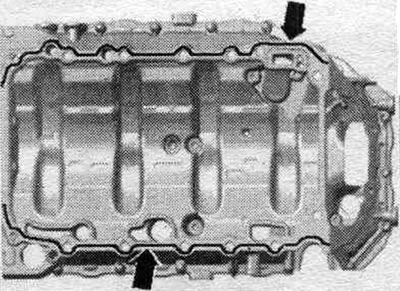
The oil pan must be installed within 5 minutes of applying the silicone sealant. The sealant strip must not be thicker than the specified width, otherwise excess sealant may get into the oil pan and clog the mesh filter in the oil intake pipe. From the gearbox side, the upper part of the oil. the oil pan and engine crankcase must be flush. Install the top part of the oil immediately. pallet and tighten the bolts. Screw in the "arrow" bolts. Remove the brake wear inspection tool. "VW 136" linings from the "arrow" damper bar. Now the spring returns to the mount. position.
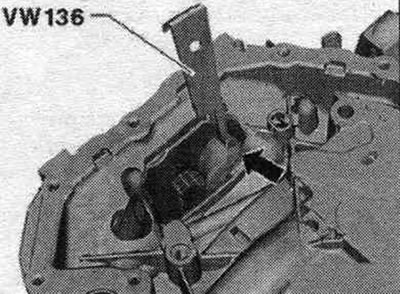
Install the rear seal. flange. Install oil. pump. Replace the oil separator. Installation in reverse order. Fill with oil and check its level.
Oil filter, oil cooler
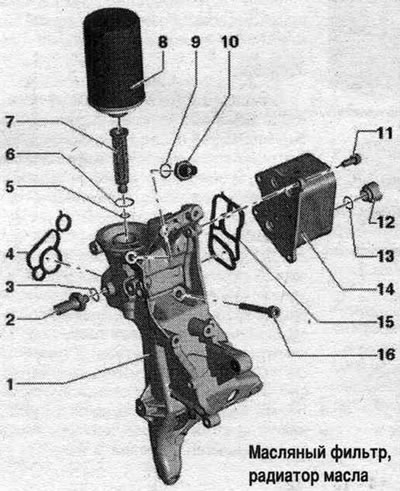
1. Additional holder. units. 2. Oil pressure sensor "P22": blue insulation; 20 Nm. 3. Sealing cuff: replace. 4. Gasket: replace. 5/ 6. Sealing ring: not a spare part, included in the scope of delivery of the valve block. 7. Valve block: with sealing ring. 8. Oil filter: remove and install with oil filter wrench "3417". 9. Sealing cuff: replace. 10. Oil pressure sensor for low pressure "E378": brown insulation; check the tester; 20 N·m. 11. Bolt: 23 N·m. 12. Connecting pipe. 13. Seal cuff: replace; moisten with coolant concentrate, coolant. 14. Oil radiator: follow the instructions, check for free space with adjacent parts. 15. Gasket: replace. 16. Bolt.
Removal and installation the oil radiator
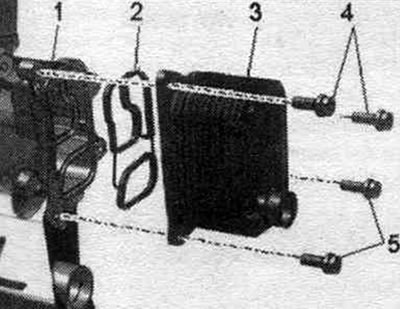
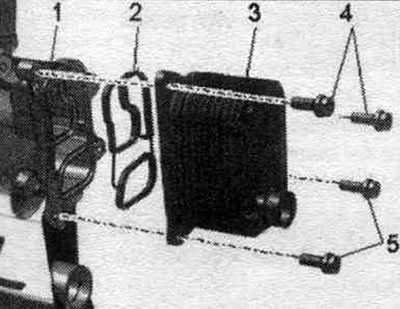
Drain the coolant. Remove the additional holder. units. Unscrew bolts "4 and 5" and remove the oil cooler "3" with seal "2".
Installation
Installation in reverse order. Gaskets and seals. the rings need to be replaced. Secure all hose connections with hose clamps of the appropriate series. Install oil cooler "3" with new seal "2". Install additional holder. units. Fill with coolant. Fill with oil and check its level.
Checking oil pressure
The oil level is ok. Oil temperature minimum 80°C (the radiator fan should complete one cycle). Place a rag under the auxiliary holder. units to collect leaking oil. Disconnect plug connection "4" on the low-pressure oil pressure sensor "F378". Unscrew the low-pressure oil pressure sensor "F378" "3". Screw the "VAG 1342" pressure gauge connector into place of the sensor in the oil filter bracket. Screw the low-pressure oil pressure sensor "F378" into the oil pressure gauge "VAG 1342". Start the engine.
- Idle oil pressure: 1.2-2.1 bar.
- Oil pressure at 2000 rpm: 1.6-2.1 bar overpressure.
- Oil pressure at 3700 rpm: 3.0-4.0 bar overpressure.
Note: Initially, the oil pressure at 2000 rpm may be between 3.0 and 4.0 bar.
Installation
Install the oil pressure sensor.