
Repair Chevrolet Repair Toyota Repair Honda Repair AvtoVAZ Repair Mercedes-Benz Repair BMW Repair Opel
Home  |  Contacts  |  Sitemap  |    
English Русский
Български
Беларускі
Український
Српски
Hrvatski
Română
Polski
Slovenský
Magyar
AudiManual.ru


  • AUDI 80
  • AUDI 100
  • AUDI A3
  • AUDI A4
  • AUDI A6
  • AUDI A8
  • AUDI Q
  • OTHER
  • ARTICLES
B8 (2007-2015) B7 (2004-2008) B6 (2000-2006) B6 (2000-2006, petrol) B5 (1994-2001) B5 (1994-2001, petrol)

Checking the electrolyte level in the battery, caring for the contacts (Audi A4 B6)

  • Home
  • Audi A4
  • B6 (2000-2006, petrol)
  • Electrical equipment
  • Power devices
  • Checking the electrolyte level in the battery, caring for the contacts
            0
The Audi A4 has a battery that does not require any special care under normal operating conditions. However, at high outside temperatures or long daily trips, it is recommended to check the electrolyte level from time to time. The electrolyte level should also be checked after each battery charge.

The electrolyte, which is a mixture of sulfuric acid and distilled water, can lose water at high temperatures or if the voltage regulator is faulty. Water loss can also occur due to self-discharge of the battery (for example, during prolonged downtime) or deep discharge due to a powerful current consumer not being switched off. In this case, you should add distilled water. Tap water, as well as boiled water, contains conductive salts and other minerals that are harmful to the battery.

1. When working with the battery, follow the warnings that are accompanied by the following pictograms: "Caution, acid!", "Wear protective glasses!", "Do not use open flame!", "Caution, detonating gas!". When disposing of the battery, it is necessary to follow the rules for handling batteries and sulfuric acid.

There are marks on the side of the battery to control the electrolyte level.

2. The electrolyte should reach at least the minimum mark (the electrolyte should cover the upper edges of the plates). The electrolysis level must be maintained so that it reaches the maximum mark. Control is greatly facilitated in batteries with a "magic eye" (see picture). The viewing window indicates an unsatisfactory battery condition: low electrolyte level or battery discharge. The indication may be distorted due to air bubbles. Lightly tap the peephole! When the battery is in normal condition, the indication is green. If the indicator is yellow or there is no color, it is necessary to add distilled water, as this means that the critical electrolyte level has been reached. If the indicator is black, the battery needs to be recharged or charged.


If the battery life exceeds five years and there is no color in the magic eye, then the battery needs to be replaced with a new one.
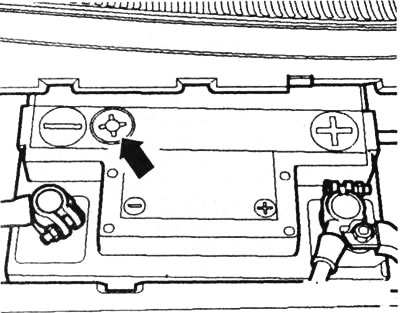
The magic eye (arrow) in the battery informs about the electrolyte level and the state of charge of…

The magic eye (arrow) in the battery informs about the electrolyte level and the state of charge of the battery


3. If the electrolyte level is low, remove the film over the plugs and unscrew the plugs. When adding distilled water, Audi recommends using the VAS 5045 filling device.
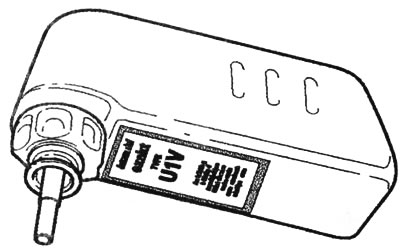
Filling device VAS 5045 for adding distilled water (recommended by Audi). The filling nipple…

Filling device VAS 5045 for adding distilled water (recommended by Audi). The filling nipple prevents the battery from overfilling and electrolyte from spilling.


4. If the battery is charged, fill it with distilled water up to the maximum mark (15 mm above the top edges of the plates).

5. If the battery is very discharged, add enough water so that the electrolyte just covers the plates. When charging, the electrolyte level rises significantly. After charging the battery, add water to the upper mark. If the element plates are not completely covered with electrolyte, the plates and jumpers are subject to corrosion. This causes damage to the battery, it may become unusable.
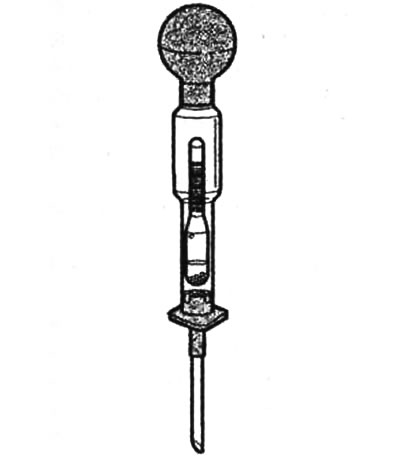


Densimeter with a pipette for sucking out excess electrolyte from the battery

Densimeter with a pipette for sucking out excess electrolyte from the battery


6. However, the battery should not be overfilled, otherwise the electrolyte will start to leak out through the plugs or the side ventilation hole. This leads to the formation of corrosion and acid crystals on the surface of the battery and the parts located in the engine compartment. For this reason, the excess electrolyte should be sucked out using a densimeter with a pipette.

7. Suck out the electrolyte until the electrolyte level reaches the plastic jumper or the maximum mark. Screw in the plugs.

Contact care


1. Remove oxide crystals on the battery terminals using warm soda water or a special product called Neutralon (manufactured by Varta).

2. Recently, Audi has been requiring that battery terminals not be lubricated.

3. To avoid damage, the pole clamps must be connected manually and without force. The tightening torque for the pole clamps is 6 Nm.
The article was checked by auto expert Alexey Ivanov
This article is available at russian, bulgarian, belarusian, ukrainian, serbian, croatian, romanian, polish, slovak, hungarian

Share information:
Previous articles
Audi A4 B6: Power devices
Next articles

Organization of the electrical network
Generator and voltage regulator — design description
Starter — design description
Battery — design description
Checking the density of the electrolyte
Measuring the battery's resting voltage
Battery load test
Charging the battery


Similar articles on other Audi car models:
Checking the battery electrolyte level Audi 80 B3 (1986-1991)
Checking the oil level in the rear axle drive Audi 100 C4 (1990-1994, petrol)
Checking battery condition, care and charging Audi A3 Type 8L (1996-2003)
Checking the electrolyte level in the battery Audi A6 C4 (1994-1997)
Checking the oil level in a manual transmission Audi A8 D2 (1994-2002)
Checking and caring for your battery Audi Q7 Typ 4L (2005-2015, diesel)
Engine — Checking Oil Level Audi A2 (1999-2005)
Link to this page in different formats


Visitor comments

No comments yet


How much will 37 + 47 =


A4(B8, 2007-2015) 
  • General information
  • Operating instructions
  • Power unit
  • Petrol engines 1.8 l
  • Petrol engines 1.8/2.0 l
  • Petrol engines 3.0 l
  • Petrol engines 3.2 l
  • Fuel system (petrol)
  • Diesel engines 2.0 l (CA*)
  • Diesel engines 2.0 l (CJCB)
  • Diesel engines 2.7/3.0 l
  • Diesel engines 3.0 l
  • Fuel system (diesel)
  • Transmission
  • Manual gearbox 0B1
  • Manual gearbox 0B2
  • Manual gearbox 0B3
  • Manual gearbox 0B4
  • Automatic transmission 0B5
  • Automatic transmission 0B6
  • Automatic transmission 0AW
  • All-wheel drive system
  • Chassis
  • Front suspension
  • Rear suspension
  • Brake system
  • Steering system
  • Body
  • Exterior
  • Interior
  • Seats
  • Doors, locks and windows
  • Security system
  • Heating and air conditioning
  • Electrical equipment
  • Audio system
  • Power devices
  • Equipment and devices
  • Lighting and lamps
  • Electrical circuits
 
A4(B7, 2004-2008) 
  • General information
  • Introduction to manual
  • Troubleshooting
  • Operating instructions
  • Maintenance
  • Power unit
  • Petrol engines 2.0 (ALT)
  • Petrol engines 2.0 (TFSI)
  • Petrol engines 1.8 (MPI)
  • Diesel engines
  • Cooling system
  • Air conditioner
  • Fuel and exhaust system
  • Ignition system
  • Starting and charging
  • Transmission
  • Clutch
  • Manual gearbox
  • Automatic gearbox
  • Drive shafts
  • Chassis
  • Brake system
  • Front suspension
  • Rear suspension
  • Steering
  • Body
  • Exterior
  • Interior
  • Electrical equipment
  • Equipment and devices
  • Lighting and signaling
  • Windscreen wipers and washers
  • Electrical diagrams
  • Electrical diagrams (since 2007)
 
A4(B6, 2000-2006) 
  • General information
  • Vehicle Description
  • User manual
  • Maintenance
  • Power unit
  • Gasoline engine
  • Diesel engine
  • Lubrication system
  • Cooling system
  • Supply system
  • Injection system
  • Exhaust system
  • Ignition and control
  • Transmission
  • Gear box
  • Clutch and drive shafts
  • Chassis
  • Brake system
  • Car suspension
  • Steering
  • Body
  • Heating and ventilation
  • Exterior (external elements)
  • Interior (internal elements)
  • Electrical equipment
  • Power devices
  • Lighting and appliances
  • Electrical circuits
 
A4(B6, 2000-2006, petrol) 
  • General information
  • Introduction to the guide
  • Car care
  • Power unit
  • Engine repair
  • Lubrication system
  • Cooling system
  • Injection and control system
  • Ignition system
  • Power and exhaust system
  • Transmission
  • Clutch and drive shafts
  • Car gearbox
  • Chassis
  • Suspension and wheels
  • Steering
  • Brake system
  • Body
  • Interior
  • Exterior
  • Electrical equipment
  • Equipment and devices
  • Lighting and signaling
  • Power devices
  • Electrical circuits
 
A4(B5, 1994-2001) 
  • General information
  • Introduction to the guide
  • Car care
  • Maintenance (gasoline)
  • Maintenance (diesel)
  • Power unit
  • Gasoline engines
  • Diesel engines
  • Engine overhaul
  • Cooling system
  • Fuel injection (gasoline)
  • Fuel system (diesel)
  • Exhaust system
  • Ignition system
  • Transmission
  • Clutch
  • Mechanical gearbox
  • Automatic gearbox
  • Drive shafts
  • Chassis
  • Brake system
  • Car suspension
  • Steering
  • Body
  • Exterior
  • Interior
  • Doors, locks and windows
  • Heating and ventilation
  • Electrical equipment
  • Power devices
  • Equipment and devices
  • Electrical circuits
 
A4(B5, 1994-2001, petrol) 
  • General information
  • Vehicle description
  • Maintenance
  • Power unit
  • Engine repair
  • Turbocharging
  • Exhaust system
  • Cooling system
  • Ignition system
  • Fuel system
  • Motronic injection system
  • MPI and MPFI injection system
  • Transmission
  • Clutch
  • Gearbox and shafts
  • Chassis
  • Steering
  • Car suspension
  • Brake system
  • Wheels and tires
  • Body
  • Heating and ventilation
  • Body parts
  • Electrical equipment
  • Fuses and relays
  • Power devices
  • Lighting and lamps
  • Tools and devices
  • Electrical circuits
 
AudiManual.ru © 2017-2026 · Mobile version · Feedback · Sitemap: EN BG BY UA RS HR RO PL SK HU · Site search · News and articles
80 B2 · 80 B3 petrol · 80 B3 · 80 B4 · 100 C3 diesel · 100 C3 petrol · 100 C3 · 100 C4 petrol · 100 C4 · A3 Type 8L · A4 B5 petrol · A4 B5 · A4 B6 petrol · A4 B6 · A4 B7 · A4 B8 · A6 C4 · A6 C5 · A6 C5 Allroad · A8 D2 · Q5 Type 8R · Q7 Typ 4L · Audi A2 ·
This site uses cookies 🍪. Click the button to accept this fact.