



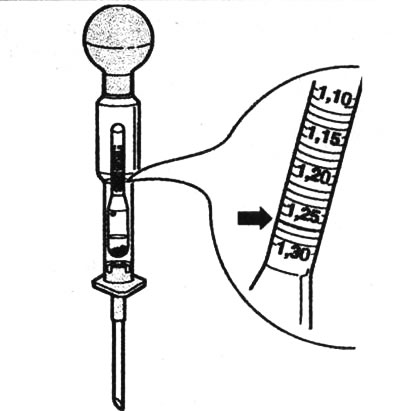
Checking the density of the electrolyte using a densimeter. Density is measured in kg/dm³
1. Measurements can only be taken if at least 6 hours have passed since the last charge.
2. Unscrew all plugs on the battery elements.
3. Immerse the densimeter vertically into the battery element. Fill the densimeter with enough electrolyte so that the float of the densimeter floats freely in the electrolyte. The higher the density of the electrolyte, the higher the float rises. The densimeter scale can be used to determine the density of the electrolyte in kg per cubic decimeter (liter).
4. Compare the measured value with the values given in the table.
5. In areas with normal climate, the density of the electrolyte should be at least 1.24 kg/l (kg/dm³). In addition, the density of the electrolyte in individual battery cells should not differ by more than 0.03 kg/l. If the density of the electrolyte is low, charge the battery. After charging, check the density again.
6. If the nominal values are ensured, screw in the plugs. Use only original plugs for the corresponding battery, the plugs must be screwed in with O-rings. If the nominal values are not achieved, replace the battery.
Electrolyte density in kg/dm³ and battery charge level
| State of charge | charged | half discharged | discharged |
| In a zone with a normal climate | 1,28 | 1,20 | 1.12 |
| In a tropical climate zone | 1,23 | 1,16 | 1,08 |