



The generator produces three-phase alternating current. Since direct current is needed to charge the battery, the alternating current is rectified using power diodes. These diodes also prevent the battery from discharging when the car is parked. The generator is virtually maintenance-free, since there is nothing to lubricate. Even the contact carbons easily last 100 thousand kilometers. Leave generator repairs to the workshop.
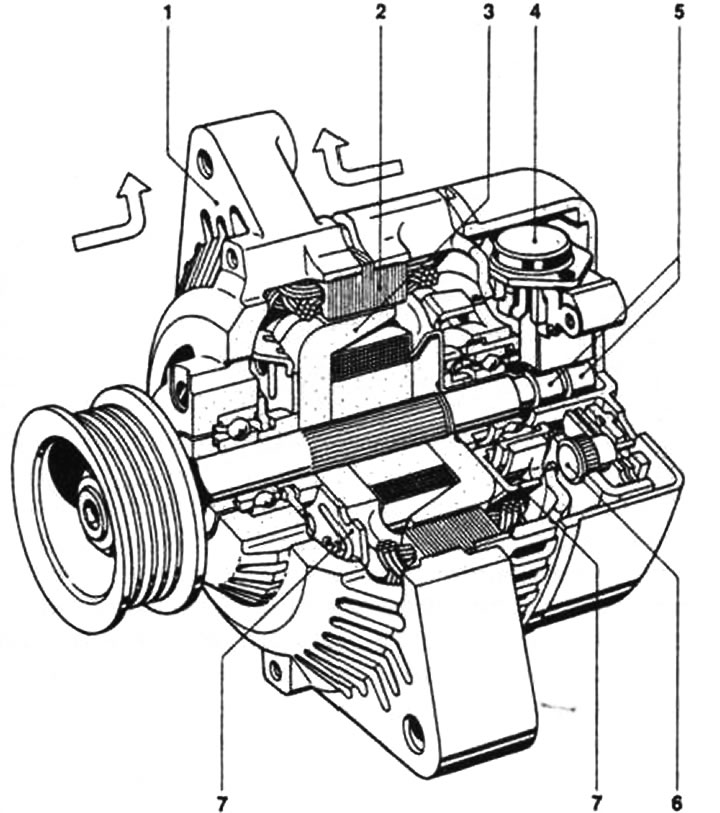
The design principle of a modern three-phase current generator for powering the electrical equipment of a car. At least six power diodes (position 6) are pressed into the heat sinks, which rectify the alternating current. 1 - housing, 2 - stator, 3 - rotor, 4 - electronic excitation rheostat with brush holder, 5 - contact rings, 6 - rectifier diode, 7 - fan
Voltage regulator
The faster the generator rotates, the more, like a bicycle generator, the voltage increases. Neither consumers nor the battery can withstand these voltage drops. Therefore, a voltage regulator is used to protect against increased voltages and prevent overcharging of the battery.
The regulator is screwed onto the generator. Depending on the battery temperature and the ambient air, it regulates the voltage within the range of 13.8 to 14.5 volts (the so-called 14-volt tolerance field).