Repair Chevrolet Repair Toyota Repair Honda Repair AvtoVAZ Repair Mercedes-Benz Repair BMW Repair Opel
Home  |  Contacts  |  Sitemap  |    
English Русский
Български
Беларускі
Український
Српски
Hrvatski
Română
Polski
Slovenský
Magyar
AudiManual.ru


  • AUDI 80
  • AUDI 100
  • AUDI A3
  • AUDI A4
  • AUDI A6
  • AUDI A8
  • AUDI Q
  • OTHER
  • ARTICLES
B4 (1991-1996) B3 (1986-1991) B3 (1986-1991, petrol) B2 (1979-1986)

Transistor Coil Ignition (TCI-H) Testing (Audi 80 B3)

  • Home
  • Audi 80
  • B3 (1986-1991, petrol)
  • Power unit
  • Ignition system
  • Transistor Coil Ignition (TCI-H) Testing
            0
Table of contents: Ignition coil ↓ Switch block ↓ Distributor Hall Sensor ↓
Note: Audi recommends using the VAG 1315A digital multimeter or VAG 1526 multimeter for the most accurate data during the following tests, as the internal resistance of some ohmmeters may affect the results obtained.


Ignition coil


1. Disconnect the wiring and cover from the ignition coil (photo). Mark the location of each wire if necessary.
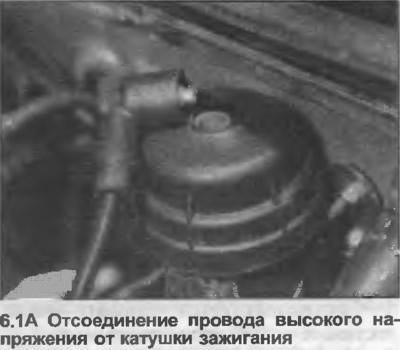
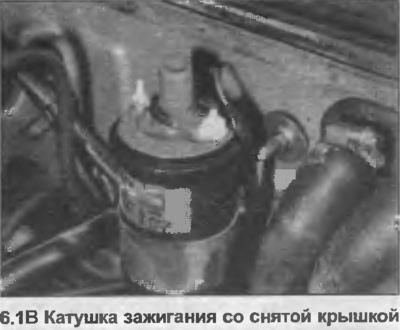
1. Disconnect the wiring and cover from the ignition coil (photo). Mark the location of each wire…


1. Disconnect the wiring and cover from the ignition coil (photo). Mark the location of each wire…


2. Connect the device between terminals 1(-) and 15(+), the resistance of the primary winding should correspond to the data in the Specifications.

3. Connect the device between terminals 4 (HT) and 15(+), the resistance of the rotor windings must correspond to the data in the Specifications.


4. Connect the electrical wiring.

Switch block


5. Check the ignition coil as described in points 1-4.

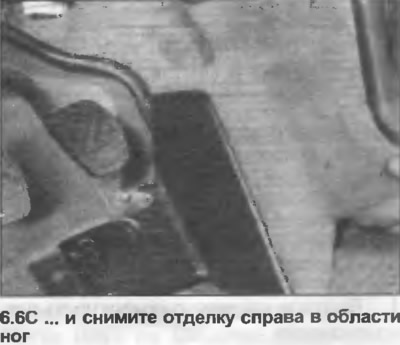
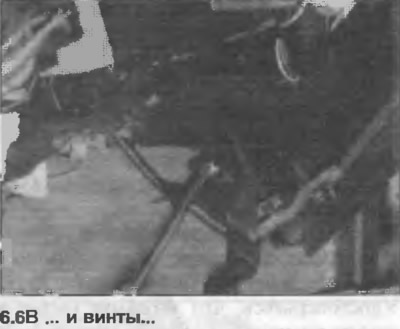
6. From inside the vehicle, remove the trim in the left or right footwell (according to the model) (photo).
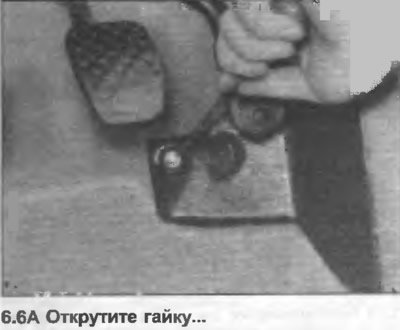
6. From inside the vehicle, remove the trim in the left or right footwell (according to the model)…


6. From inside the vehicle, remove the trim in the left or right footwell (according to the model)…


6. From inside the vehicle, remove the trim in the left or right footwell (according to the model)…


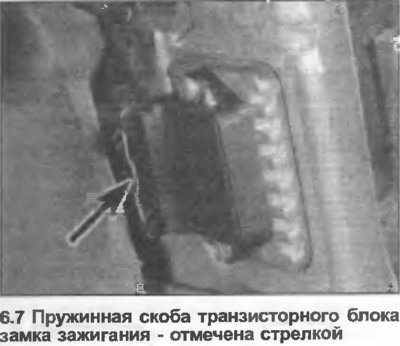
7. Press the spring clip together and pull out the connector (photo).
7. Press the spring clip together and pull out the connector (photo).


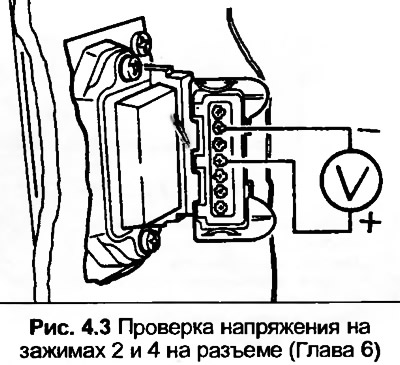
8. Connect the voltmeter between terminals 2 and 4 (Fig. 4.3).


8. Connect the voltmeter between terminals 2 and 4 (Fig. 4.3).

8. Connect the voltmeter between terminals 2 and 4 (Fig. 4.3).


9. Turn on the ignition and check that the voltmeter registers battery voltage. If not, check the wiring.

10. Turn off the ignition, then disconnect the voltmeter and reconnect the connector.

11. Squeeze the spring clip together and disconnect the wiring from the distributor.

12. Connect the voltmeter to terminals 1(-) and 15(+) on the ignition coil.

13. Turn on the ignition, the voltage should be about 2 volts at first, then drop to zero within one or two seconds. If not, replace the switch unit. Also check if the sealant has leaked from the ignition coil. Replace the ignition coil if necessary.

14. Connect the center clamp of the distributor wire contact to ground. The voltage should briefly increase to 2 volts. If not, check the center wire of the clamp or replace the switch.


15. Turn off the ignition.

16. Connect the voltmeter to the outer terminals of the distributor wire contact.

17. Turn on the ignition, the voltmeter should show at least 5 volts.

18. Disconnect the voltmeter and reconnect the wire contact to the distributor.

19. If damage is still not found, check the wiring between the distributor and the switch unit and if the wiring is not damaged, replace the switch.

20. Disconnect the voltmeter and connect the connector. Install the trim on the left or right side of the footwell.

Distributor Hall Sensor


21. Before checking the Hall sensor, check the switch assembly and ignition coil as described earlier and make sure the related wiring is in good condition.

22. Disconnect the high voltage wire from the breaker-distributor cover and connect it to a suitable ground point using a wire of suitable length.

23. From inside the vehicle, remove the trim on the left or right side of the footwell.

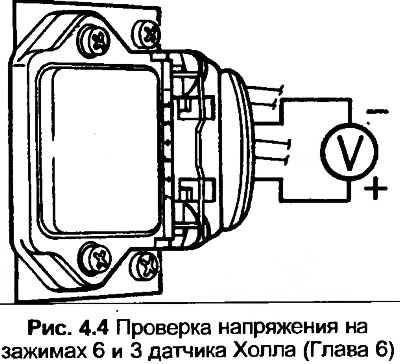
24. Connect the voltmeter between terminals 3 and 6 on the switch block, leaving the connector connected to the switch.

25. Turn on the ignition.

26. Using a wrench on the crankshaft pulley bolt, slowly turn the engine clockwise while watching the voltmeter readings. The voltage should alternate between zero and 2 volts. If not, replace the Hall sensor.

27. Turn off the ignition, disconnect the voltmeter, install the trim and connect the high-voltage wires.

[The original text of the material can be found on the website AudiManual.ru]
The article was checked by auto expert Timur Bazhenov
This article is available at russian, bulgarian, belarusian, ukrainian, serbian, croatian, romanian, polish, slovak, hungarian

Share information:
Previous articles
Audi 80 B3: Ignition system
Next articles

Transistor Coil Ignition (TCI-H) — Description
Distributor — disassembly, inspection and assembly
Distributor — removal and installation
General description of the ignition system
Fully Contactless Ignition (FEI) — Description
Fully Contactless Ignition (FEI) — Test
Motronic Ignition System — Description
Motronic Ignition System — Testing


Similar articles on other Audi car models:
Fuses, ignition coil with electronic transistor switch, fuel… Audi 100 C4 (1990-1994, petrol)
Ignition switch and engine start Audi A3 Type 8L (1996-2003)
Ignition Coil — General Information Audi A4 B6 (2000-2006, petrol)
Electrical diagram of high voltage circuit, ignition coil, spark… Audi A6 C5 (1997-2004)
Ignition switch Audi A8 D2 (1994-2002)
Actuator 8 for regulating valve lift, ignition coil 1 with… Audi Q5 Type 8R (2008-2017)
Removal and installation the ignition lock cylinder Audi A2 (1999-2005)
Link to this page in different formats


Visitor comments

No comments yet


How much will 40 + 12 =


80(B4, 1991-1996) 
  • General information
  • User manual
  • Maintenance
  • Troubleshooting
  • Power unit
  • Engine
  • Cooling system
  • Heating and ventilation
  • Petrol injection
  • Diesel fuel system
  • Fuel system
  • Exhaust systems
  • Ignition system
  • Transmission
  • Clutch
  • Car gearbox
  • Chassis
  • Brake system
  • Suspension and steering wheel
  • Body
  • Body and trim
  • Electrical equipment
  • Electrical system
  • Electrical circuits
 
80(B3, 1986-1991) 
  • General information
  • Repair characteristics
  • Maintenance
  • Power unit
  • Gasoline engine
  • Diesel engine
  • Engine lubrication system
  • Fuel system (gasoline)
  • Injection system (gasoline)
  • Fuel system (diesel)
  • Ignition system
  • Cooling system
  • Heater
  • Exhaust system
  • Transmission
  • Clutch and gearbox
  • Chassis
  • Steering
  • Brake system
  • Car suspension
  • Body
  • Body elements
  • Electrical equipment
  • Power devices
  • Lighting and appliances
  • Electrical circuits
 
80(B3, 1986-1991, petrol) 
  • General information
  • User manual
  • Maintenance
  • Power unit
  • Engine 4-cylinder
  • Engine 5-cylinder
  • Cooling system
  • Fuel and exhaust systems
  • Ignition system
  • Transmission
  • Clutch
  • Mechanical transmission
  • Automatic transmission
  • Drive shafts
  • Chassis
  • Brake system
  • Suspension
  • Steering
  • Body
  • Exterior
  • Interior
  • Electrical equipment
  • Equipment and devices
  • Electrical circuits
 
80(B2, 1979-1986) 
  • General information
  • User manual
  • Power unit
  • Engine FZ
  • Engine EP, YP, YZ, DT, DS, DZ
  • Transmission
  • Clutch
  • 4 speed gearbox
  • 5 speed gearbox
  • Front wheel drive
  • Chassis
  • Front suspension
  • Rear suspension
  • Steering
  • Brake system
  • Electrical equipment
  • Equipment and devices
  • Electrical circuits
 
AudiManual.ru © 2017-2026 · Mobile version · Feedback · Sitemap: EN BG BY UA RS HR RO PL SK HU · Site search · News and articles
80 B2 · 80 B3 petrol · 80 B3 · 80 B4 · 100 C3 diesel · 100 C3 petrol · 100 C3 · 100 C4 petrol · 100 C4 · A3 Type 8L · A4 B5 petrol · A4 B5 · A4 B6 petrol · A4 B6 · A4 B7 · A4 B8 · A6 C4 · A6 C5 · A6 C5 Allroad · A8 D2 · Q5 Type 8R · Q7 Typ 4L · Audi A2 ·
This site uses cookies 🍪. Click the button to accept this fact.