



Table of contents: Removal and installation of the air… ↓ Lambda probe ↓ Replacing the engine control unit… ↓
Removal and installation of the air mass meter "G70"
Disconnect the electrical. connect plug "1" to the air flow meter "G70". Open the air duct hose clamp. going to the turbocharger, and pull the hose off the "G70" air flow meter. Loosen the two mounting screws on the "C70" air flow meter and remove it. Carefully remove the "G70" air flow meter from its guide in the air flow meter housing. filter.
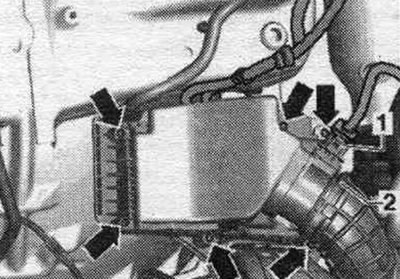
Install
To ensure the G70 air flow meter functions properly, it is essential to follow these instructions and steps. If the replaceable air element is heavily soiled or saturated with moisture. filters, dirt particles or moisture can get into the G70 air flow meter and distort the data obtained. This will result in a loss of power as less fuel injection volume is calculated. Use only the original filter element. Use grease to install the air duct hose (silicone-free). To secure all hose connections, use clamps of the appropriate series. Check the air flow meter and air duct hose for salt deposits, dirt and leaves (from the clean air intake side). Check the intake duct before the air intake element is replaced. filters for dirt.
If contamination is detected, clean the air duct housing. filter (upper and lower parts) from salt, dirt and leaf deposits (if necessary, wash or vacuum clean). Removal and installation of air. filter. Installation is in reverse order.
Lambda probe
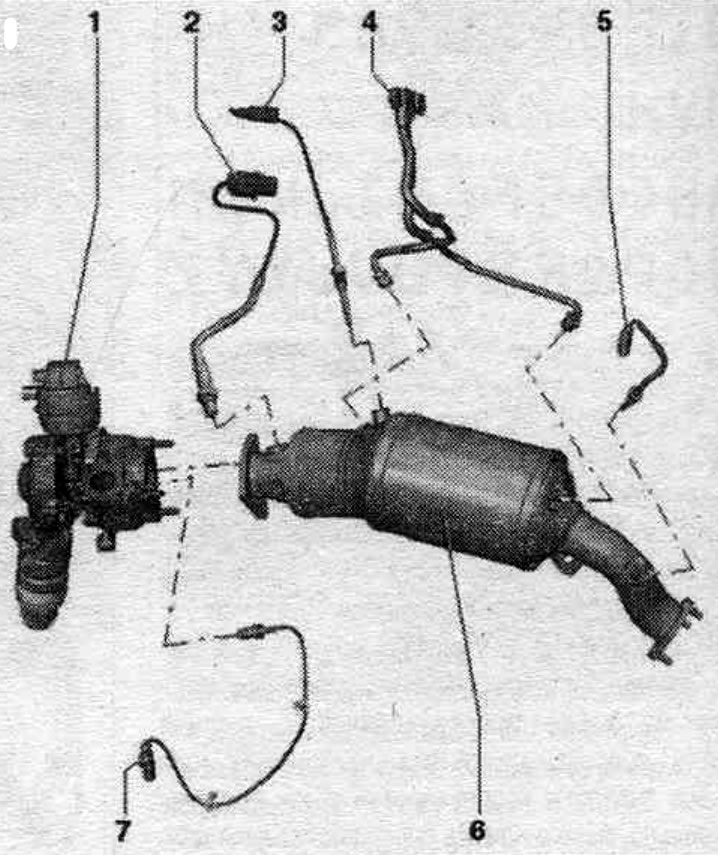
1. Turbocharger: with turbocharger pressure regulator position sensor "G581".
2. Lambda probe "G39" with lambda probe heating element "Z19": new lambda probes are lubricated with mounting paste; on a used lambda probe, lubricate the threads with heat-resistant bolt paste; mounting or heat-resistant paste should not get into the grooves of the lambda probe housing; 50 Nm.
3. Exhaust gas temperature sensor 3 "G495": 45 Nm.
4. Exhaust gas pressure sensor 1 "G450": tighten the bolt to a torque of 4.5 Nm; pressure lines to the diesel particulate filter 45 Nm.
5. Exhaust gas temperature sensor 4 "G648": 45 Nm.
6. Diesel particulate filter: after replacing the diesel particulate filter, it is necessary to make an adjustment, using the Tester for this.
7. Exhaust gas temperature sensor 1 "G235": 45 Nm.
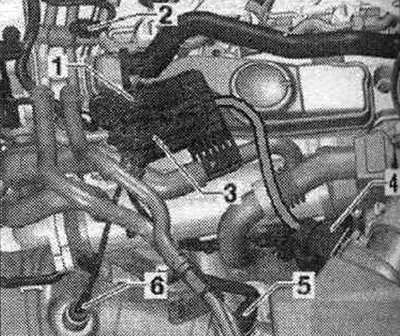
1. Electrical connector of lambda probe "G39" with lambda probe heater "Z19". 2. Fuel temperature sensor "G81". 3. Electrical connector of exhaust gas temperature sensors 3 "G495". 4. Air flow meter "G70". 5. Lambda probe "G39" with lambda probe heating element "Z19". 6. Exhaust gas temperature sensor 3 "G495".
Replacing the engine control unit "J623"
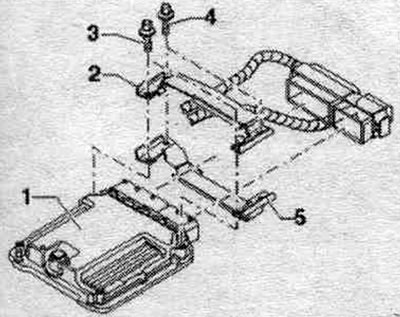
Before removing the engine control unit "J623", the injector adaptation values and soot mass should be read. Use a tester for this. If the injector adaptation values are not read from the old one (faulty) engine control unit, they must be entered into the new engine control unit and adapted manually. After saving the file with the adaptation parameters, turn off the ignition and remove the ignition key. Not every engine control unit is bolted on with a protective housing. The installation of the protective housing depends on the engine-gearbox combination. Protective housing "5" is bolted to engine control unit "1." To prevent loosening of shear screws "4" of retainer "2," a locking varnish is applied to their threads. To be able to remove the plug connectors from the engine control unit (for example, to connect a switch or replace the engine control unit), it is necessary to dismantle the protective housing.
Do not completely remove the rubber seal from the water drain box cover from nut "1." Unscrew nut "1." Disconnect wiring harness "2" from fasteners "A." Remove filler neck "3" with the feed tube from the windshield washer reservoir and the body opening.
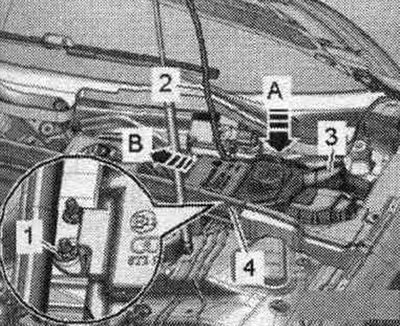
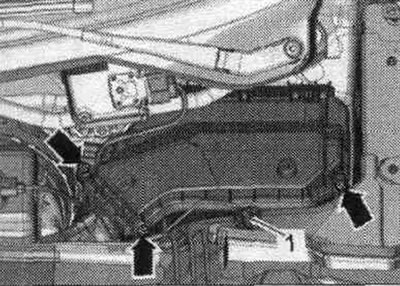
Unscrew the arrow bolts and remove the cover of the switching unit.
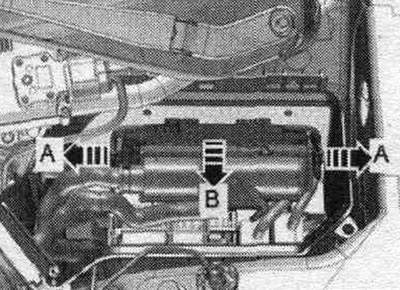
Unlock the clamps "arrow A" and remove the engine control unit "J623" "arrow B".
To make it difficult to access the engine control unit connectors, engine control unit "1" is bolted through the locking device "2 and 5" and the locking bolts "3" or "4". On the threads of both locking bolts "4" (not bolted to the engine control unit) thread varnish applied. Therefore, to unscrew these bolts, the threads should be heated with a heat gun. The threads of both locking bolts connected to engine control unit "3" are not protected with thread varnish. The threads in the engine control unit housing must not be exposed to heat (unacceptable heating of the engine control unit). Adjust the hair dryer as shown in the picture. This means that the temperature control potentiometer "2" should be set to maximum heating output, and the two-stage blower intensity switch "3" to position 3.
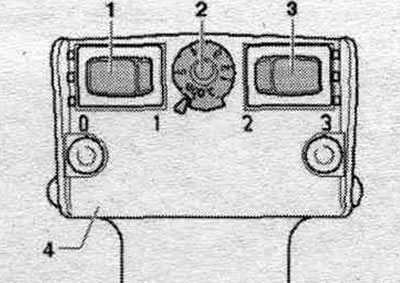
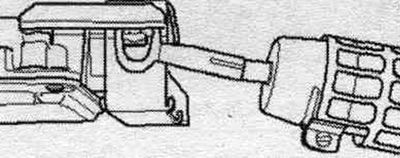
To do this, turn on a hair dryer and heat the bolt for 20-30 seconds. Use pliers to unscrew the locking bolt (in the direction of the arrow).
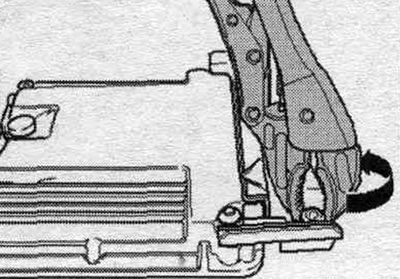
Do not heat the two shear screws screwed into the engine control unit. They should be unscrewed without heating. Disconnect the protective housing from the control unit connectors. Unlock the engine control unit connector and disconnect it. Remove the old engine control unit "J623" and install the new engine control unit "J623".
Install
Installation in reverse order. After this, it is necessary to cover the control unit "J623" with a protective casing. Clean the threaded holes of the locking screws from any remaining thread sealant. A tap can be used for cleaning. Always use new shear screws. Tightening torque for the junction box cover bolts: 3.5 Nm. The steps to be taken after connecting a new engine control unit are described in "Guided Fault Finding" or "Guided Functions." Use the tester for this. After replacing the engine control unit, re-align the fuel quantity adjustment and injector voltage adjustment in the engine control unit "J623." (both parameters affect engine power and exhaust emissions). On vehicles with a diesel particulate filter, the actual mileage must be saved in the engine control unit during approval.
This article was copied from the website AUDImanual.ru