



Table of contents: General recommendations ↓ Spare wheel ↓ New tires ↓ Tire wear ↓ Signs of tire wear ↓ Wheel rotation ↓ Tire replacement ↓ Wheel balancing ↓ Winter tires ↓ Anti-skid chains ↓
Tires and wheels are important elements of the car's design. The reliability of the car's running characteristics and the overall situation on the road largely depend on their correct selection for each specific model.
When selecting tires and wheels, follow these recommendations:
- For technical reasons, never install wheels from other brands of cars, and in some cases even from modifications of this model.
- Tires and wheels are always designed together, which means that tires must fit the wheels and vice versa.
- When changing any disks, for example when switching to wheels with winter tires or installing wheels with disks made of light metals, only the included fasteners of the appropriate length, shape, etc. must be used. The strength of the wheel fastening and, as a result, the normal functioning of the braking system depend on this.
- The use of non-standard tires and wheels may adversely affect driving safety.
- When installing additional protective caps, ensure that the air supply for cooling the brake system is not blocked.
- It is best to have tires and wheels replaced by service station specialists.
General recommendations
Check your tires from time to time and remove any foreign objects stuck in the treads.
To prevent possible damage to tires and wheels, try to drive over curbs and other obstacles at right angles. Do not allow oil, grease, or fuel to get on your tires. If you lose valve caps, replace them immediately with new ones. When removing wheels, mark them so as not to mix them up when reinstalling them and thereby not disrupt the previous adjustment.
Dismounted wheels or tires should be stored in a dry, cool and, if possible, dark place. Tires removed from rims are stored in an upright position.
Spare wheel
Designed for temporary replacement of the main wheel.
New tires
New tires do not meet their optimal road grip parameters during the initial period of operation. They require running-in. Therefore, when running new tires for the first 100 km, try not to drive at maximum speeds. The timing of their subsequent wear depends on good running-in.
Tire wear
The wear period depends on the pressure in them. Excessive or, on the contrary, insufficient pressure in tires reduces their wear period and worsens the driving performance of the car.
When driving for a long time at high speed, the load on tires with insufficient air pressure increases and they heat up. The intensity of tread wear increases, the tire may even burst. In addition, fuel consumption increases.
Therefore, at least twice a month, and before each long trip, check the pressure, including the spare tire. The pressure is checked on cold tires, while on heated ones it is slightly higher. Do not forget about this and do not try to reduce it! The required pressure standards are indicated on the plate on the inside of the fuel tank filler cap.
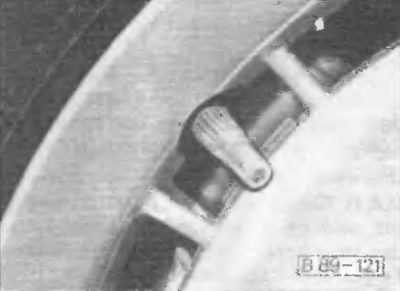
On modifications with decorative full-profile protective caps, the valve extension is brought out. It is intended for monitoring and regulating the pressure in the tires. It is not necessary to unscrew it. Tire wear also increases due to fast driving on turns, sharp acceleration and braking of the car.
This is also facilitated by any incorrect installation of wheels, errors in adjustment. In these cases, tires, as a rule, begin to wear out intensively on one side, in addition, the stability of the car is disrupted. The help of specialists is required.
Signs of tire wear
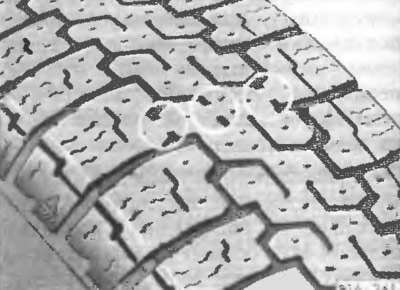
Signs of tire wear are small transverse abrasions, 1.6 mm deep, in 6 - 8 places along the entire perimeter of the wheel at equal intervals. See the picture. Markings on the sides of the tires in the form of letters. For example, TWI or a triangle - indicate the permissible level of wear.
If the tread profile in these areas is no longer visible, the tire needs to be changed.
In Germany, the maximum permissible tread depth in these areas according to traffic regulations is 1 mm; in export countries, these standards may be different.
Worn tires are a source of increased danger. When driving at high speeds, especially in wet weather, the required kinematic grip of the wheels on the road is lost and they can come off, so it is better not to wait for the tires to wear out to a critical state, but to replace them with new ones in a timely manner.
Wheel rotation
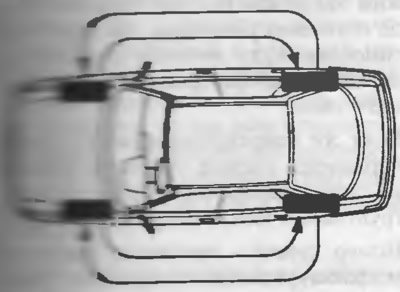
If the front tire treads are noticeably worn, it is recommended to swap them with the rear ones. See the diagram. This swap will ensure that all tires have approximately the same service life. Depending on the nature of the wear, a cross swap is allowed.
If the front tire treads are noticeably worn, it is recommended to swap them with the rear tires (see diagram). This swap will ensure that all tires have approximately the same service life.
Tire replacement
For driving safety, tires should be replaced in pairs along the axles. In this case, tires with a more preserved tread profile are always installed on the front wheels.
Tires may only be replaced with radial tires, if possible, of the same modification, the same size and, preferably, even the same tread profile.
For safety reasons, when replacing tubeless tires, it is recommended to also replace the rubber valves.
Installing tubes on tubeless tires is only allowed in exceptional cases. In this case, you need to make sure that there is no air accumulation between the tire and the tube. It must be released.
Tyre repair should only be carried out by specialists. This requires a wide range of specialist knowledge.
Wheel balancing
The wheels of a new car are balanced at the factory. During operation, for various reasons, they may become unbalanced, which can be felt immediately by the behavior of the steering. Unbalanced wheels contribute to a significant reduction in the service life of the steering, suspension, and accelerates tire wear. Therefore, make sure that the wheels are always properly balanced.
Balancing is also necessary after any repair or replacement of tires.
Winter tires
In winter operating conditions, even for cars with four-wheel drive, winter tires significantly improve the driving characteristics of the car. Especially for modifications with VR or HR tires. Such tires are designed for driving at high speeds and are made of special heat-resistant rubber, which is not entirely suitable for use on slippery roads with snow and ice. When switching to winter tires, follow these rules:
- Winter tires must be of radial construction only.
- It is advisable to install it on all four wheels at once.
- The pressure in them should be 0.2 bar higher than in summer ones. See section "Technical specifications".
- When the tread profile wears down to a depth of 4 mm, winter tires lose their specific purpose and advantages for use in winter conditions.
- All-weather tires can be used instead of winter tires.
- On SR- modification tires with the letter Q at the end of the digital code on the sidewall and HR- tires (and the letter T) - maximum speed limits must be no more than 160 and 190 km/h, respectively.
Anti-skid chains
Anti-skid chains can be selected for all tire sizes.
The Audi Quattro chains are installed only on the front wheels. They must be thin, no thicker than 15 mm, including the lock sector and with side links no thicker than 10 mm. They are intended for driving on snow-covered roads. They are not used in other conditions - they can damage the tires or break
The permitted speed limit for driving with snow chains in Germany is 50 km/h.
For technical reasons, storing a chain on a spare wheel is not permitted.
The original article is available on the website: audimanual.ru