Repair Chevrolet Repair Toyota Repair Honda Repair AvtoVAZ Repair Mercedes-Benz Repair BMW Repair Opel
Home  |  Contacts  |  Sitemap  |    
English Русский
Български
Беларускі
Український
Српски
Hrvatski
Română
Polski
Slovenský
Magyar
AudiManual.ru


  • AUDI 80
  • AUDI 100
  • AUDI A3
  • AUDI A4
  • AUDI A6
  • AUDI A8
  • AUDI Q
  • OTHER
  • ARTICLES
C5 Allroad (1999-2005) C5 (1997-2004) C4 (1994-1997)

Pistons and connecting rods (Audi A6 C4)

  • Home
  • Audi A6
  • C4 (1994-1997)
  • Engine repair
  • Removal and reassembly
  • Pistons and connecting rods
            0
Table of contents: Removal ↓ Examination ↓ Final installation of pistons and… ↓

Piston and connecting rod
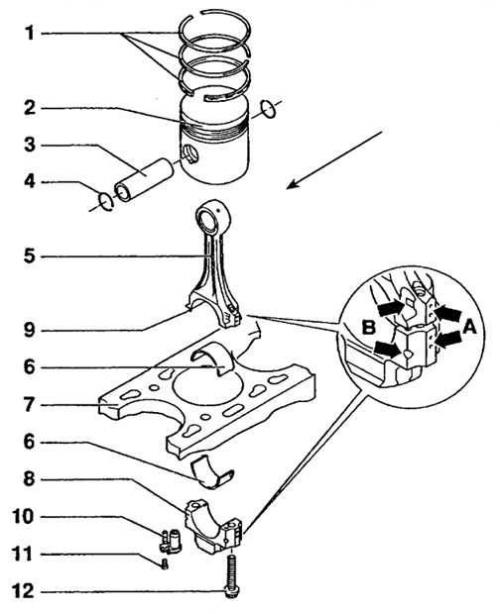


Piston and connecting rod

  • 1. Piston rings
  • 2. Piston
  • 3. Piston pin
  • 4. Retaining ring
  • 5. Connecting rod
  • 6. Connecting rod bearing
  • 7. Cylinder block
  • 8. Connecting rod cap
  • 9. Mounting pin
  • 10. Oil jet
  • 11. Oil jet screw
  • 12. Connecting rod cap bolts
  • A - identification marks on the connecting rod and connecting rod cap
  • B - orientation marks

Piston and connecting rod
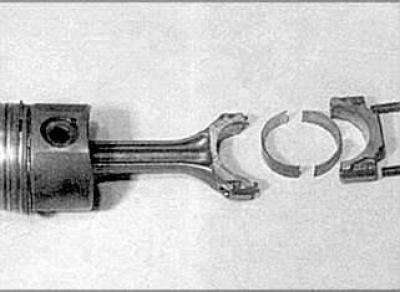


Piston and connecting rod


Removal


1. Remove the cylinder head, flywheel, oil pan, oil pump and oil pick-up pipe.

2. Remove the ledge on the top of the cylinder caused by wear.
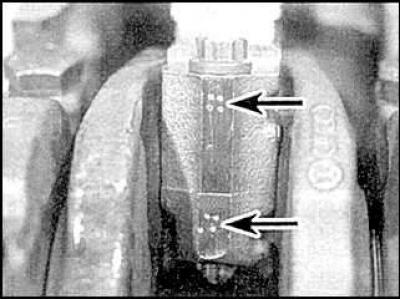
2. Remove the ledge on the top of the cylinder caused by wear.


3. If the connecting rods and connecting rod caps are not marked, mark them.


4. Set pistons N1 and N4 to bottom dead center.
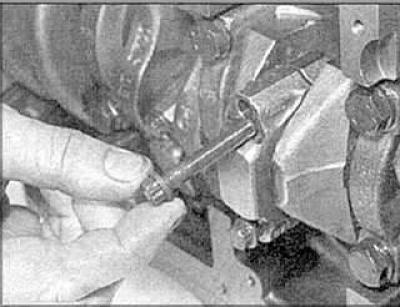
4. Set pistons N1 and N4 to bottom dead center.

4. Set pistons N1 and N4 to bottom dead center.


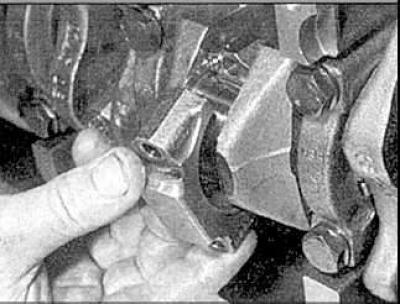
5. Unscrew the fastening nuts and remove the first connecting rod cover and bearing shell, mark the shells.
5. Unscrew the fastening nuts and remove the first connecting rod cover and bearing shell, mark the…


6. Place pieces of rubber tubing over the connecting rod bolts to avoid damaging the crankshaft journal and cylinder walls.
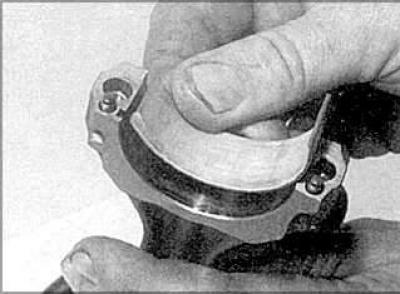
6. Place pieces of rubber tubing over the connecting rod bolts to avoid damaging the crankshaft…


7. Remove the bearing shell and lift the connecting rod out from the top of the cylinder block.


8. Remove the remaining connecting rods and pistons in the same manner.
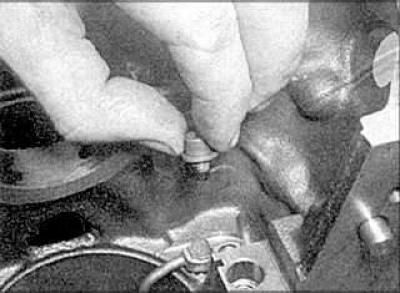
8. Remove the remaining connecting rods and pistons in the same manner.
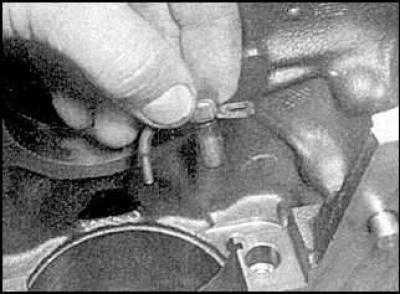

8. Remove the remaining connecting rods and pistons in the same manner.


9. If possible, unscrew the screws and remove the piston jets.

Piston head (AAT)
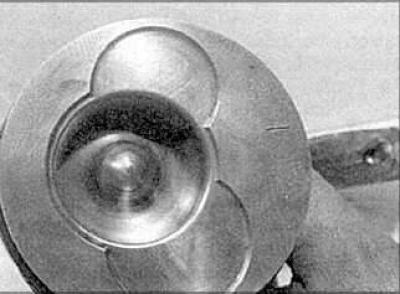


Piston head (AAT)


Examination


Examination


Examination


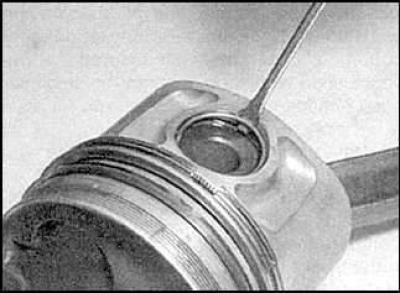
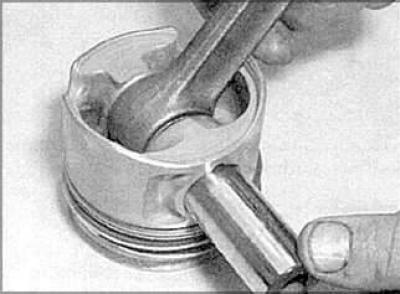
1. Use a small screwdriver to remove the piston pin retaining rings and remove the pin. Inspect the pin for wear and damage; if damage is found, contact a specialist.
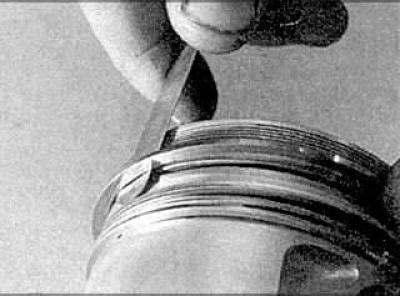


1. Use a small screwdriver to remove the piston pin retaining rings and remove the pin. Inspect the…


2. Remove the piston rings. Clean the piston crown from deposits and clean the piston ring grooves. After removing all deposits. Clean the pistons and connecting rods with solvent and dry them.

3. Carefully inspect all pistons for cracks in the piston skirt and around the connecting rod pin. Inspect pistons for scratches, scoring, burnt areas, or corrosion.

4. Inspect the connecting rods for cracks and other damage. For a more detailed inspection of pistons and connecting rods, contact specialists
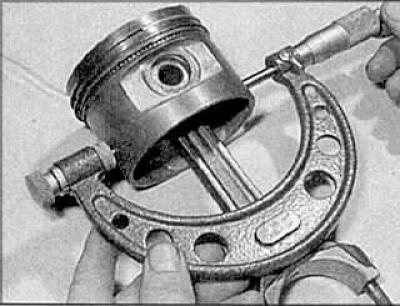
4. Inspect the connecting rods for cracks and other damage. For a more detailed inspection of…


5. Measure the diameters of all four pistons.
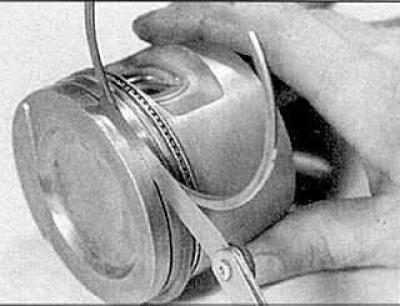
5. Measure the diameters of all four pistons.


6. Measure the piston ring side clearance.
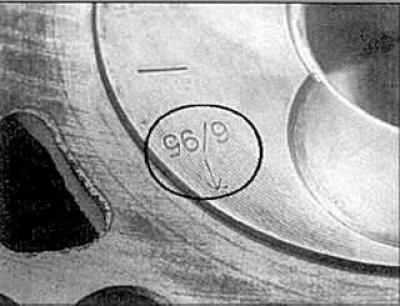


6. Measure the piston ring side clearance.


7. When assembling the piston and connecting rod, note that the arrow on the piston head should point towards the timing belt. The marks on the connecting rod and on the connecting rod cap should point towards the turbocharger.

Checking the lubrication clearance of connecting rod bearings

To measure the lubrication gap, you can use an internal micrometer or other special device, but the most accurate and easiest method is to use a special plastic gauge.

Temporarily install the piston in the cylinder, tighten the connecting rod cap bolts, and check the connecting rod bearing lubrication clearance in the same way as checking the main bearing lubrication clearance.

If the gap size is not as required, the bearing shells may be the wrong size.

Piston arrangement and coding in diesel engines
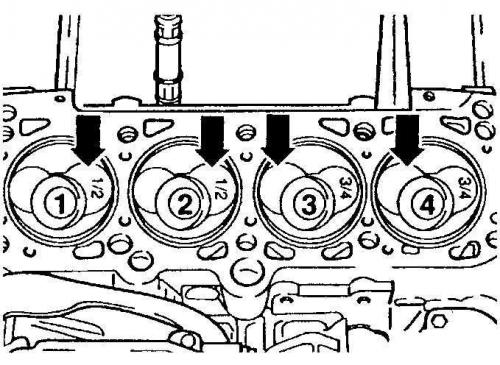


Piston arrangement and coding in diesel engines


Final installation of pistons and connecting rods
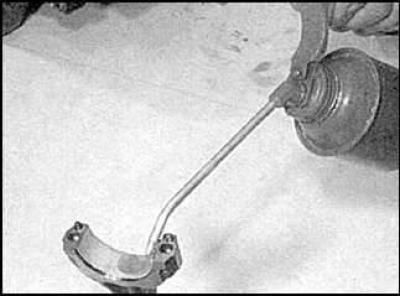


Final installation of pistons and connecting rods


1. Remove all traces of plastic. Check that the surface of the bearings is absolutely clean and lubricate them with engine oil.

2. Clean the upper connecting rod bearing shell and install it on the connecting rod. The oil holes in the connecting rod and the shell must be aligned.

3. Clean the second bearing and install it into the connecting rod cap.
3. Clean the second bearing and install it into the connecting rod cap.


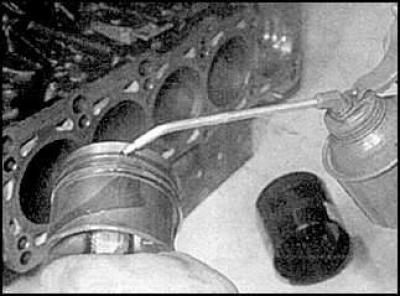
4. Lubricate the pistons and rings and compress the piston rings using a piston ring compressor.

5. Turn the crankshaft so that the connecting rod bearing of the first cylinder is at the bottom dead center position and lubricate the cylinder walls.

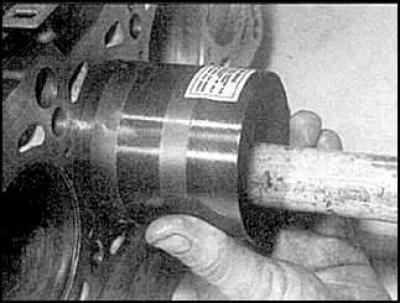
6. Make sure the mark on the top of the piston is facing forward.


6. Make sure the mark on the top of the piston is facing forward.


7. Press the piston and install it into the cylinder.

8. The installation of the remaining connecting rods is carried out in a similar manner.
8. The installation of the remaining connecting rods is carried out in a similar manner.


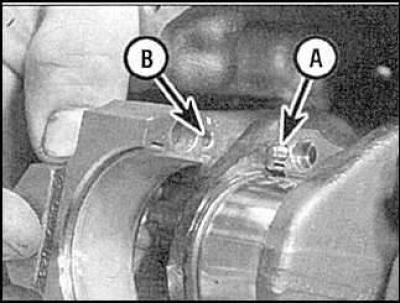
9. Install the connecting rod onto the crankshaft journal and install the connecting rod cap.
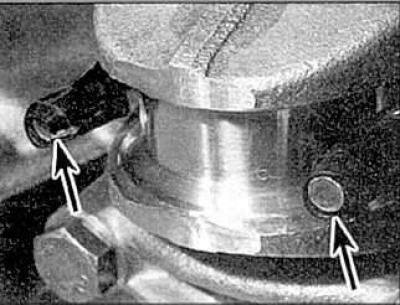
  • A - pin (diesel only)
  • B - mounting hole (diesel only)

10. In diesel 4-cylinder engines 1Z and AHU and 5-cylinder ABP, AAT, AEL pistons have a special shape for better combustion of the mixture and must be installed correctly (see fig. Piston arrangement and coding in diesel engines).
10. In diesel 4-cylinder engines 1Z and AHU and 5-cylinder ABP, AAT, AEL pistons have a special…


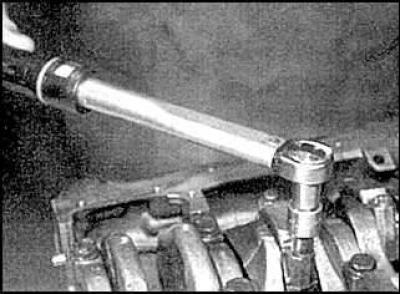
11. Tighten the bolts to the specified torque.


11. Tighten the bolts to the specified torque.


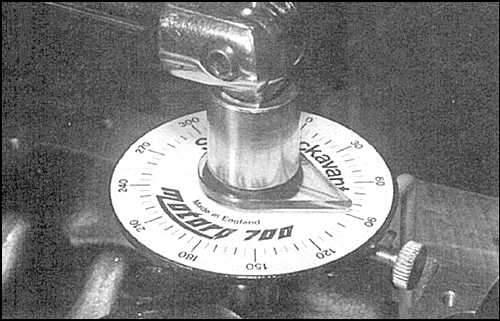
12. Tighten the bolts to the required angle.

13. After installing all connecting rods, turn the crankshaft several times and check for ease of movement.

Diesel engines 1Z, AHU, AAS, ABP, AAT, AEL


Diesel engines 1Z, AHU, AAS, ABP, AAT, AEL


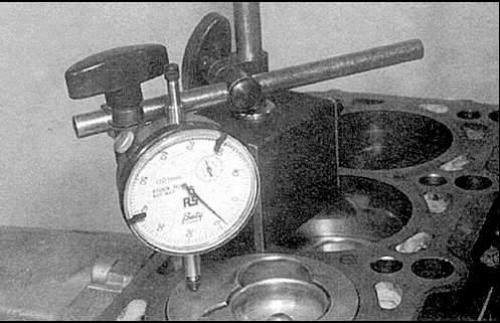
13. To accurately select the gasket thickness, measure the piston protrusions using a special tool.
The article was checked by auto expert Georgy Rodionov
This article is available at russian, bulgarian, belarusian, ukrainian, serbian, croatian, romanian, polish, slovak, hungarian

Share information:
Previous articles
Audi A6 C4: Removal and reassembly
Next articles

Checking and assembling the cylinder head
Overhaul and cleaning of the cylinder head
Engine overhaul
Removal and installation the engine
Removal and checking the crankshaft
Installing and checking the crankshaft
Intermediate shaft
Cylinder block


Similar articles on other Audi car models:
Pistons and connecting rods — removal and disassembly Audi 80 B3 (1986-1991, petrol)
Piston/Connecting Rod Assemblies — Removal and Inspection Audi 100 C3 (1982-1990, diesel)
Checking, assembling and installing the connecting rod and… Audi A3 Type 8L (1996-2003)
Pistons and connecting rods — removal and inspection Audi A4 B5 (1994-2001)
Pistons and connecting rods Audi A8 D2 (1994-2002)
Pistons and connecting rods Audi Q5 Type 8R (2008-2017)
Connecting the Airbag adapter VAS 5094 Audi A2 (1999-2005)
Link to this page in different formats


Visitor comments

No comments yet


How much will 41 + 40 =


A6(C5 AR, 1999-2005) 
  • General information
  • User manual
  • Maintenance
  • Troubleshooting
  • Power unit
  • V6 petrol engines
  • V8 petrol engines
  • Diesel engines
  • Cooling and heating system
  • Injection system (gasoline)
  • Fuel system (diesel)
  • Supply system
  • Exhaust system
  • Ignition system
  • Transmission
  • Clutch
  • Mechanical gearbox
  • Automatic gearbox
  • Chassis
  • Brake system
  • Car suspension
  • Steering
  • Body
  • Body elements
  • Doors, locks and windows
  • Electrical equipment
  • Equipment and devices
  • Power devices
  • Electrical circuits
  • Schemes (petrol engine 2.7 l)
  • Schemes (petrol engine 4.2 l)
  • Schemes (diesel engine 2.5 l)
 
A6(C5, 1997-2004) 
  • General information
  • User manual
  • Maintenance
  • Power unit
  • Engine repair
  • Cooling system
  • Fuel system
  • Engine management
  • Fuel system (diesel)
  • Exhaust system
  • Transmission
  • Clutch
  • Car gearbox
  • Chassis
  • Front suspension
  • Rear suspension
  • Steering
  • Wheels and tires
  • Brake system
  • Body
  • Exterior
  • Interior
  • Electrical equipment
  • Air conditioner
  • Equipment and devices
  • Electrical circuits
 
A6(C4, 1994-1997) 
  • General information
  • User manual
  • Maintenance (gasoline)
  • Maintenance (Diesel)
  • Gasoline engines
  • 4 cylinder engines
  • 5 cylinder engines
  • 6 cylinder engines
  • Diesel engines
  • 4 cylinder engines
  • 5 cylinder engines
  • Engine repair
  • Removal and reassembly
  • Cooling system
  • Single point injection system
  • Multipoint injection system
  • MPI/MPFI injection system
  • Fuel system (diesel)
  • Exhaust system
  • Ignition system
  • Transmission
  • Clutch
  • Manual transmission
  • Automatic transmission
  • Drive shafts
  • Chassis
  • Brake system
  • Front suspension
  • Rear suspension
  • Steering
  • Body
  • Exterior (external elements)
  • Interior (internal elements)
  • Electrical equipment
  • Power devices
  • Lighting and appliances
  • Electrical circuits
 
AudiManual.ru © 2017-2026 · Mobile version · Feedback · Sitemap: EN BG BY UA RS HR RO PL SK HU · Site search · News and articles
80 B2 · 80 B3 petrol · 80 B3 · 80 B4 · 100 C3 diesel · 100 C3 petrol · 100 C3 · 100 C4 petrol · 100 C4 · A3 Type 8L · A4 B5 petrol · A4 B5 · A4 B6 petrol · A4 B6 · A4 B7 · A4 B8 · A6 C4 · A6 C5 · A6 C5 Allroad · A8 D2 · Q5 Type 8R · Q7 Typ 4L · Audi A2 ·
This site uses cookies 🍪. Click the button to accept this fact.