



Table of contents: Checking the gap in the piston ring… ↓ Checking the clearance between the… ↓ Measuring the piston diameter ↓ Measuring the cylinder diameter ↓ Pistons ↓ Connecting rod ↓
Remove the cylinder head and oil pan.
Turn the crankshaft and set the pistons of the first cylinder to the bottom dead center (BDC) position.
If a ridge has formed at the top of the cylinder, it must be removed with a reamer or scraper without damaging the cylinder wall. The formation of a ridge indicates increased wear of the cylinder.
Loosen the connecting rod cover fastening bolts for the first cylinder. Remove the cover and take out the lower connecting rod bearing. If the bearing is to be installed again, tape it to the removed cover.
Using the handle of a hammer, push the piston into the cylinder and pull it out through the top of the cylinder block. Remove the upper connecting rod bearing shell and tape it to the removed connecting rod.
Place the cover on the connecting rod and secure with bolts to maintain the previous assembly order of the parts.
Repeat the above operations to remove the connecting rods and pistons from the remaining cylinders.
Before checking the pistons with connecting rods, remove the piston rings from the pistons and thoroughly clean the pistons.
To remove piston rings from pistons, spread the ring and insert two or three old feeler gauge blades evenly around the circumference and slide the ring off the piston. Be careful not to scratch the piston with the ends of the ring. Rings are very fragile and can crack if spread too hard. Handle the sharp working edges of piston rings with care to avoid cutting yourself. Keep each set of rings with the pistons for reinstallation.
Clean all traces of carbon from the top of the piston.
Remove carbon deposits from the piston ring grooves using an old piston ring.
After removing the deposits, clean the piston and connecting rod with a suitable solvent and wipe dry.
Carefully inspect each piston for cracks around the skirt and piston pin holes.
Check for wear on the piston skirt, holes in the piston head, and burnout on the top of the piston.
Traces of pitting on the piston indicate that coolant has entered the combustion chamber. It is necessary to determine the cause of the liquid entering the combustion chamber and eliminate it.
Determine the piston clearance in the cylinder, equal to half the difference between the diameters of the cylinder and the piston.
Check each connecting rod for wear, cracks and distortion.
Connecting rods usually do not require replacement unless the engine is seized.
During installation, you need to do the following.
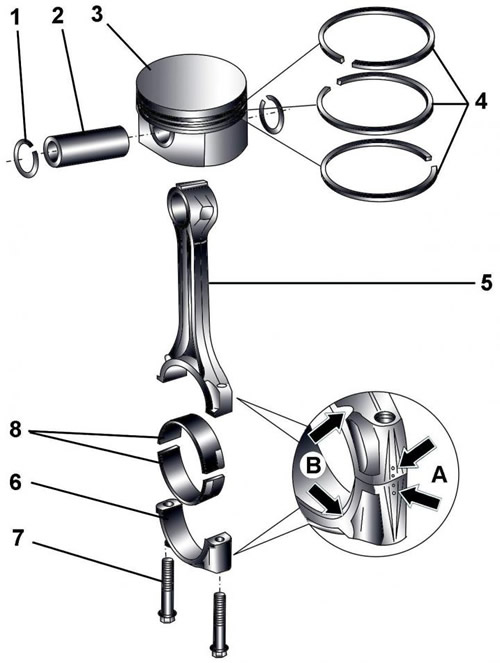
Fig. 3.1–74. Piston and connecting rod: 1 – retaining ring; 2 – piston pin; 3 – piston; 4 – piston rings; 5 – connecting rod; 6 – connecting rod cover; 7 – bolt, 30 Nm + turn further by 90°; 8 – connecting rod bearings
Before installing piston pin 2 (Fig. 3.1–74), it is necessary to heat piston 3 to a temperature of 60°C.
Mark the piston mounting position and the cylinder number in which it is installed.
The arrow on the bottom of the piston points to the belt pulley.
Before installing the piston into the cylinder, the piston rings must be compressed with a tension band clamp.
Measure the piston diameter.
The piston ring locks are located at an angle of 120°.
The "TOP" mark on the piston ring must point towards the piston bottom.
Measure the piston ring gap.
Check the clearance between the piston ring and the piston groove.
The connecting rod and connecting rod cap are provided with identification marks A, which should be located on one side.
The connecting rod and connecting rod cap have identification bossesIN, determining the mounting position of the connecting rod. In cylinders 1–3, the identification lugs should be located on the belt pulley side, and on cylinders 4–6, on the flywheel side.
When installing, it is necessary to use new bolts 7.
Before screwing in the bolts, the threads and the bearing surface of the bolt heads must be lubricated with oil.
When installing, it is necessary to maintain the correct mounting position of the connecting rod bearing.
Checking the gap in the piston ring lock
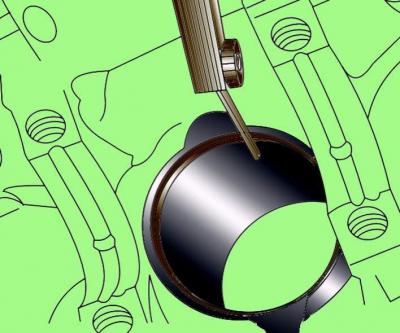
Fig. 3.1–75. Using a feeler gauge to measure piston ring gap
Insert the ring into the corresponding cylinder and push it with the piston bottom to a depth of 15 mm to prevent the ring from being skewed during measurement, then remove the piston. Measure the gap with a feeler gauge (Fig. 3.1–75). If the gap exceeds the norm, replace the rings and repeat the procedure.
If the gap is too small (which is unlikely), it is best to select new rings with a standard gap in the lock. Otherwise, serious damage will occur due to the rings closing when the engine is running. As a last resort, the gap can be increased by carefully filing the ends of the ring lock with a thin file. To do this, clamp the file in a vice with soft jaws, move the ring so that the ends of the lock are on both sides of the file, and, slowly moving the ring, remove excess material. Keep in mind that the ring is very fragile and can easily break.
Checking the clearance between the piston rings and the piston grooves
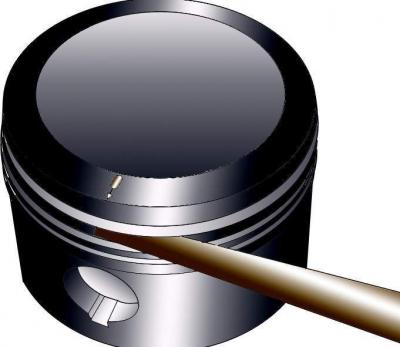
Fig. 3.1–76. Using a feeler gauge to measure the clearance between the piston ring and the piston groove wall
Check the clearance between the piston ring and the wall of the piston groove. To do this, insert the ring from the outside into the corresponding groove and measure the clearance between the upper surface of the ring and the wall of the groove with a feeler gauge (Fig. 3.1–76). If the clearance exceeds the norm when installing a new ring, replace the piston.
Measuring the piston diameter
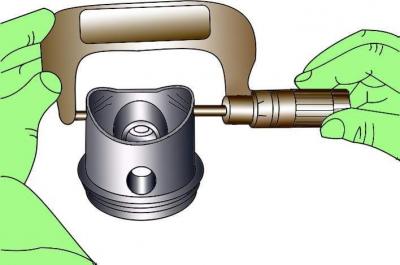
Fig. 3.1–77. Using a micrometer to measure piston diameter
Measure the piston diameter with a micrometer in a plane perpendicular to the piston pin axis, at a distance of 10 mm from the lower edge of the piston skirt (Fig. 3.1–77). The measured value should differ from the nominal value by no more than 0.04 mm. If the piston wear exceeds the maximum permissible value, the piston must be replaced.
Measuring the cylinder diameter
The cylinder diameter is measured in three planes in the transverse and longitudinal directions (Fig. 3.1–78). The clearance between the piston and the cylinder is defined as the difference between the measured diameters of the cylinder and piston.
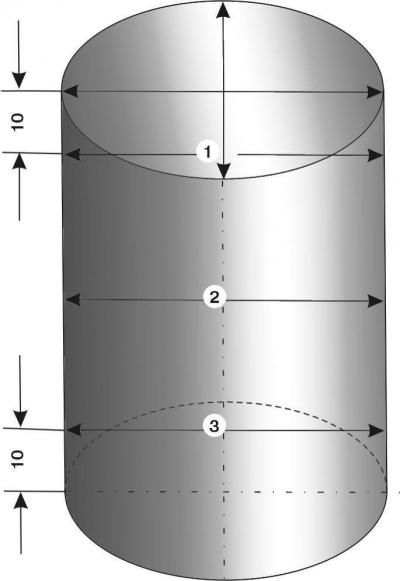
Fig. 3.1–78. Cylinder diameter measurement locations
The deviation of the cylinder diameter from the nominal value should not exceed 0.08 mm.
Pistons
Using a waterproof marker, make identification marks on the piston crowns. The arrow on the piston crown points to the belt pulley.
Connecting rod
Connecting rods do not require replacement, except in cases of engine seizure or other serious failures. Check the condition of the connecting rods visually, take deformed connecting rods to a service station for inspection and repair by an experienced specialist.
The connecting rod can only be replaced together with the connecting rod cap.
When removing, the connecting rod bearings must be installed in their original places.
Before removal, check the presence of identification marks on the connecting rod and connecting rod cap. Mark the connecting rod caps with the numbers of the corresponding cylinders in which they are installed.
The connecting rod radial clearance is checked in the same way as the radial clearance in the crankshaft main bearings, using a Plastigage plastic rod.
Warning: After loosening the intake manifold mounting bolts, all cylinder head mounting bolts must be re-tightened by turning them an additional 90°.
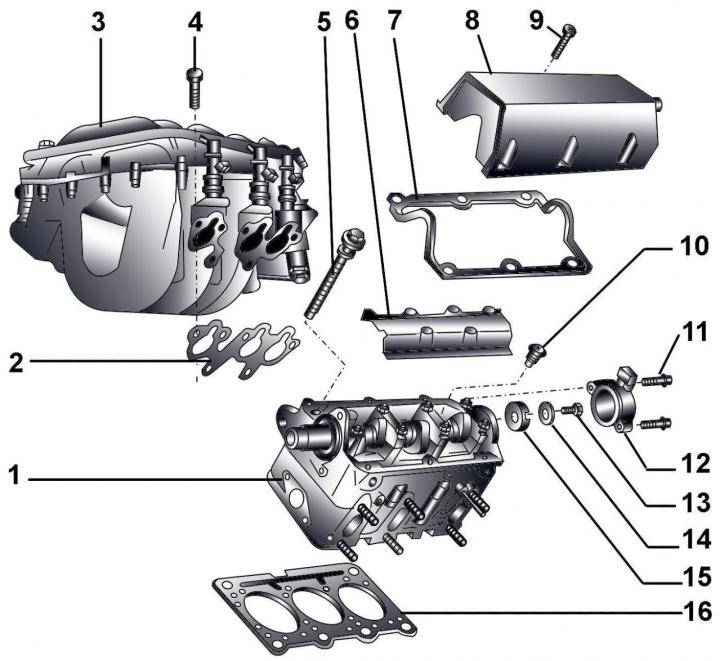
Fig. 3.1–79. Cylinder head: 1 – cylinder head; 2 – gasket; 3 – intake manifold; 4 – bolt, 20 Nm; 5 – cylinder head mounting bolts; 6 – oil deflector; 7 – cylinder head cover gasket; 8 – cylinder head cover; 9 – bolt, 10 Nm; 10 – pressure limiting valve 2.7 bar, 25 Nm; 11 – bolt, 10 Nm; 12 – casing; 13 – bolt, 22 Nm; 14 – conical washer; 15 – rotor; 16 – cylinder head gasket
[Text provided by the online resource «AUDIMANUAL.ru»]