




Checking the axle joint dust caps: When checking the axle joint seals (arrows on the right) you should also take a look at the cuffs of the stabilizer connecting rods (arrows on the left).
Check the steering folds for cracks: the easiest way to detect leaks is to stretch the folds (arrow).
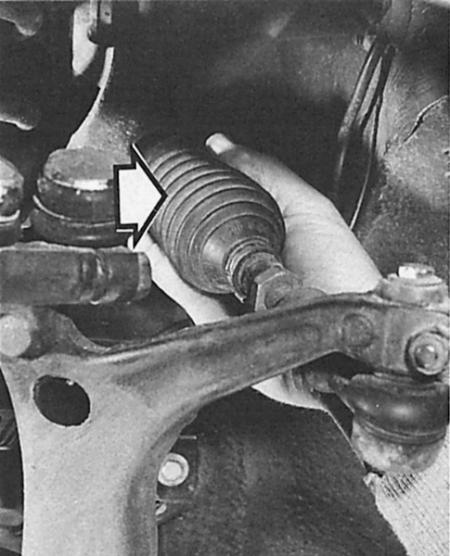
It is necessary to regularly check the condition of the dust seals (arrow) of the tie rod heads. The tie rod heads with torn seals must be completely replaced; seals are not sold separately at spare parts warehouses.
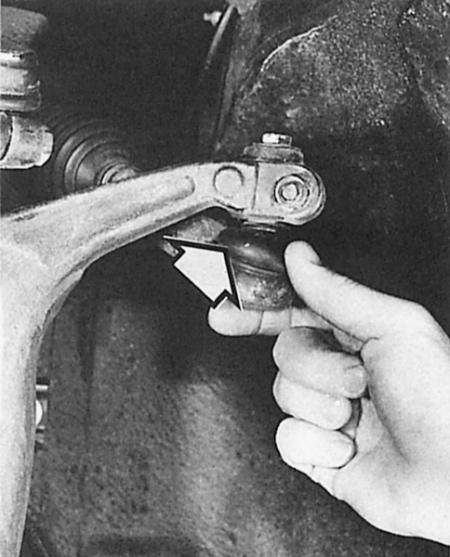
The front axle joints between the four wishbones of the independent suspension and the wheel bearing housing (commonly called the "steering knuckle") are not subject to maintenance. The steel ball heads of the axle joints are placed in long-term grease and additionally in synthetic shells. Rubber dust caps serve as protection against moisture and dirt. Penetrating dirt acts on the joint as an abrasive; dampness causes it to rust over time.
Execution order
1. Turn the steering wheel completely to one side.
2. Check the axle joint boots on the right and left for damage.
3. The dust cap cannot be replaced separately. The entire joint must be replaced, which makes sense since dirt and water have probably already penetrated through the crack.
4. Therefore, the joint is considered defective even before any gaps or creaks become noticeable.
5. Replace the hinge.
Tip: When checking the axle joint cuffs, you can also take a quick look at the front and rear stabilizer link joint cuffs (only in quattro). Due to their subordinate function, they are not safety components, but when the hinges fail, the knocking noise that occurs is at least annoying.
(This article was copied from the website «audimanual.ru»)