



Table of contents: Front oil seal ↓ Rear crankshaft oil seal ↓
Front oil seal
1. Remove the timing belt and crankshaft sprocket as described in paragraph 5.
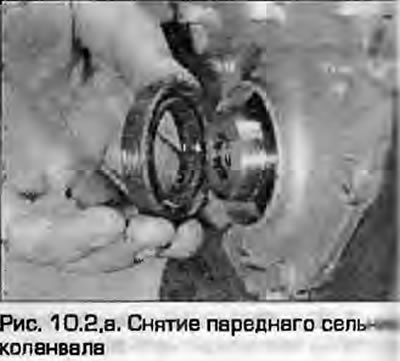
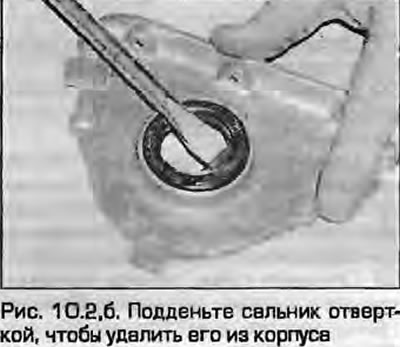
2. The seal can be replaced without removing the housing. Drill two small opposite holes in the seal to be replaced. Screw a screw into each hole and, pulling them with pliers, remove the seal (Fig. 10.2). Do not drill through the seal housing or the wheel seal! Using an alternative method, unscrew the housing mounting bolts (including the corresponding pan mounting bolts), remove the gasket and remove the oil seal by prying it off with a screwdriver (Fig. 10.2). If necessary, on ADP, ADR, AEB, AJL engines, remove the auxiliary shaft sprocket to improve access. If the oil pan gasket is damaged when removing the housing, it will be necessary to remove the oil pan and install a new gasket. However, the oil pan is installed after the oil seal housing is installed.
 |
 |
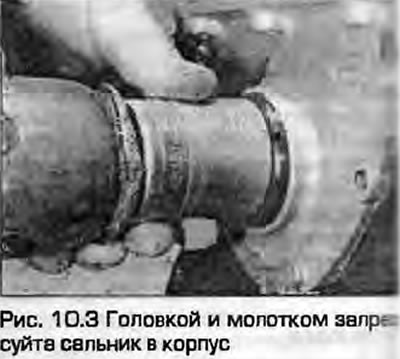
3. Lubricate the seal with clean engine oil and install it flush into the housing with the working edges facing inside the engine using a mandrel or a wooden block of a hammer (Fig. 10.3).
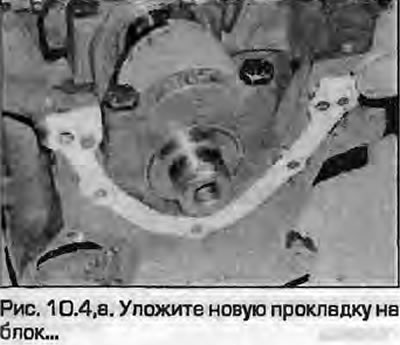
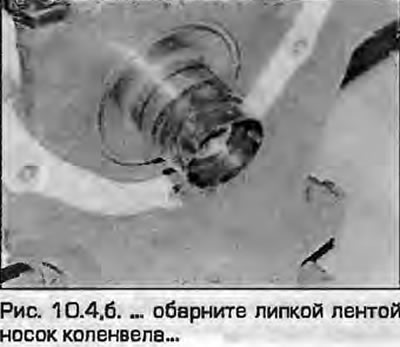
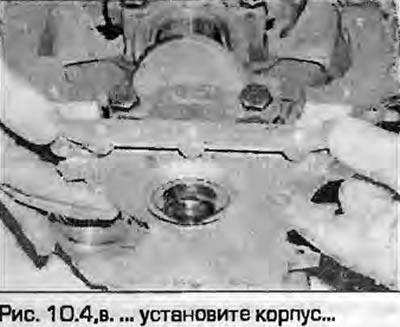
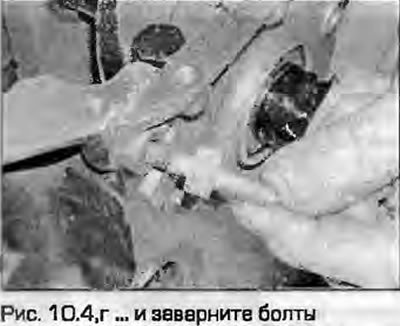
4. Install the housing with a new gasket, tighten the bolts evenly in a diagonal sequence. To avoid damaging the seal, wrap the sharp edges of the shaft with adhesive tape (fig. 10.4, a-g).
 |
 |
 |
 |
5. Install the timing belt and crankshaft sprocket as described in paragraph 5.
Rear crankshaft oil seal
Application: Before starting work, make sure that you have a seal without a housing. Later models are equipped with a seal in the housing and are not supplied separately as spare parts.
6. Remove the flywheel/faceplate as described in paragraph 13.
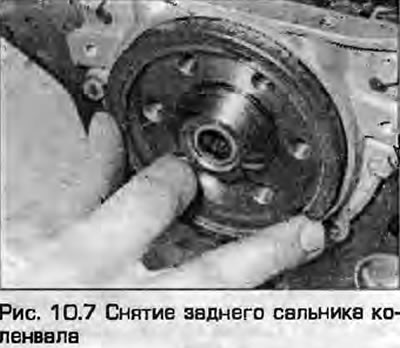
7. If there is a gland without a housing, it can be replaced without removing the housing. Drill two opposite holes in the hard edge of the gland, screw a self-tapping screw into them and, pulling them with pliers, remove the gland (Fig. 10.7). Using another method, dismantle the gland housing (to do this, you will have to unscrew the corresponding bolts securing the pallet), remove the gasket and press out the seal on the workbench. If the pan gasket is damaged when removing the housing, you will have to remove the pan and replace it. However, the pan is installed after the seal housing is installed. After removing the old seal, immerse the new one in clean engine oil and press it into the housing flush with the outer surface using a mandrel or wooden block. The seal is pressed in with the closed side facing outward.
8. If the old seal is built into the housing (non-removable), remove the housing (unscrew the corresponding mounting bolts on the pallet) and remove the gasket. If the pan gasket was damaged when removing the housing, you will have to remove the pan and replace the gasket. The pan is installed after the seal housing is installed.
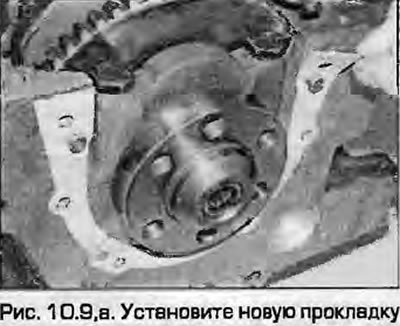
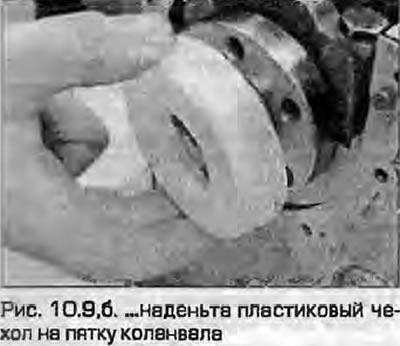
9. New oil seals are supplied complete with a plastic cover, which is put on the crankshaft to avoid damaging the oil seal during installation. First, put on the cover, then the oil seal (fig. 10.9, a, b).
 |
 |
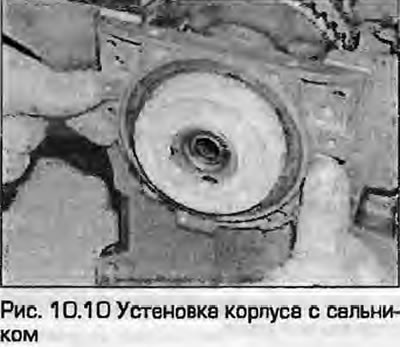
10. Install the housing with the seal and tighten the housing mounting bolts in a diagonal sequence to the specified torque, remove the cover (fig. 10.10).
11. Install the flywheel/faceplate as described in paragraph 13.
[The original article is available on the website «AUDImanual.ru»]