



2. Disconnect the thermal switch plug if the resistance is normal.
3. Short-circuit both contacts of the plug with a piece of wire. For two-stage thermal switches, short-circuit all three contacts. If in this case the radiator fan turns on and works, then the thermal switch is faulty.
4. Fix the jumper on the plug and insulate it to avoid short circuit. This will allow you to continue your trip.
If the above method does not give the desired result, then check the fan relay. When installing a jumper on both power wires of the thermal switch, when turning on the ignition, you should hear the clicking of the switching relay contacts.
Otherwise, short-circuit terminals 30 and 87 of the relay and put it back in place. The fan should turn on with the ignition off. In this case, this means that the relay is faulty.
Warning! Installing a jumper is only a way to continue the trip. Using it permanently is not allowed.
If the fan does not work even when the jumper is installed on the relay, then check the fan itself.
5. Disconnect the fan power plug and instead route the auxiliary wire from the positive battery terminal to the terminal that has the red-black insulation wire attached. The negative charge for the brown insulation wire is supplied directly from the negative battery terminal.
If the fan still does not work, it is faulty and must be replaced. If the fan does work in this case, check the relay, plugs, and all connections related to the thermal switch and radiator fan anyway. The trip can be continued, but the power wires from the battery to the fan must be well insulated.
Power for the second stage of the fan, if any, is provided through the wire with red and blue insulation. To check the fan operation at this stage, connect the wire (+) (-) to the contacts of the fan motor plug to which you connected the wire with red and blue insulation.
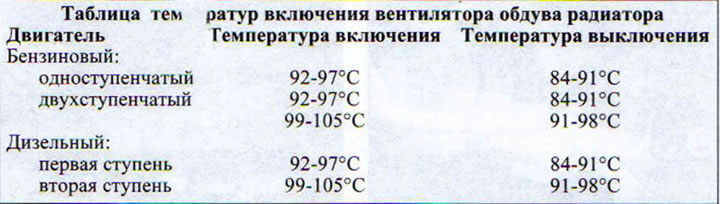
In diesel engines, the cause of the radiator blower electric fan malfunction may be a breakdown on the board with additional resistors (located in the front of the engine compartment, on the left side) or a defective relay for the second stage of fan rotation. In this case, check the relay as described above.
Material republished from the website: AUDIMANUAL