



1. Warm up the engine and turn off all electrical consumers in the on-board network.
2. Return the cold start accelerator handle to its original position.
3. Adjust the idle speed using the adjusting screw. Turning the screw to the right increases the speed, and turning it to the left decreases the speed (see illustration). The nominal value of the number of revolutions is 900 rpm. A tolerance of 30 rpm is allowed.
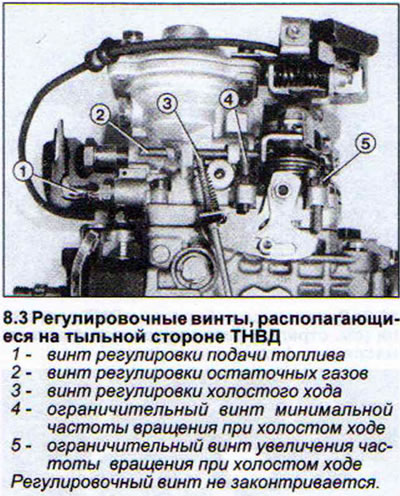
When the idle speed is set correctly, the idle speed should increase by 60 rpm when the cold start accelerator handle is moved. When the cold start accelerator handle is fully extended, the idle speed should be 1050±50 rpm. If the data obtained during the check does not match the specified data, loosen the lock nut of the idle speed increase limiting screw (see illustration 8.3).
4. Pull the idle speed control handle all the way out.
5. Set the speed to 1050 rpm using the stop bolt.
6. Tighten the lock nut of the stop bolt. Do not tamper with the residual gas adjustment screw. If the screw is accidentally turned, which can happen because the idle speed adjustment screw was located in this place on older types of diesel engines, the engine may malfunction. It may "hang" at high idle speed. This means that the adjusting screw was screwed in. If the screw is turned out, the engine will not respond well to increased fuel supply. If this situation occurs, do the following:
- a) Engine "hanging" with the adjusting screw screwed in:
7. Turn the adjusting screw out until the engine begins to make a normal transition to the set speed when the accelerator pedal is released. Check several times.
8. Turn the adjusting screw half a turn and tighten the lock nut.
- b) The engine responds poorly to the supply of "gas"
9. Turn the adjusting screw in until the engine "hangs" at high speed. Then perform the above steps.
The original text is available on the website AUDIMANUAL.RU