



Removal
1. Disconnect the negative battery cable. Remove the front bumper as described in chapter 11.
2. Drain the coolant as described in the relevant section chapters 1.
3. If there is a fan switch screwed into the radiator, disconnect the wiring from it.
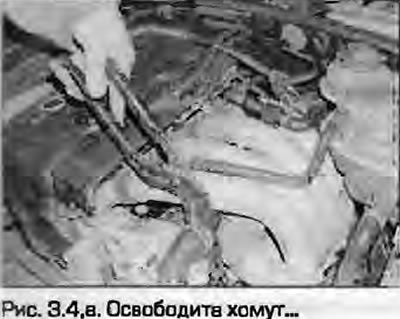
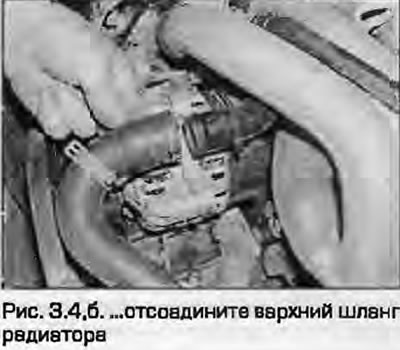
4. Loosen the clamps and disconnect the upper and lower hoses from the radiator, remembering the routing (fig. 3.4, a, b).
 |
 |
5. On models with automatic transmission, clean the areas around the hydraulic tube connections to the radiator. Loosen the mounting bolts, then carefully pull both tubes away from the radiator. Tighten the tube openings to prevent dirt from getting into the system. Discard the sealing rings; new ones will be required for installation.
6. On models with air conditioning, remove the nuts and bolts securing the condenser to the radiator and all the nuts and bolts securing the pipes. Release the condenser from the radiator and suspend it so as not to put any stress on the pipes. DO NOT DISCONNECT the refrigerant pipes (see paragraph 10).
7. On models with air conditioning, disconnect the wiring from the pressure sensor on the right side of the radiator.
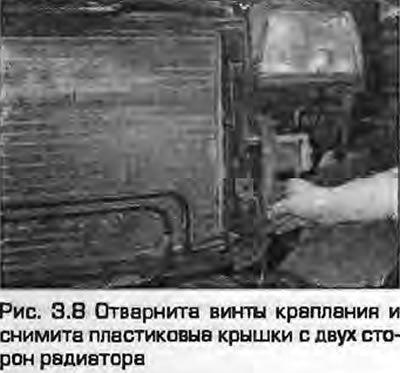
8. Loosen the mounting bolts and remove the plastic covers from the left and right sides of the radiator. If necessary, loosen the mounting screws of the air intake duct to the top of the radiator (Fig. 3.8).
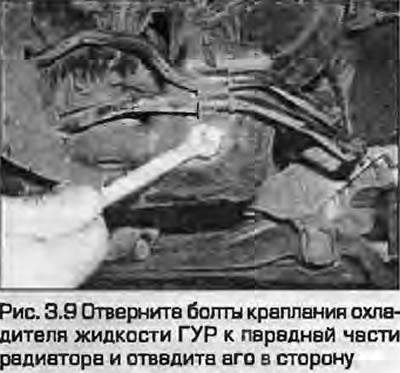
9. Unscrew the bolts securing the power steering cooler to the front of the radiator and move it to the side (Fig. 3.9). Tie the cooler to the body so as not to put stress on the hoses.
10. Remove the upper radiator mounts, tilt the radiator forward and remove it from the lower supports. On models with air conditioning, proceed with extreme caution to avoid damaging the condenser.
Examination
11. If the radiator was removed for flushing, flush it in the reverse direction as described in paragraph 32 of chapter 1A or 1B. Remove dirt from the outside of the radiator cells, using compressed air and a brush. Be careful, as the cells are very fragile.
12. If necessary, contact a specialist for help in determining the suitability of the radiator.
13. Take the leaking radiator to a specialized radiator repair shop. Do not try to weld or solder the radiator yourself, you can damage the plastic components - experience is needed.
14. If the radiator is to be sent for repair, remove all sensors and hoses from it.
15. Check the condition of the radiator supports, replace any defective parts.
Installation
13. Installation - reverse procedure. Please note the following:
- a) Make sure that the radiator is securely fastened to the lower supports and upper fasteners.
- b) On automatic models, install new O-rings on the tube mounts, lubricating them with clean transmission fluid before installation to make installation easier. Push both tubes in until they stop, then install the mounting bolts and tighten them securely.
- c) Make sure that the hoses are connected correctly and that their clamps are securely tightened.
- d) Fill the system with coolant as described in the relevant section chapters 1.
- d) On models with automatic transmission, finally check the fluid level in the box and top up the fluid if necessary, as described in the relevant section chapters 1.