



The anti-lock braking system (ABS) prevents the wheels from locking during sudden braking. This reduces the braking distance, especially when there is poor traction on the road surface in rain or snow. The force of traction between the wheels and the road is greater in this case, when the wheels continue to rotate during braking. In addition, even with full braking, the car remains controllable.
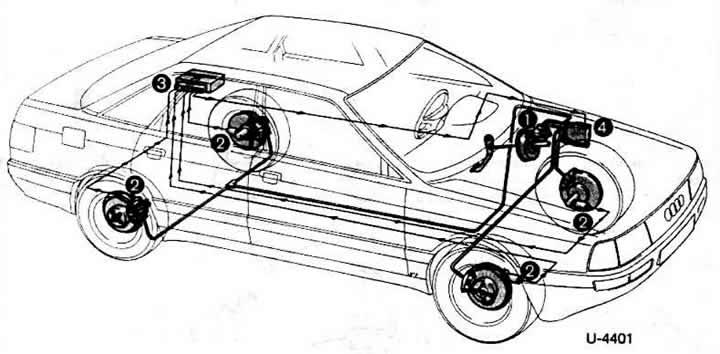
1 - master brake cylinder, brake booster, brake fluid reservoir
2 - speed sensor element
3 - electronic control unit
4 - hydraulic unit
ABS operates at speeds above 5-7 km/h. Regulation of all braking processes in the locking range begins after a speed of 12 km/h has been reached.
Based on signals from the speed sensors, installed two on the front and two on the rear wheels, the electronic control unit calculates the average speed, approximately corresponding to the speed of the car. By comparing the rotation speed of each individual wheel with the average calculated speed, the electronic unit recognizes the slip state of the individual wheel and thus determines which wheel is in the pre-lock state.