



The sealed cooling system includes a water pump with a drive belt, a radiator fan with a thermoviscous coupling, a radiator, an expansion tank, a thermostat and a heater core, as well as hoses and switches.
To cool the engine, the water pump keeps the coolant moving continuously. When the engine is cold, the coolant circulates through the cylinder head, engine block, and interior heater radiator. As the coolant temperature increases, the thermostat opens the large circulation loop. In this case, the coolant also passes through the radiator, and its temperature decreases due to the air flow blowing over the radiator.
The air flow is increased by a fan located behind the radiator. The fan is driven by a poly V-belt from the crankshaft pulley. Thermoviscous coupling (viscous coupling) the radiator fan is switched on depending on the air temperature behind the radiator. When a predetermined temperature is reached, the valve in the clutch opens and the thermoviscous clutch starts the fan impeller, which increases the airflow to the radiator. The fan speed cannot exceed the engine speed. Depending on the design, for example, if there is an air conditioner, an additional fan with an electric drive is installed. It is controlled by a two-stage temperature sensor, which is screwed to the lower left part of the radiator. When the coolant temperature is from +92°C to +98°C, the temperature sensor switches the fan to the first stage (low speed). If the coolant temperature rises to +99... +105°C, the fan switches on at maximum speed.
As a result of the periodic operation of the fan and thermostatic regulation of the coolant flow, the engine operating temperature is reached faster while reducing fuel consumption.
The electric fan can also be turned on when the ignition is off. When working on a hot engine, temporarily disconnect the fan connector.
Attention
- An electrically driven fan may turn on after the ignition has been turned off. Therefore, when working on a hot engine, it is necessary to disconnect the electrical connector from the fan motor for the duration of the work.
- When working on the cooling system, be careful not to let coolant come into contact with the toothed belt. Ethylene glycol contained in the coolant can damage the toothed belt material, which can lead to belt rupture during further operation.
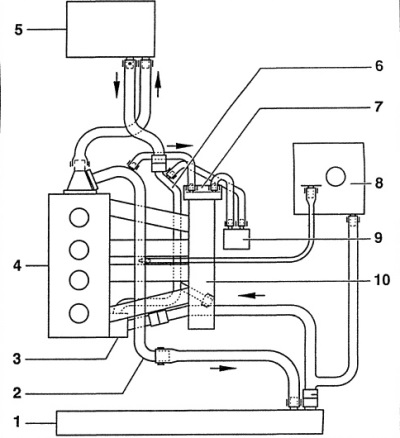
Fig. 3.1. Elements of the cooling system of 1.8-I petrol engines
1 - radiator,
2 - upper radiator hose,
3 - water pump/thermostat,
4 - cylinder head,
5 - heater heat exchanger (radiator),
6 - return coolant line,
7 - throttle assembly,
8 - expansion tank,
9 - oil heat exchanger,
10 - intake manifold.
This publication is borrowed from the resource: AUDIMANUAL.RU