



If the routine maintenance schedule is strictly followed from the date of purchase, with frequent checks of fluid levels and condition of high wear components as suggested in this manual, the engine will remain in good operating condition for a long time and the need for any additional work will be kept to a minimum.
More often, however, the engine is not running efficiently due to neglect of regular maintenance. This happens even more often when buying a used car, the owners of which did not bother with frequent and regular checks and maintenance. In this case, in addition to the usual routine maintenance procedures, it will be necessary to tune the engine.
The first step in any tuning or diagnostic procedure to improve engine performance is to check the compression ratio in the cylinders. Checking the compression (refer to subsection Checking the compression in the engine cylinders) will help determine the condition of the internal engine components and should serve as a guide when performing tune-ups and repairs. If, for example, a compression ratio check indicates severe internal engine wear, a simple tune-up will not improve its performance and will be a waste of time and money. Since the compression ratio check procedure is so important, it should be performed by a specialist who has the equipment specifically designed for this purpose.
To get the engine into good working order, the following procedures are most often required.
Minimum settings
Checking all fluids related to engine operation (subsection Checking the condition of the tires and their pressure)
Checking the condition of all hoses in the engine compartment (subsection Checking the condition and replacing engine compartment hoses, localizing leaks)
Checking and adjusting the tension of drive belts (subsection Checking the condition of ribbed drive belts)
Cleaning, inspection and checking the battery charge (subsection Checking battery condition, care and charging)
Replacing spark plugs or glow plugs (subsection Checking and replacing spark plugs)
Inspection of spark plug wires, except for direct ignition models
Checking the air filter (subsection Replacing the air filter element)
Checking the cooling system (subsection Checking the functioning of the cooling system)
General settings
All the above minimum setup points, plus...
- Checking the ignition or preheating system
- Checking the charging system
- Checking the fuel system
- Replacing spark plug wires, except for direct ignition models
Monthly checks
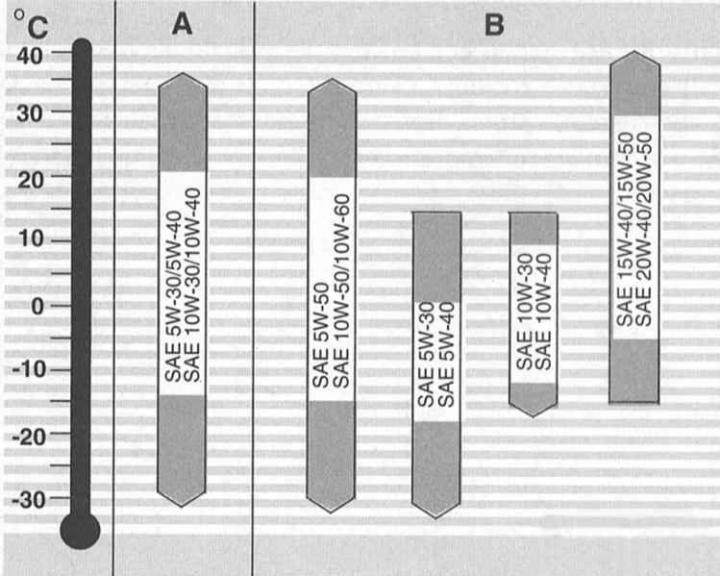
Viscosity map of used engine oils
Petrol engines
And all-season oils with increased antifriction properties, specification VW 500 001)
In all-season oils, specification VW 501 011)
all-season oils, API–SF specifications2) or SG2); ACEA – A2/A32)
1) This specification designation must be followed by a date no earlier than 10.91
2) These engine oils should only be used when no other recommended engine oil is available.
Turbo diesel engines
In all-season oils, specification VW 505 00
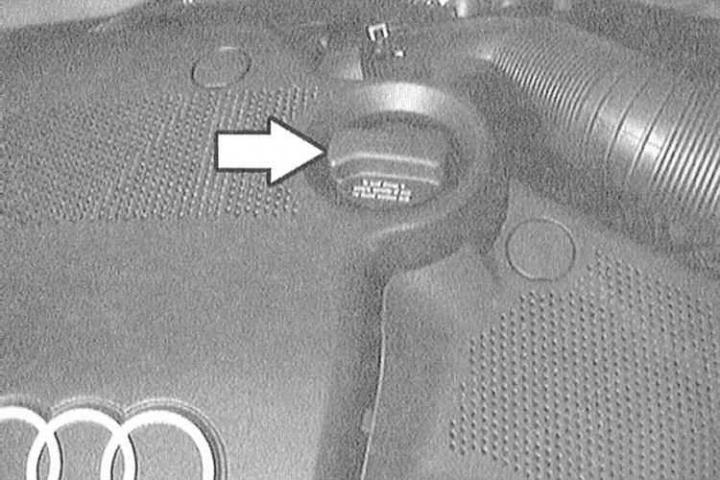
The oil filler cap is located in the cylinder head cover - make sure the area around the filler cap is clean each time before opening it
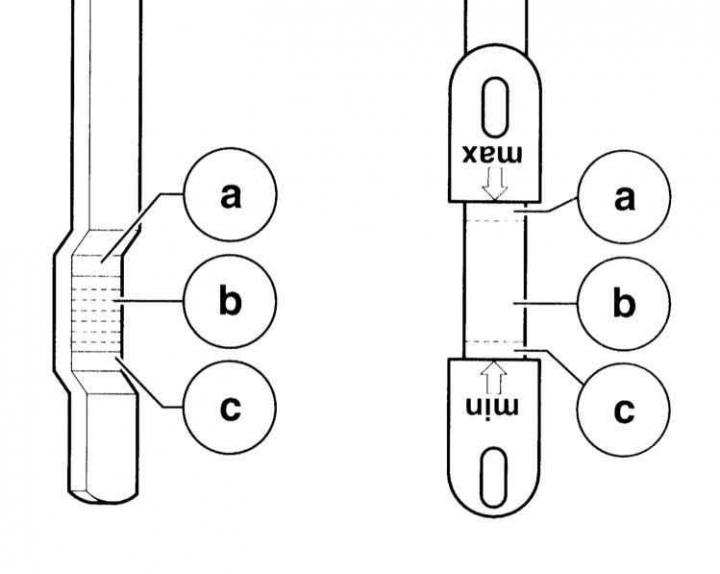
The oil level should be maintained between the two marks, preferably at or close to the upper one – if not, add oil to the upper mark. The amount of oil between the MIN and MAX marks is 1 liter. Two versions of the oil level indicator are shown
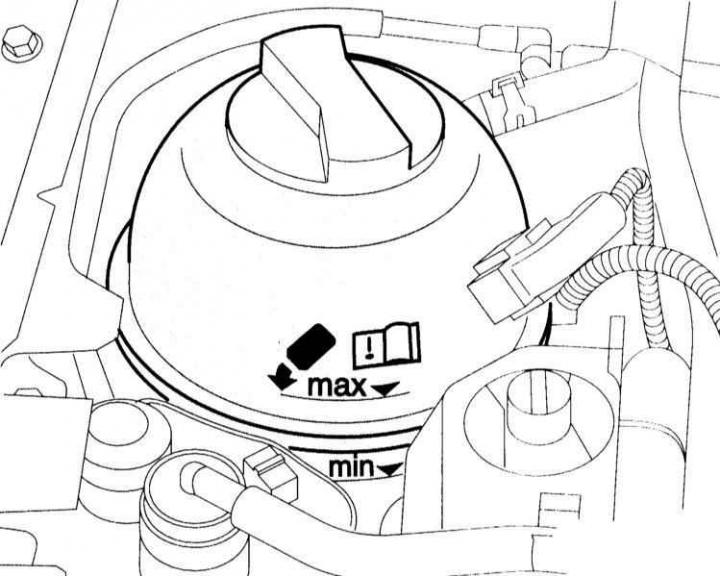
Expansion tank (coolant reservoir) is located on the side of the engine compartment. The fluid level on a cold engine should be between the MIN and MAX marks. On a hot engine, the level may slightly exceed the MAX mark. If necessary, remove the cap and add coolant