



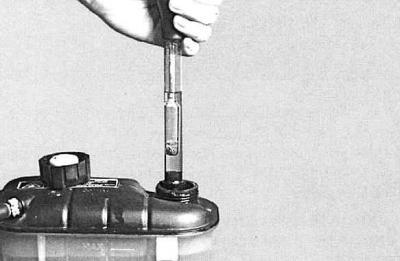
Checking the frost resistance (density) of the coolant in the expansion tank
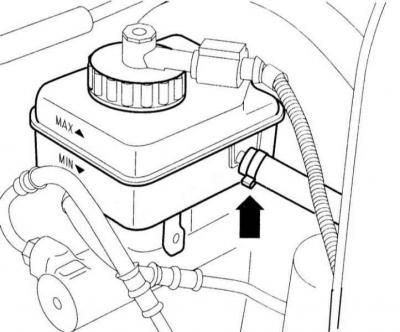
The brake fluid reservoir is located on the left in the engine compartment. The reservoir cap has a vent hole that should not be blocked. The brake fluid level should remain above the "MIN" mark on the translucent reservoir - remove the cap and top up the fluid
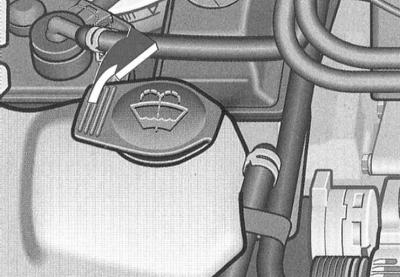
The windshield washer reservoir is located on the right side of the engine compartment
Warning: The following procedures are used to check the liquid level every 400 km or weekly. Other fluid level checks can be described later in the Sections on specific maintenance procedures. Regardless of the scheduled check intervals, do not allow fluid to leak under the vehicle, as such leaks indicate a malfunction that should be corrected immediately.
Execution order
1. Fluids are an integral part of the lubrication, cooling, braking and windshield washer systems. Due to the gradual consumption and/or contamination of fluids during normal vehicle operation, they should be replaced periodically. Read Section "Types and volumes of lubricants and fluids used" in the Specifications before adding fluid to any of the listed components.
Warning: Whenever checking the fluid level, the vehicle must be parked on a level surface.
Visual inspection of leaks
2. If the engine is oily and has a high oil consumption, check for leaks. To do this, check the following places:
- Open the filler cap and check the seal for cracks or damage.
- Crankcase ventilation: For example, the ventilation hose from the cylinder head cover to the air intake hose.
- Cylinder head cover seal.
- Cylinder head seal.
- Oil drain plug (round ring).
- Oil filter seal: filter fits onto flange.
- Oil pan seal.
- Front and rear camshaft and crankshaft seals.
Since the oil is spread over a large surface area of the engine when there is a leak, it is difficult to immediately identify the leak location. To detect leaks, proceed as follows:
3. Wash the engine as follows: cover the generator with a plastic bag. Spray the engine with a regular cold cleaner and after a short time wash it with water at a car wash.
4. Sprinkle the outside of the connecting surfaces and seals on the engine with lime or talc.
5. Check the oil level and top up if necessary.
6. Take a test drive. Since oil in a hot engine reduces its viscosity and comes out faster in leaks, it is necessary to take a test drive for a distance of about 30 km on a high-speed highway.
7. Finally, examine the engine with a lamp and locate the leaks, eliminating the faults.
Checking the level
8. The engine oil level is checked using the dipstick located on the side of the engine (refer to the engine compartment illustrations provided in this Chapter to determine its location). The dipstick passes through the metal tube downwards, reaching the bottom of the engine oil pan.
9. The engine oil level is measured before starting the engine or at least 15 minutes after turning it off.
Warning: If you measure the engine oil level immediately after turning off the engine, some oil will remain in the upper part of the engine, which will significantly affect the accuracy of the dipstick readings.
10. Remove the dipstick and wipe the blade dry with a clean rag or paper towel. Insert the dipstick all the way back and remove it again. The height of the oil-soaked section of the blade will correspond to the oil level in the engine. This level should be between the two marks on the dipstick.
11. It takes one liter of oil to raise the oil level from the minimum mark on the dipstick to the maximum. Do not allow the level to fall below the minimum mark, as oil starvation can cause engine damage. On the other hand, overfilling the engine with oil (topping up above the maximum mark) may cause spark plugs to become oily, oil leaks or seals to fail.
12. To add oil, unscrew the filler cap located on the cylinder head cover. After adding oil, wait a few minutes for the oil level to stabilize, then remove the dipstick and check the level again. Add more oil if necessary. Close the filler cap and tighten it by hand.
13. Checking the oil level is an important preventive procedure. A constant drop in the oil level indicates either leaks through damaged seals or loose connections, or its burning out (internal leaks through worn piston rings or through valve guides). In addition, you should pay attention to the condition of the oil itself. If the oil is milky or if you can see drops of water in it, this indicates a possible leak in the cylinder head gasket or a crack in the head or cylinder block. In this case, the engine should be repaired immediately. Each time you measure the oil level, before wiping the dipstick blade, run your thumb and forefinger over it. If you find dirt or metal particles stuck to the dipstick, the oil should be replaced (refer to the subsection Changing engine oil and oil filter).
Engine cooler
Warning: Do not allow antifreeze to come into contact with your skin or the painted surfaces of your vehicle. If this does happen, rinse off the antifreeze immediately with plenty of water. Antifreeze is extremely toxic if ingested. Never leave it unattended in an open container or spilled on the floor; children or animals may be attracted to its sweet smell and may drink it. Arrange with local authorities for disposal of used antifreeze.
14. All vehicles covered in this Manual are equipped with a compensating positive pressure cooling system. White plastic expansion tank (or coolant reservoir) is located in the engine compartment and is connected to the radiator by a hose. As the engine warms up during operation, the expanding coolant fills the tank. When the engine cools down, the coolant automatically flows back into the cooling system, which ensures that its level is maintained at a constant value.
15. Check the coolant level in the reservoir regularly. Add a 40%/60% mixture of ethylene glycol antifreeze and water. G12 composition should be used.
Please note: AUDI antifreeze and anticorrosion agents "G 11" used in previous AUDI models are not allowed to be used. G 11 is green. G 12 is red. G11 and G 12 should not be mixed, as this can cause severe engine damage. The brown mixture (G 11 and G 12) must be replaced immediately.
Warning: Do not remove the coolant expansion tank filler cap or radiator cap to check the coolant level until the engine has cooled down completely! The level in the reservoir fluctuates depending on the engine temperature. When the engine is cold, the coolant level should be above the "MIN" mark on the reservoir. As the engine warms up, the level should approach the "MAX" mark. If this is not the case, allow the engine to cool down and then remove the reservoir cap.
16. Run the vehicle and measure the coolant level again. If only a small amount of coolant needs to be added to the required level, then clean water can be used for this. However, frequent additions of water will dilute the antifreeze. To ensure the correct ratio of antifreeze to water, always add the required mixture to the required level.
17. If the coolant level drops regularly, there may be a leak in the system. Inspect the radiator, hoses, filler cap, drain plugs and water pump. If no leaks are found, check the expansion tank cap and radiator for leaks at an AUDI service station.
18. If you need to remove the cover, wait until the engine has cooled down completely, then wrap a thick rag around the cover and unscrew it to the first stop. If steam or coolant starts escaping from under the cover, allow the engine to cool down a little more before removing the cover.
19. It is also necessary to check the condition of the coolant. It should be relatively clean. If the liquid is brown or rusty, it should be drained, the system flushed and filled with a new mixture. Even if the coolant looks normal, the corrosion inhibitors in its composition lose their effectiveness over time, so it should be replaced at certain intervals.
20. To check the frost resistance of the coolant, it is necessary to use a hydrometer.
Brake and clutch fluid
Warning: Brake fluid can cause eye damage and damage painted surfaces, so use extreme caution when handling it. Do not use brake fluid that has been open for a long time or that is more than one year old. Brake fluid tends to absorb moisture from the air, which can lead to a dangerous loss of braking efficiency. Use only the recommended type of brake fluid. Mixing different types of fluid may cause brake failure.
21. The brake master cylinder is located in the rear left corner of the engine compartment.
22. To check the clutch fluid level, look into the translucent reservoir. The level should be near the lip on the reservoir. If it is lower, remove the cap and add the recommended fluid.
23. The brake fluid level is also checked visually, using the marks on the plastic reservoir mounted on the master cylinder. The fluid level should be between the "MAX" and "MIN" marks. If the level is below the acceptable level, first wipe the top of the reservoir and the cap with a clean rag to prevent dirt from getting into the system after removing the cap. Top up to the required level with the recommended fluid, but do not overfill.
24. While the reservoir cap is off, check the fluid and master cylinder reservoir for contaminants. If there are rust particles, dirt or water droplets, the system should be drained and new fluid added.
25. After filling the reservoir to the correct level, make sure the lid is installed level to prevent liquid leakage and/or dirt ingress.
26. The fluid level in the master cylinder will drop slightly as the brake pads wear. There is no need to top up as long as the level remains near the "MIN" mark; it will rise after replacing the linings. A very low level may indicate worn brake pads. Check them for wear.
27. If the brake fluid level drops constantly, immediately check the entire system for leaks. Inspect the brake lines, hoses and fittings, along with the calipers, wheel cylinders and master cylinder.
28. If the reservoir is empty or nearly empty when checking the fluid level, the brake or clutch system should be checked for leaks and bled.
Windshield washer fluid
29. The windshield washer fluid is located in a plastic reservoir on the right side of the engine compartment. The capacity of the reservoir on cars with headlight washers is 5.5 liters.
30. In temperate climates, the system can be filled with plain water, but it is recommended to add a glass cleaner with a solvent for wax preservatives to the water. The reservoir should be no more than two-thirds full to allow for expansion of the water when it freezes. In cold climates, a special windshield washer antifreeze should be used to lower the freezing point of the liquid, which can be purchased at any auto accessory store. It is usually sold in concentrated or ready-made form. If you purchased concentrated antifreeze, mix it with water according to the manufacturer's instructions on the package.
Warning: Do not use antifreeze in the cooling system - it will damage the painted surfaces of the vehicle.
The original article is located on the online resource AudiManual