



Warm up the engine until it reaches normal operating temperature.
Safety instructions. When opening the expansion tank cap on a hot engine, be careful, as escaping steam can cause severe burns. To do this, cover the expansion tank cap with a thick layer of cloth and slowly unscrew the cap until a hissing sound is heard. After the hissing stops, slowly unscrew and remove the cap from the expansion tank. Remove the cap from the expansion tank only at temperatures below +90°C.
Remove the cap from the expansion tank and replace it with the HAZET 4800-1 test device with the 4800-5 adapter.
Using the hand pump of the testing device, create a pressure of 1.0 bar in the cooling system. If the pressure in the system drops to zero within a short period of time, the cooling system is not sealed and there is a coolant leak, which must be found and eliminated.
To check the overpressure safety valve located in the expansion tank cap, install the cap in the test device and create pressure with a hand pump. At a pressure of 1.4-1.6 bar, the overpressure safety valve should open.
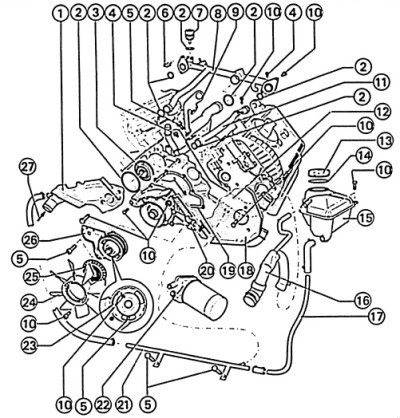
Fig. 3.2. Elements of the V6 engine cooling system
1 - thermostat housing,
2 - sealing ring,
3 - thermostat,
4 - air bleed screw,
5 - bolt, 25 Nm,
6 - spring retainer,
7 - temperature sensor,
8 - rear pipe of the cooling system,
9 - engine lifting earring,
10 - bolt, 10 Nm,
11 - cooling system pipe,
12 - front pipe of the cooling system,
13 - cover,
14 - sealing ring,
15 - expansion tank,
16 - upper hose of the cooling system,
17 - cooling system pipe,
18 - rear timing belt cover,
19 - gasket,
20 - water pump,
21 - lower pipe of the cooling system,
22 - oil heat exchanger,
23 - belt pulley,
24 - wheels of the temple fan,
25 - Visco fan clutch,
26 - cover,
27 - from the lower radiator hose.