



2. The fluid level may drop even with a functioning brake system. This happens due to wear of the brake linings on the front disc brakes. In this case, the pistons of the wheel brake cylinders come out of the cylinders, and the brake fluid follows them. Since the clutch hydraulics also operate on brake fluid, a decrease in the fluid level may also be associated with a clutch malfunction.
3. If the brake fluid level has dropped, but it remains between the maximum and minimum marks on the reservoir, then this is not a cause for concern.
4. Whether or not to top up the brake fluid depends on the degree of wear of the brake pads. If the pads are almost worn out, the fluid level may drop to the minimum mark. When installing new pads, the pistons of the brake cylinders move back, and the fluid level rises. With new pads or pads in good condition, you can top up the fluid if necessary, but first make sure that there are no loose spots in the brake system.
5. Only brake fluid meeting the American standard FMVSS 116 DOT 4 can be used for topping up.
Warning! Brake fluid is poisonous and corrodes varnish. Since brake fluid is hygroscopic, it should be stored in a tightly closed container.
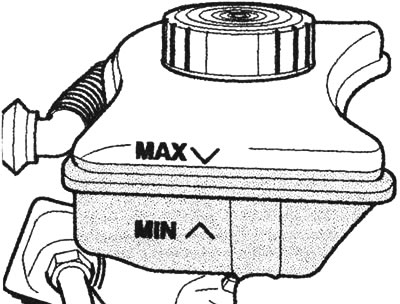
If the brake fluid level in the reservoir drops, it does not necessarily mean that some part has failed. Due to wear and automatic adjustment of the brake pads, the fluid level gradually drops. Before adding fluid, check the brake system and the condition of the brake pads. To prevent fluid from leaking out of the reservoir, do not exceed the maximum mark.