



Table of contents: Removal ↓ Installation ↓
Removal
Loosen the wheel bolts, lift the car, remove the wheels.
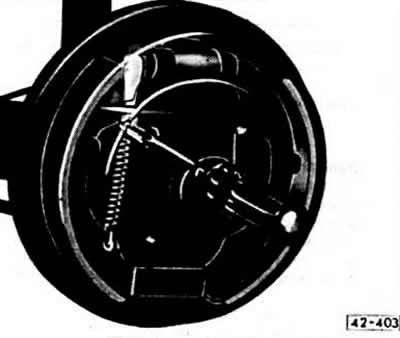
Fully release the brakes. To do this, push the wedge up through the hole in the brake drum until it stops.
Squeeze or knock off the cap with a rubber mallet.
Remove the cotter pin, remove the crown ring, unscrew the nut, remove the pressure washer.
Remove the outer wheel hub bearing.
Note: The bearing may fall out, put a clean cloth underneath. If the bearing is dirty, clean it with gasoline or lubricate it with a special casting grease.
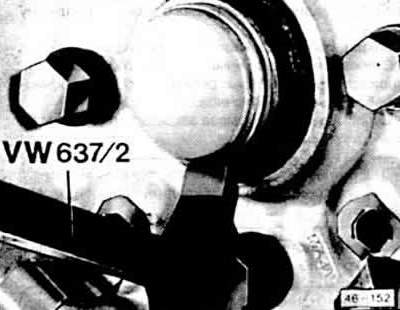
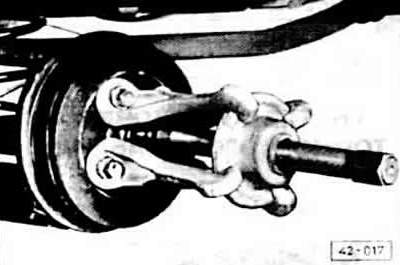
If necessary, remove the brake drum from the journal using a universal puller.
Remove the seal and inner bearing if it was not removed together with the drum.
Installation
Thoroughly clean the brake drum. Check for wear, integrity, size compliance, thread condition and working surface. Fill the hub with universal grease.
Insert the inner bearing together with the bearing grease into the brake drum, hammer the seal with a rubber hammer. Before doing this, lightly lubricate the rubber lips.
Put on the brake drum.
Lubricate the outer bearing with wheel bearing grease and place it on the journal.
Screw on the nut with the pressure washer.
Adjust the bearing clearance.
Install the crown lock so that the cotter pin can be inserted.
Use a new cotter pin and hammer the cap in with a rubber mallet.
Install the rear wheel, lower the vehicle, tighten the wheel bolts crosswise to 110 Nm.
Press the brake pedal fully several times, thereby setting the brake pads to the working position.
[This article was copied from the website «AUDImanual»]