



Table of contents: Position of the three-point seat… ↓ Fastening of three-point seat belts… ↓ Belt height adjustment ↓ Adjusting the rear side seat belts ↓ Adjusting the middle rear seat belt ↓ Waist belt ↓ Unfastening seat belts ↓ Long-term locking of seat belts ↓ Seat belt tensioners ↓
Attention
- The maximum protective effect of the belts is achieved only if the seat is positioned correctly.
- Never use one belt to secure two people at once (including children). It is especially dangerous to fasten a child when he is sitting on your lap.
- The belt tape should not press against hard or brittle objects (glasses, ballpoint pens, etc.), as this may cause injury.
- Damaged or stretched seat belts due to an emergency activation must be replaced at a specialized enterprise. In addition, the belt attachment points must also be checked.
Position of the three-point seat belt straps
The position of the belt straps is of great importance for the protective effect of seat belts.
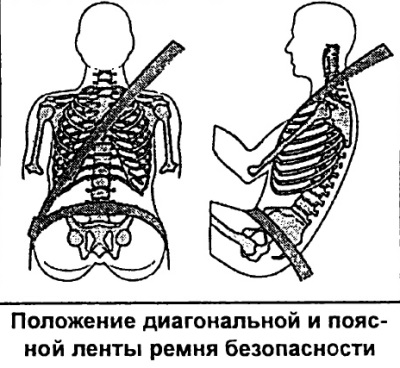
Possibility of adjusting the position of the seat belt according to height:
- Belt height adjustment
- Front seat height adjustment
Attention
- The diagonal part of the belt tape should pass approximately through the middle of the shoulder and should never encircle the neck. At the same time, it should fit tightly to the chest. The waist tape should always fit tightly to the hips, not to the stomach. If necessary, tighten the belt tape.
- Insufficient belt tension (the belt does not fit the body) may cause injuries, since in an accident, under the influence of kinetic energy, the body moves forward and is suddenly braked by the belt.
Fastening of three-point seat belts by pregnant women and position of belt straps
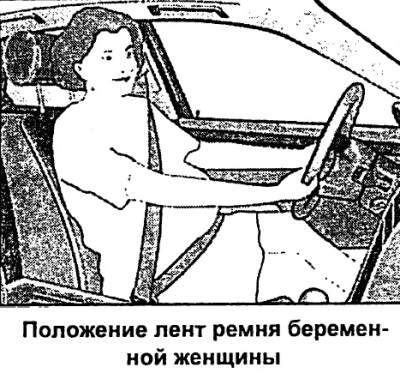
Pregnant women should also always wear seat belts.
- Install the front seat and headrest correctly and only then fasten the belt.
- Take hold of the belt buckle, smoothly pull the tape out, and place it over your chest and waist. The waist tape of the belt should be positioned as low as possible toward your hips to avoid pressure on your lower abdomen.
- Insert the clasp into the slot of the corresponding lock until you hear a click.
- Be sure to pull the belt and make sure the lock is locked.
Belt height adjustment
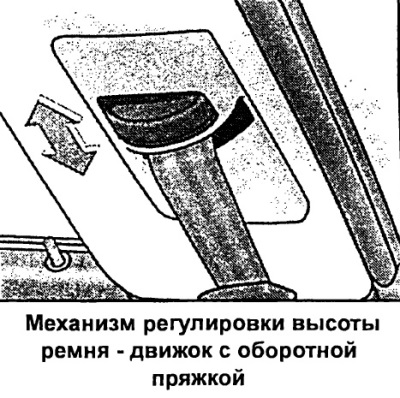
- Move the slider with the reverse buckle up or down so that the diagonal tape is approximately at the level of the middle of the shoulder, but in no case does it cover the neck.
- After adjustment, pull the belt to ensure that the buckle is securely fastened.
Adjusting the rear side seat belts
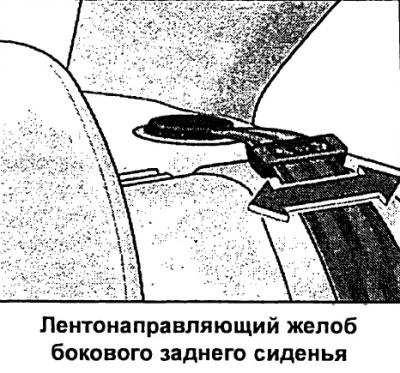
- For passengers of short stature, the belt strap may not be at mid-shoulder level, but rather go around the neck.
- In this case, adjust the position of the belt by moving the belt guide towards the door (for passengers of small stature) or to the middle of the cabin (for tall passengers).
Adjusting the middle rear seat belt
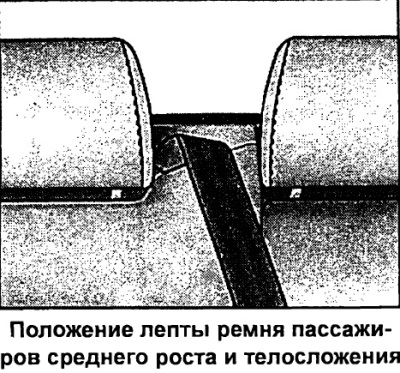
- For passengers of short stature, the belt strap may not be at mid-shoulder level, but rather go around the neck.
- In this case, adjust the position of the belt by installing it in the belt guide groove.
Waist belt
- Pull the belt webbing out in one continuous motion and insert its buckle into the center rear seat buckle slot until it clicks into place.
The belt is only pulled out if the belt webbing has been completely retracted by the retractor mechanism.
When the belt is properly fastened, the red button is located on the outside of the belt buckle.
Unfastening seat belts
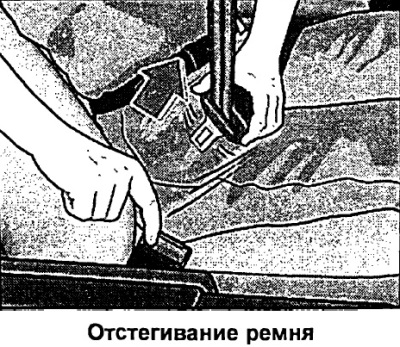
- Press the red button of the lock. The clasp is pushed out of the socket by the action of the spring.
- To make the automatic belt retraction system easier to operate, pull the buckle back by hand.
Long-term locking of seat belts
A permanent three-point belt lock is available for securing a child seat to the front passenger seat or rear seats. This belt lock ensures that the child seat is firmly secured in the vehicle.
Warning. When the front passenger airbag is on, do not install a child seat in its place with the child sitting with his back to the direction of travel. There is a risk of serious or fatal injury to the child if the airbag deploys!
Seat belt tensioners
The safety of the fastened driver and passengers is increased, in addition to the airbag system, by belt tensioners located on the automatic retractor mechanisms of the three-point seat belts.
The system is triggered by sensors in the event of dangerous frontal collisions. In this case, the fastened three-point seat belts are automatically tightened.
The belt webbing must not pass over the folded rear seat backrest. Otherwise, the rear seat belt webbing tensioners will be activated in an accident.
In more severe collisions, additional airbags are deployed. The seat belt tensioners do not deploy in rear collisions or rollovers.
Attention. The protective action of the system is sufficient for only one accident. After the belt tensioners are triggered, the tensioner system must be replaced.