



Table of contents: 1 - Moving the seat in the… ↓ 2 — Adjusting the angle of the seat… ↓
The correct position of the seat ensures ease of use of controls, does not lead to fatigue and stiffness of the body, and increases the protective effect of seat belts.
Adjustments to the front seats should be made before the driver or passenger fastens the seat belt.
Do not place objects under the seats that may make it difficult to adjust the seats. After moving the seat longitudinally or changing the backrest angle, make sure that the seat or backrest is locked in the new position.
1 - Moving the seat in the longitudinal direction
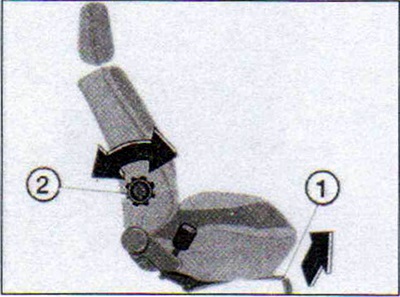
Move the seat by first pulling handle 1 upwards. Then, releasing the handle, move the seat again until the lock clicks into place.
The driver's seat should be positioned so that the driver can, with his legs bent at the desired angle, press the control pedals all the way down.
Caution: For safety reasons, the driver should only move the seat longitudinally after the vehicle has stopped.
2 — Adjusting the angle of the seat back
Lean forward and turn the backrest adjustment handle.
The driver's seat back should be positioned so that the driver can hold the steering wheel with his arms slightly bent at the elbows at its highest point.
Warning! The seat backs should not be reclined while driving. This reduces the restraining effect of the seat belts.
3 - Seat height adjustment
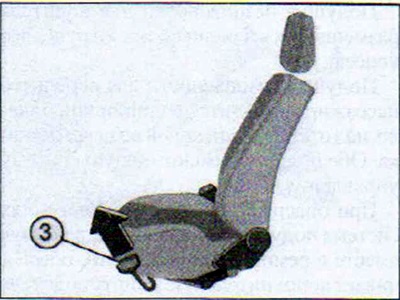
Shifting your body weight to the front of the cushion, pull handle 3 upwards.
When loading or unloading the seat, adjust the seat to the desired height and release the handle.
Caution: For safety reasons, the driver should not adjust the seat height only while driving.
[The text is based on materials from the website: AUDIMANUAL]