



The pressure data obtained during measurement on each cylinder of a petrol engine should not differ by more than 3 bar. If the pressure in one or more cylinders differs from the pressure in other cylinders by more than 3 bar, this indicates a defect in the valves, wear of the piston rings or working surfaces of the cylinders, as well as the cylinder head gasket.
When checking the compression, the engine oil temperature should be at least +30'C. At this oil temperature, the oil filter is warm enough to the touch. Warm up the engine if necessary.
1. Unscrew the bolts (see arrows in the illustration) and remove the upper engine protective cover.
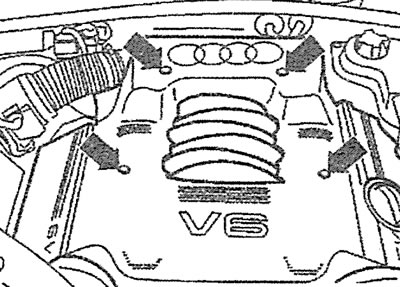
5.1. Unscrew the bolts (see arrows) and remove the upper engine cover
2. Remove the mounting clamps and disconnect the air duct (see arrows in the illustration).
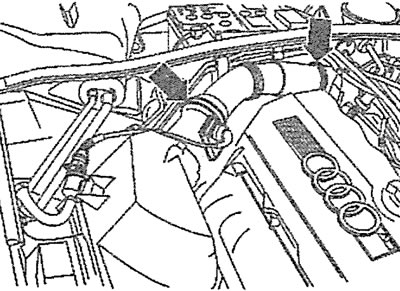
5.2. Remove the mounting clamps and disconnect the air duct (see arrows)
3. Remove the spark plug caps (see arrows in the illustration) and unscrew the spark plugs using a special spark plug wrench.
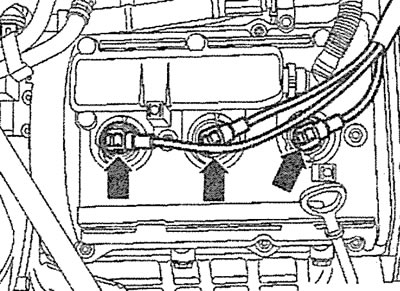
5.3. Remove the spark plug caps (see arrows)
4. Disconnect 5-pin plug 1 from the ignition coils (see illustration).
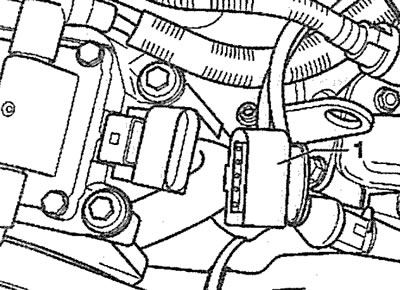
5.4 Disconnect 5-pin plug 1 from the ignition coils
5. Disconnect the fuel injector connectors.
6. Screw the compression tester into the spark plug socket, following the instructions for use.
7. Ask an assistant to hold the accelerator pedal depressed until the check is complete.
8. Let the engine turn over approximately 8 revolutions until the pressure registered by the compression gauge stops increasing. Read the compression gauge readings.
9. Install the removed components in the reverse order of removal.
Attention! The engine control unit registers disconnection of the plugs as a malfunction. In this regard, it is recommended to contact a workshop at the earliest opportunity to delete the entry.
Compression Values Table
| nominal value | maximum permissible value | |
| Compression, bar | 9-14 | 7,5 |