



Table of contents: Windshield ↓ Removal and installation the rain… ↓ Replacing the rain and light sensor… ↓
Windshield
On vehicles with lane keeping assist, the video camera must be calibrated.
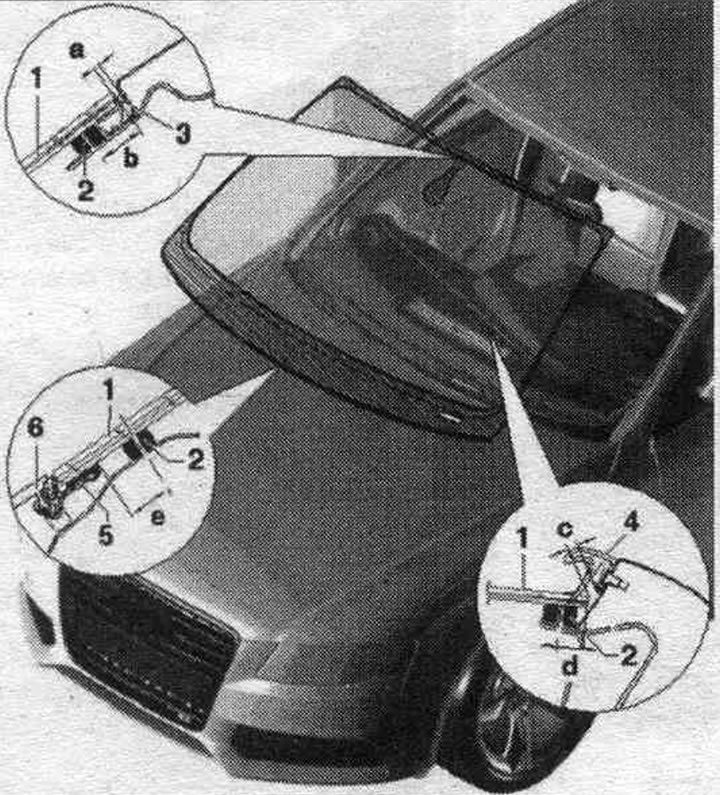
1. Windshield: distance to the roof, dimension "a" = 2 mm; align the side gap, dimension "c".
2. Glue roller: observe the minimum curing time; size "b" = 17 mm + 2 mm, size "d" = 8 mm + 2 mm, size "e" = 12 mm + 2 mm.
3. Slotted cover: not a spare part; when removing the glass, it is necessary to pass the cutting wire under the joint plate.
4. Waterproof cover.
5. Edging frame of the water drainage box cover: not a spare part; before installing the cover of the water drainage box on a new glass, first remove the protective edging.
6. Water deflector box cover: insert into the fixing strip only after the glass adhesive has hardened (3 hours).
Removal the sealing strip
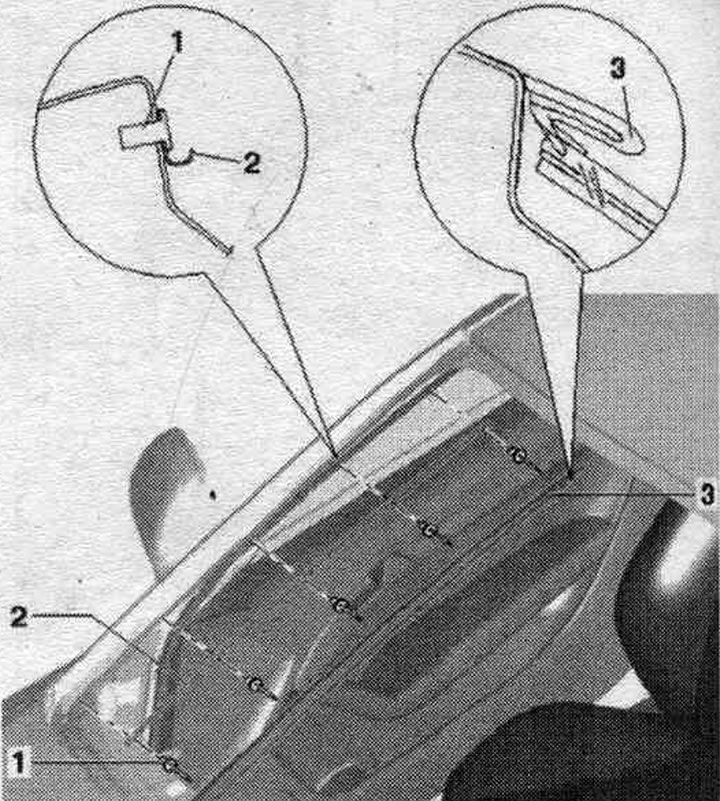
1. Blind rivet: 5x; installation of rivets on the guide starts from the top.
2. Guide: To remove, drill out the heads of rivets "4" and knock out the rivets.
3. Waterproof pad: Press firmly into the guide from top to bottom; at the junction with pillar A, observe the tolerances for protrusion.
Removal the protective edging
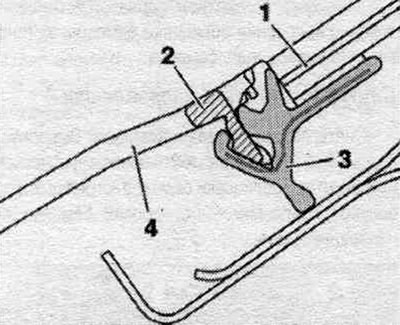
Before installing the water drainage box cover "4" on the new windshield "1", it is necessary to first remove the protective edging "2" from the edging frame "3".
Removal and installation the rain and light sensor "G397"
When removing the rain and light sensor "G397", the film is removed; when reinstalling it, it must be replaced. The outside mirror has been removed.
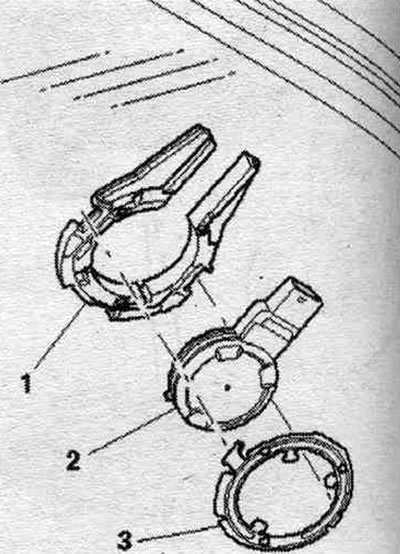
1. Mounting plate.
2. Rain and light sensor "G397".
3. Clamp "3".
Unlocking the clamp
Disconnect the connector. Press clamp "2" outward, for example, with a small screwdriver, with the "arrows" facing outward. Remove clamp "2" from mirror base "1." Remove rain and light sensor "G397" "3" from the mirror base. At the same time, the film from the sensor remains stuck to the windshield. If the old glass is being installed, remove the sensor film from the glass without leaving any residue. Clean the surface with cleaner D 009 401 04.
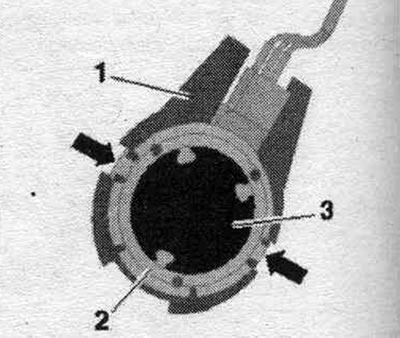
Installation of the rain and light sensor "G397"
When installing the previous rain and light sensor "G397", the sensor film must be replaced. If necessary, remove any remaining sensor film from the rain and light sensor "G397". Carefully remove the sensor film "2" from the rain and light sensor "G397" "1". Clean the surface with cleaner D 009 401 04. There should be no film residue on the sensor surface.
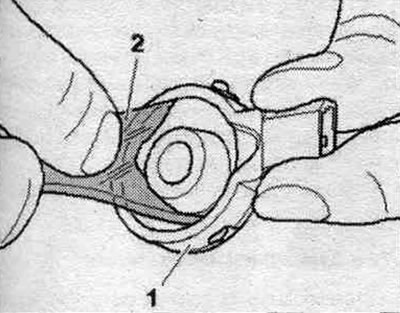
Remove silicone paper "3" from sensor film "2". Transparent protective film "1" remains on the sensor film initially as a support.
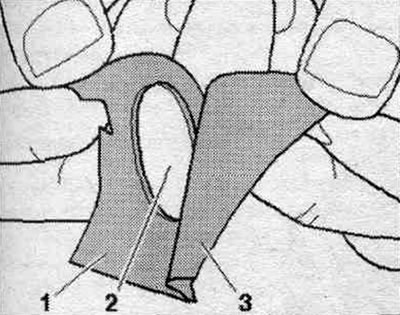
Place the sensor film using the transparent protective film "1" on the rain and light sensor "G397" "2".
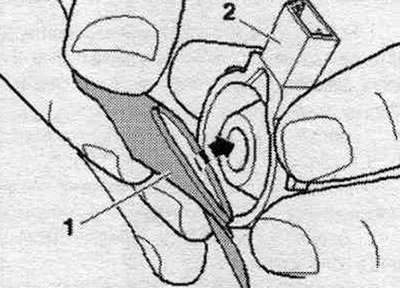
As shown in the figure, press the sensor film through the protective film "1" without forming bubbles to the rain and light sensor "G397" "2".
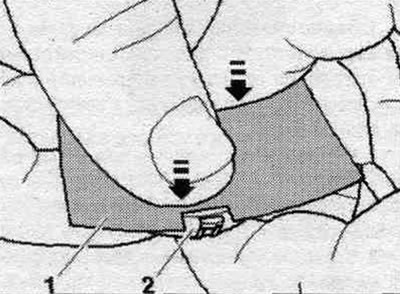
After this, remove the transparent protective film "1" from the sensor film "2".
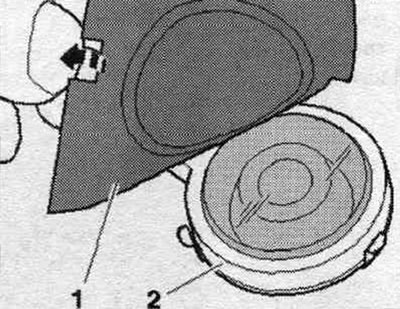
Spray the entire surface of the sensor film "1" with cleaner D 009 401 04 and insert the rain and light sensor "G397" into the mirror base. For the rain and light sensor "G397" to function properly, there must be no foreign inclusions or bubbles on the contact surface with the windshield. Install the sensor mounting bracket onto the mirror base.
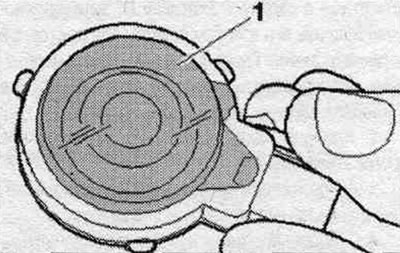
Replacing the rain and light sensor "G397"
The sensor is replaced according to the description above. If necessary, completely remove the remaining film of the previous rain and light sensor "G397" from the windshield. Clean the mating surface with the windshield using cleaner D 009 401 04. Slightly squeeze the surfaces of the "arrows" on the cap "1" and remove from the rain and light sensor "G397" "2".
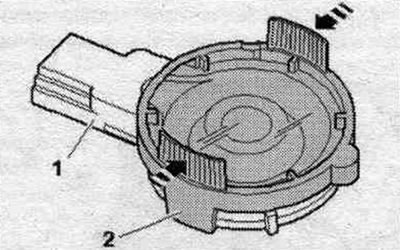
Spray the entire surface of the sensor film "1" with cleaner D 009 401 04 and insert the rain and light sensor "G397" into the mirror base. Install the rain and light sensor "G397" on the windshield without forming bubbles and press the fasteners on the mirror base. For the rain and light sensor "G397" to function properly, there must be no foreign inclusions or bubbles on the contact surface with the windshield.
[The original article is located on the online resource: AUDIMANUAL]