



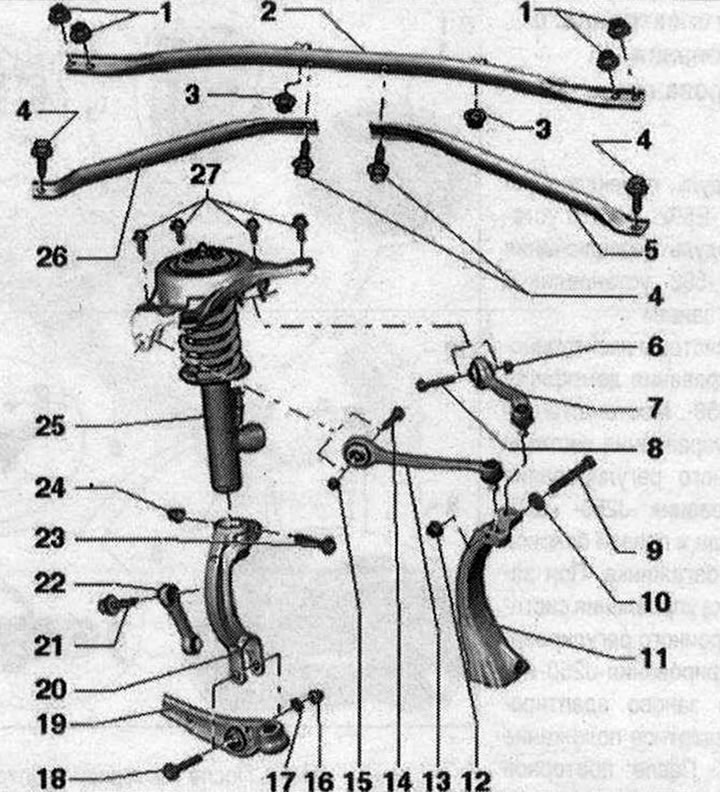
I 1. Nut. 20 Nm; 2. Stretching; 3. Nut. 2 Nm.; 4. Bolt 20 Nm; 5. Additional rigidity element on the left; 6. Nut. 50 Nm + 90° further. Replace each time it is removed. Tighten only when the vehicle is unloaded. When tightening, apply pressure to the suspension arms towards the inside of the vehicle; 7. Suspension arm at the top rear; 8/ 9. Bolt. Replace each time it is removed; 10. Washer; 11. Hub bearing housing; 12. Nut. 40 Nm. Replace each time when removed; 13. Upper front suspension arm; 14. Bolt. Replace each time it is removed; 15. Nut. 50 Nm + 90° further. Replace each time it is removed. Tighten only when the vehicle is unloaded. When tightening, apply pressure to the suspension arms towards the inside of the vehicle; 16. Nut. 90 Nm + 90° further. Replace each time it is removed. Tighten only when the vehicle is in a no-load position; 17. Washer; 18. Bolt. Replace each time it is removed; 19. Carrying lever; 20. Shock absorber fork; 21. Bolt. 40 Nm + 90° further. Replace each time when removing. Tighten only when the vehicle is in a no-load position; 22. Connecting rod. Consider the installation position, consider the different designs: aluminum and steel, compliance. Simultaneous installation of 2 racks of different types is not allowed; 23. Bolt. 40 Nm + turn further by +180°. Replace each time when removing; 24. Nut. Replace each time it is removed; 25. Shock absorber strut. It is necessary to take into account the differences in the design of the chassis, see the plate with the data of the car. Defective shock absorbers must be emptied and degassed before disposal; 26. Additional rigidity element on the right; 27. Bolt. 40 Nm + 90° further. Observe tightening sequence. Replace each time when removing