



Table of contents: Removal ↓ Installation ↓
Removal
Bottom of the oil pan
1. Remove the cap from the coolant expansion tank.
Caution! When the engine is hot, before removing the expansion tank filler cap, wrap it in a rag to avoid being burned by hot coolant or steam.
2. Cars with a parking heater. Unscrew the bolts securing the heater pipe to the soundproofing shield (see arrows in the illustration).
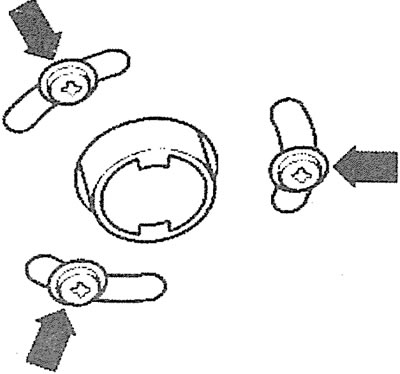
11.2. Unscrew the bolts securing the parking heater pipe to the soundproofing shield (see arrows). Cars with parking heater
3. Unscrew bolts/remove fasteners 1-3 and 5 and remove the front part of the engine splash guard (see illustration).
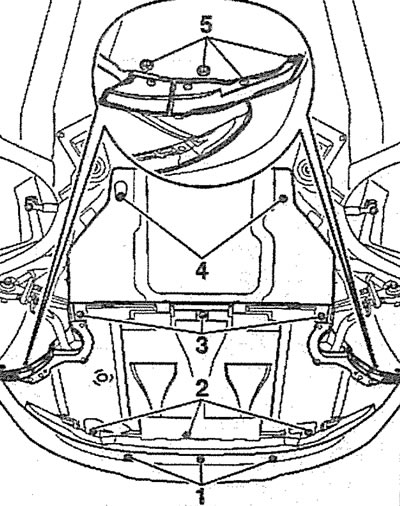
11.3. Unscrew bolts/remove fasteners 1-3 and 5 and remove the front part of the engine mudguard
4. Unscrew bolt 2, disconnect hose 1 from the oil radiator and drain the coolant into a suitable container (see illustration).
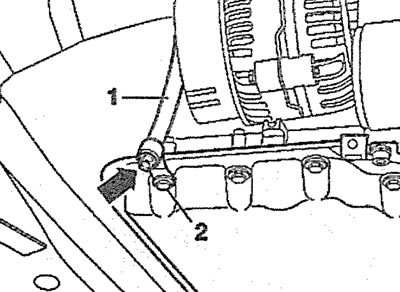
11.4. Unscrew bolt 2, disconnect hose 1 from the oil radiator and drain the coolant into a suitable container
5. Unscrew the bolt (see arrow in illustration) transmission oil circulation pipe holders.
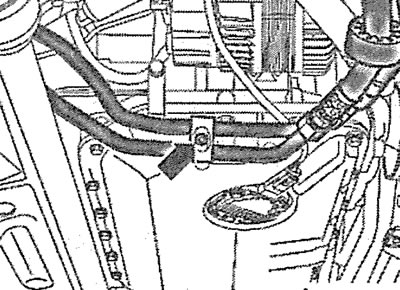
11.5. Unscrew the bolt (see arrow) transmission oil circulation pipe holder
6. Disconnect the plug (see arrow in illustration) engine oil level and temperature sensor.
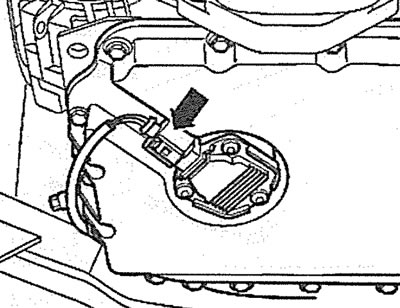
11.6. Disconnect the plug (see arrow) engine oil level and temperature sensor
7. Unscrew bolts 1 and 2 of the brackets securing the anti-roll bar to the subframe (see illustration). Lower the stabilizer bar a little and tie it with wire.
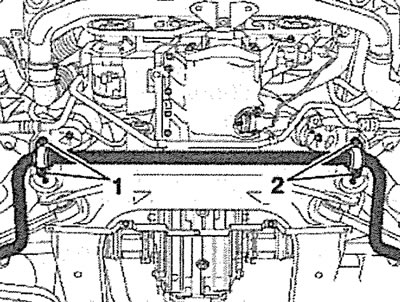
11.7. Unscrew bolts 1 and 2 of the brackets securing the anti-roll bar to the subframe
8. Siphon the engine oil through the dipstick guide tube or drain the oil by unscrewing the drain plug.
9. Unscrew the mounting bolts and remove the lower part 1 of the oil pan (see illustration).
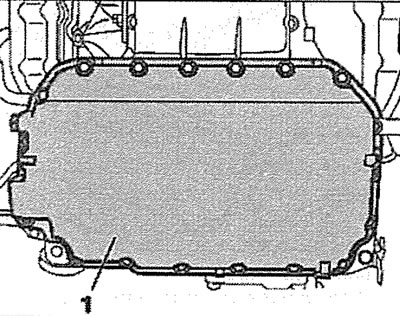
11.9. Unscrew the mounting bolts and remove the lower part 1 of the oil pan
Upper part of the oil pan
10. Disconnect the negative (-) battery terminal from the battery.
11. Remove the upper engine cover by removing the plugs and unscrewing the nuts (see arrows in the illustration).
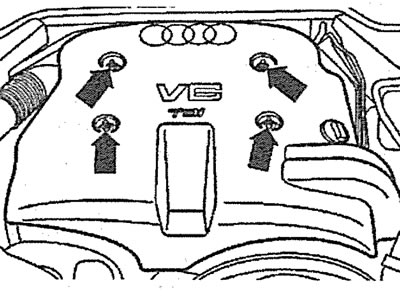
11.11 Remove the upper engine protective cover by removing the plugs and unscrewing the nuts (see arrows)
12. Drain the coolant.
13. Remove the front bumper (see the relevant chapter).
14. Set the upper front cross member to the service position (see points 3.1-3.6).
Attention! Since the engine mount supports will need to be removed to remove the upper part of the oil pan, the engine should be lifted with a hoist or in some other way to relieve the supports. Specialized workshops use a crossbar installed above the engine compartment for this purpose (see illustration 11.0a).
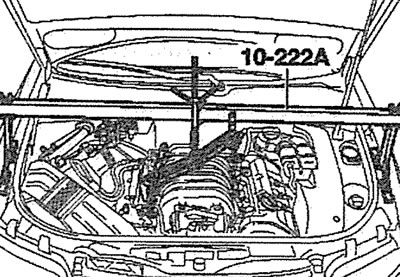
11.0a. In specialized workshops, a cross beam installed above the engine compartment is used to lift the engine
15. Remove the oil dipstick and disconnect its guide tube from the cylinder block.
16. Remove the accessory drive V-belt (see the relevant chapter).
17. Disconnect plug 1 of the air conditioning compressor pressure reducing valve, unscrew the bolts securing the compressor to the bracket (see arrows in the illustration).
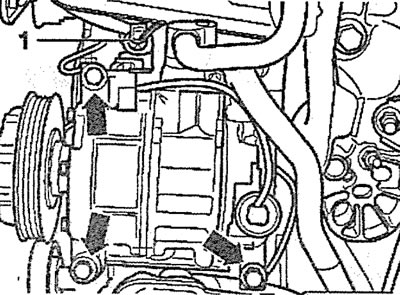
11.17. Disconnect plug 1 of the air conditioning compressor pressure reducing valve, unscrew the bolts securing the compressor to the bracket (see arrows)
18. Tie the air conditioning compressor to the subframe with wire without disconnecting the pipes from it (see arrow in illustration).
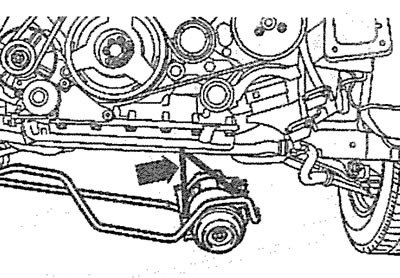
11.18. Tie the air conditioning compressor to the subframe with wire without disconnecting the pipes from it (see arrow)
19. Unscrew the bolts (see arrows in the illustration) and remove the air conditioning compressor bracket.
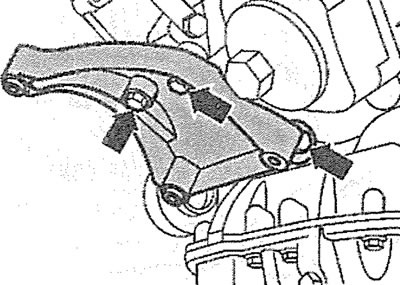
11.19. Unscrew the bolts (see arrows) and remove the air conditioning compressor bracket
20. Unscrew the bolts (see arrows in the illustration) fasteners, remove the generator and disconnect the plug from it.
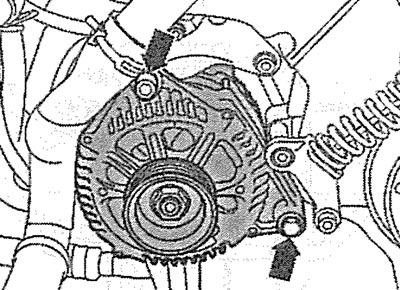
11.20. Unscrew the bolts (see arrows) fasteners, remove the generator and disconnect the plug from it
21. Disconnect wires 2 and 3 from the starter and unscrew its mounting bolts (see arrows in the illustration) and remove the starter.
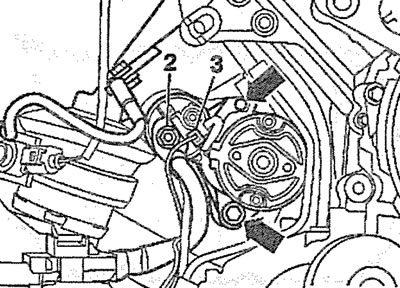
11.21. Disconnect wires 2 and 3 from the starter, unscrew the bolts that secure it (see arrows) and remove the starter
22. Unscrew bolts 1 and 2 of the brackets securing the anti-roll bar to the subframe (see illustration 11.7).
23. Release the starter wire from the holder and move it to the side(see arrows in the illustration).
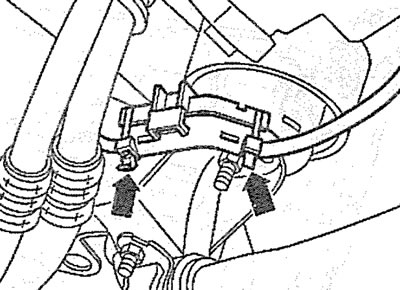
11.23. Release the starter wire from the holder and move it to the side (see arrows)
24. Place a support under the subframe, for example, support 1202A (see illustration).
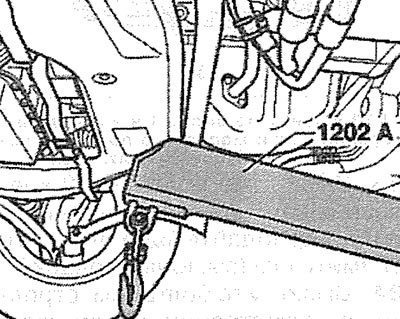
11.24. Install support 1202A under the subframe
25. Mark the mounting position of the lower nut 3 on the left and right engine mount supports and unscrew the lower nuts on both supports, and also unscrew the bolts 4 and 5 of the support brackets (see illustration).
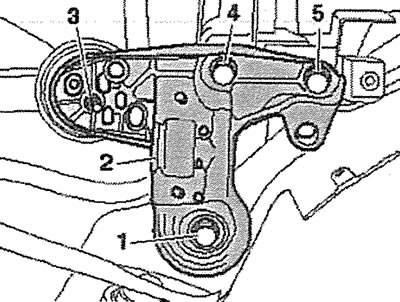
11.25. Mark the mounting position of the lower nut 3 on the left and right engine mount supports and unscrew the lower nuts on both supports, and also unscrew the bolts 4 and 5 of the support brackets
26. Unscrew the front bolts 1 securing the left and right sides of the subframe and remove the bracket 2 (see illustration 11.25).
Attention! To avoid adjusting the front wheel alignment later, it is recommended to unscrew only the front subframe mounting bolts and lower only its front part.
27. Loosen the tightening of bolt 2 of the gearbox suspension support, unscrew bolt 1 (see illustration).
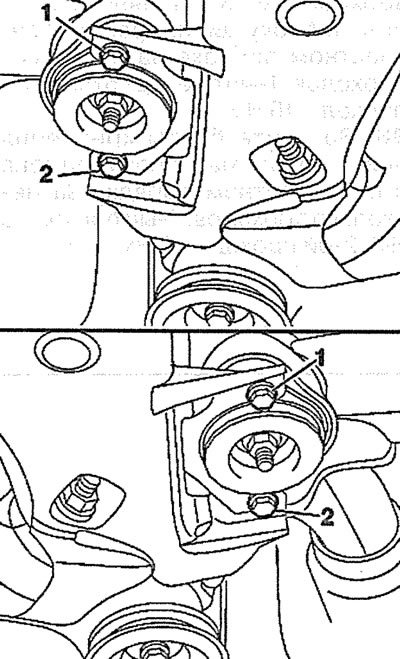
11.27. Loosen the tightening of bolt 2 of the gearbox suspension support, unscrew bolt 1
28. Slowly lower the subframe.
29. Remove the lower part of the oil pan (see paragraphs 11.1-11.9).
30. Remove the oil pump (see the relevant chapter).
31. Remove the engine to gearbox mounting bolts near the top of the oil pan.
32. Remove the dipstick guide tube from the top of the oil pan.
33. Unscrew bolts 1 and 2 securing the upper part of the oil pan, move the pan to the left and remove it (see illustration).
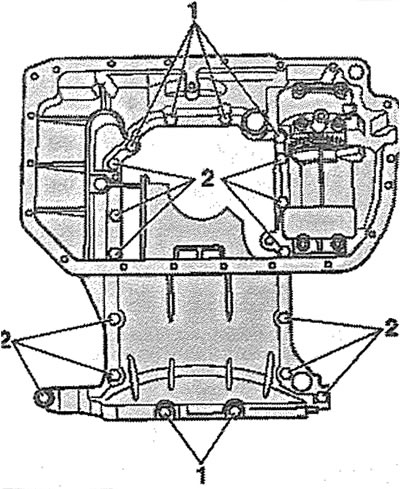
11.33. Unscrew bolts 1 and 2 securing the upper part of the oil pan, move the pan to the left and remove it
34. Unscrew the bolts (see arrows in the illustration) and remove the balance shaft housing from the oil pan.
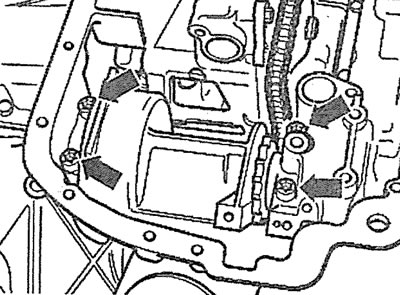
11.34. Unscrew the bolts (see arrows) and remove the balance shaft housing from the oil pan
Installation
The oil pan is installed in the reverse order of removal.
35. Clean the surfaces to be sealed and remove any remaining sealant using the attachments and a drill (see illustrations 11.35 and 11.35a).
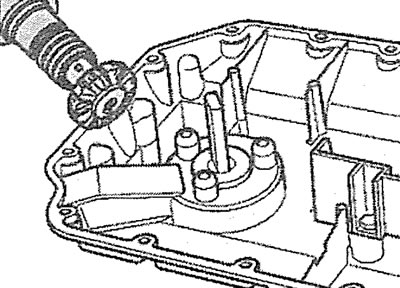
11.35. Clean the surfaces to be sealed and remove any remaining sealant using a drill attachment (lower part of the oil pan) |
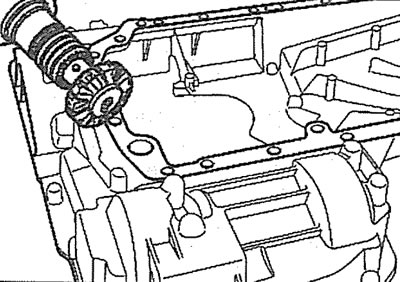
11.35a. Clean the surfaces to be sealed and remove any remaining sealant with a drill attachment (top of oil pan) |
36. Apply to the mating surface of the oil pan before installing it (see arrows in illustrations 11.36 and 11.36a) a layer of sealant approximately 2-3 mm thick. If you apply more sealant, the excess will get into the engine oil and clog the mesh filter of the oil intake.
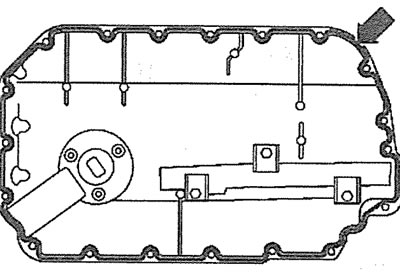
11.36. Apply to the mating surface of the oil pan before installing it (see arrow) a layer of sealant approximately 2-3 mm thick (lower part of the oil pan) |
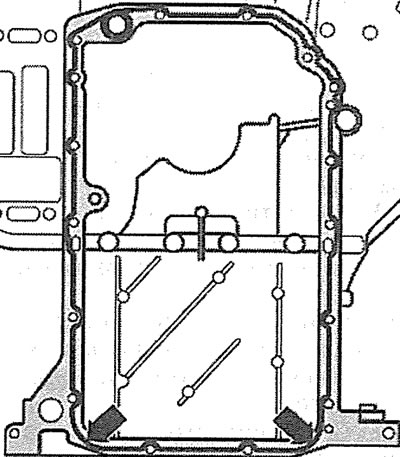
11.36a. Apply to the mating surface of the oil pan before installing it (see arrows) a layer of sealant approximately 2-3 mm thick (top of oil pan) |
Attention! After applying the sealant, the tray should be installed in place no later than 5 minutes later.
Caution: If the oil pan is not sealed with sealant, replace the oil pan sealing gasket with a new one.
37. Tighten the bolts securing the upper part of the oil pan to the cylinder block in a crosswise pattern in several passes: 1st pass - 5 Nm; 2nd pass - 16 Nm.
38. Tighten the lower oil pan mounting bolts in a cross pattern in several passes: 1st pass - 5 Nm; 2nd pass - 10 Nm.