



Table of contents: Manual gear selection program… ↓ Selector positions ↓ Forced anticipatory downshift device… ↓ Recommendations for choosing… ↓ Moving from a place ↓ Stop ↓ Parking ↓ Towing for the purpose of starting… ↓
The automatic transmission control system provides for various transmission operation programs. Depending on the driver's actions or the vehicle's driving conditions, a program is selected: economical, reducing fuel consumption, or active, which can be conventionally called "sporty".
The selection of the gearbox operating program is carried out automatically in accordance with the driver's operation of the accelerator pedal.
If the accelerator pedal is slow or normal, it is possible to save fuel by switching to higher gears early and switching to lower gears later.
The so-called "sport" program of the gearbox operation is selected when the accelerator pedal is controlled quite sharply. When selecting the "sport" mode, the engine power reserves are fully utilized due to a slight delay in switching to a higher gear.
Manual gear selection program (Tiptronic)
The presence of a sequential gear shift mode (tiptronic system) allows the driver to manually shift gears.
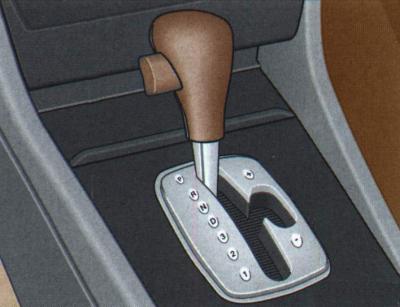
Fig. 1–29. Automatic transmission selector lever
You can switch to the manual shift program both when the vehicle is stationary and when it is moving; to do this, you need to move the selector (Fig. 1–29) from position D to the right. When changing gears, the display shows which gear is currently engaged (Fig. 1–30).
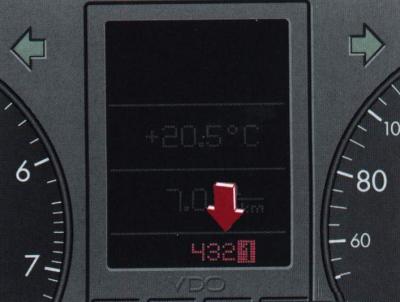
Fig. 1–30. Display location of the manually selected gear indicator
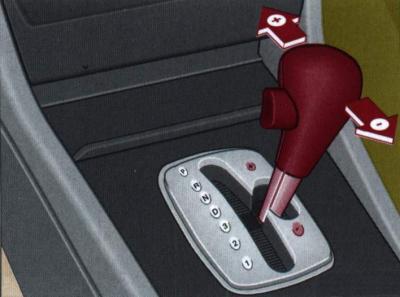
Fig. 1–31. Directions of movement of the selector lever during manual gear selection
When the selector is moved forward (+) (Fig. 1–31), the gears are successively increased; when moved backward (–), the gears are successively decreased.
When accelerating the car, 2nd, 3rd and 4th gears are automatically engaged shortly before the engine reaches its maximum permissible rotation speed.
If the driver shifts into a lower gear, the transmission control unit will only engage that gear when there is no danger of the engine over-revving.
Selector positions
The display in the instrument cluster shows the position number of the selector lever.
Warning: Never move the selector lever to the position while the vehicle is moving R or R.
P – parking lock
The drive wheels are locked.
The selector should only be set to this position when the vehicle is at a complete stop. Before switching on and off the position P it is necessary to press the lock button on the selector handle. Before disengaging this position with the ignition on, you should additionally press the brake pedal.
R – reverse
It should only be turned on when the vehicle has come to a complete stop and the engine is idling. Before moving to position R from positions R or N you need to press the brake pedal and press the lock button in the selector handle.
In position R when the ignition is on, the reversing lights come on.
N – neutral position (idle position)
When removing the selector from the position N at speeds of up to 5 km/h, and also when the vehicle is stationary and the ignition is on, you should press the brake pedal and the lock button on the selector handle. It is not necessary to press the lock button when the selector is moved from the position N in position D.
D – long forward movement
Four gears shift automatically from low to high and vice versa depending on engine load and driving speed.
Under certain driving conditions, it may be advisable to temporarily use one of the positions below.
3 – position for "hilly" sections of the road
It is recommended that when, under certain driving conditions, with the selector in position D frequent switching from 3rd to 4th gear and vice versa occurs.
To move the selector to this position, press the lock button in the selector handle. The 1st, 2nd or 3rd gears are automatically shifted up and down depending on the engine load and driving speed, the 4th gear is locked. This also increases the efficiency of engine braking when the fuel supply is cut off.
2 – position for mountainous road sections
Recommended for long climbs and descents. Automatically shifts up and down 1st or 2nd gear depending on engine load and driving speed, 3rd and 4th gears remain locked to prevent unnecessary upshifts. This also increases engine braking efficiency.
1 - position for mountainous road sections with large slopes
It is recommended to select this position when driving on steep ascents and descents. To activate this position, it is necessary to press the lock button on the selector handle. The car moves only in 1st gear, 2nd, 3rd and 4th gears are locked to prevent unnecessary upshifts. At the same time, the maximum possible engine braking efficiency is achieved.
Cruise control in position 1 selectors cannot be used.
Note: When manually downshifting sequentially, you can shift to positions 3, 2 and 1, however, automatic downshifting only occurs if the maximum permissible engine speed is not exceeded after the shift.
Forced anticipatory downshift device (kick-down)
The device ensures maximum acceleration of the car in the given driving conditions. As soon as the force on the accelerator pedal exceeds a certain threshold value, depending on the rotation frequency and driving speed, a switch to one of the lower gears occurs. Switching to the next higher gear will follow only when the maximum permissible value of the engine crankshaft rotation frequency is reached.
Warning: On slippery roads, forced anticipatory downshifting may cause the drive wheels to spin.
Recommendations for choosing positions
Starting the engine
The engine can only be started when the control selector is in position N orR.
Vehicle movement
To move the selector to one of the driving positions when the vehicle is stationary and the engine is running, you must press the brake pedal.
When selecting a position with the vehicle stationary, do not press the accelerator pedal.
If the selector is accidentally moved to position while the vehicle is moving N, before moving the lever to any forward position, you must release the accelerator pedal and reduce the rotation speed to idle.
Warnings: When the engine is running, when the selector is in any of the driving positions, it is necessary to hold the car by pressing the brake pedal, since even when the engine is idling, the transmission of torque to the wheels is not completely interrupted - the car "crawls".
If one of the driving positions is selected when the vehicle is stationary, the accelerator pedal must not be pressed under any circumstances (and increase the fuel supply by hand from the engine compartment), otherwise, the vehicle will start moving even with the parking brake on.
Before performing any actions with the engine running, the selector should be set to position P and turn on parking brake.
Moving from a place
Select one of the movement positions (R, D, 3, 2, 1). Wait until the gearbox is engaged and the car starts moving (a slight jerk is felt) and only then press the accelerator pedal.
Stop
When stopping briefly, for example at a traffic light, there is no need to change to position N. It is quite sufficient to hold the car by pressing the brake pedal. The engine should be running in idle mode.
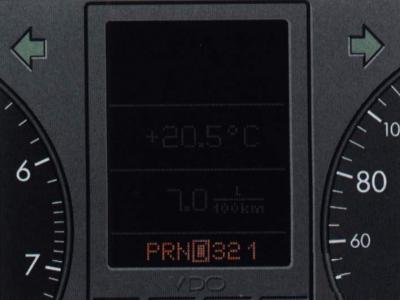
Fig. 1–32. Display location of the automatically selected gear indicator
Parking
Warnings: To prevent the vehicle from rolling uncontrollably after it has come to a complete stop, always engage parking brake. Additionally, please put automatic transmission selector in positionR.
On a slope, apply the parking brake and then set the selector to the parking lock position. This procedure will ensure that the locking mechanism is not overloaded and the selector can be easily released from this position later.
Towing for the purpose of starting the engine
Towing or pushing a vehicle with an automatic transmission will never cause the engine to start.
If the battery is discharged, you can use the battery of another car to start the engine using jumper cables.