



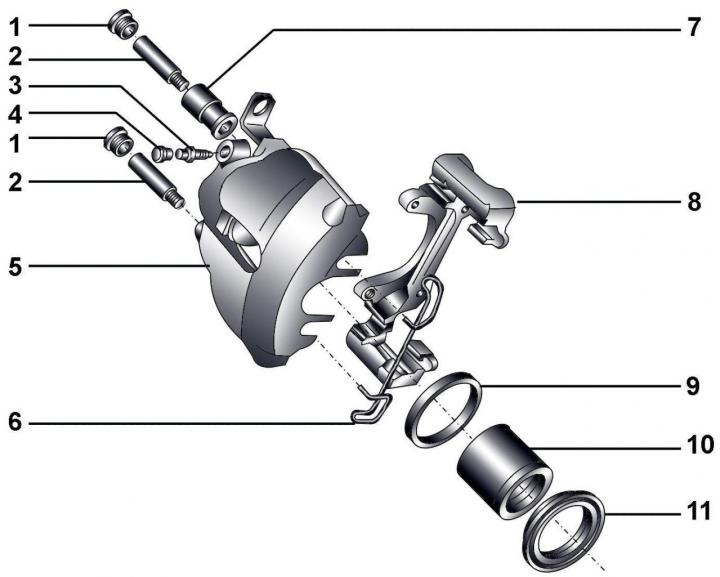
Fig. 15–19. FN-3 front caliper: 1 – protective cap; 2 – guide pin, 25 Nm; 3 – bleed nipple; 4 – protective cover; 5 – support; 6 – spring; 7 – bushing; 8 – caliper holder; 9 – sealing ring; 10 – piston; 11 – protective cover
The front caliper parts of the FN–3 are shown in Fig. 15–19.
Clean the caliper from dust and dirt, without inhaling the dust that rises.
Secure the caliper in a vice. Remove the piston from the caliper by applying low-pressure air to the brake cylinder through the brake hose connection hole, using a wooden block instead of brake pads.
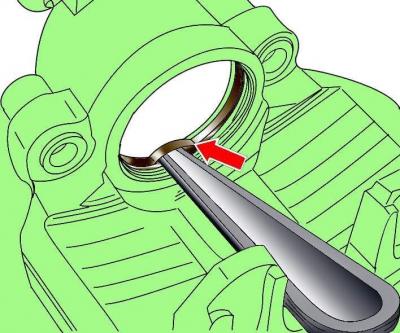
Fig. 15–20. Using a wedge to remove the seal from the caliper cylinder groove
Remove the wooden block and carefully remove the piston. Carefully, so as not to damage the cylinder walls, remove the seal from the groove of the caliper cylinder with a mounting wedge or a flat-head screwdriver blade as a lever (Fig. 15–20).
Check the condition of all caliper parts and replace worn or damaged parts. Pay special attention to the cylinder and piston. If there are scratches, marks, wear or pitting, the piston and cylinder must be replaced. Regardless of the condition, replace all rubber seals.
Wash all parts in methylated spirits or clean brake fluid and wipe them dry. Blow out tubes and holes with compressed air.
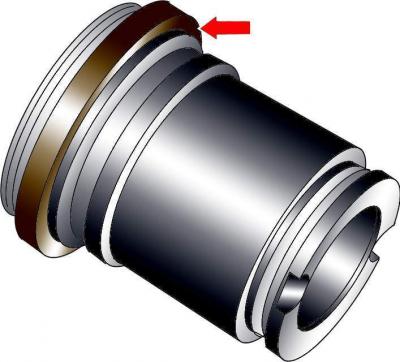
Fig. 15–21. Location of installation of the protective cover on the caliper piston
Apply a thin layer of grease G 052 150 A2 to the sealing ring and piston (Fig. 15–21).
Install the dust boot onto the piston so that the inner diameter of the boot fits into the piston groove.
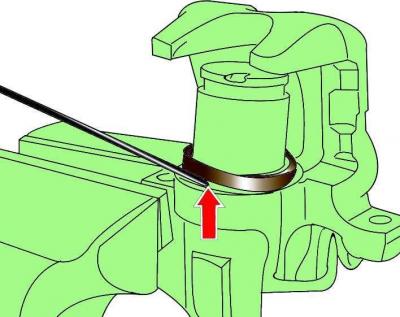
Fig. 15–22. Using a special device to install the working edge of the dust cover into the support
Place the piston opposite the caliper cylinder and use a special tool to insert the working edge of the dust cover into the caliper until it locks into place (Fig. 15–22).
Using a special tool or a hammer handle, press the piston into the caliper cylinder.
After installing the piston, blow air into the cylinder and fill it with fresh brake fluid.