



The hood, doors and front fenders are bolted together and can therefore be removed and replaced without any problems (see illustration 1.0). But in this case, when installing, it is necessary to maintain the required gaps, otherwise, for example, the door may knock, or increased air flow noise will be observed during movement. The gap should always run parallel, which means that the distance between the body parts should be the same along the entire length of the gap. Permissible deviations should not exceed 1 mm.
Numerous body trim and finishing elements are secured with expansion clamps. Damaged or lost clamps should be replaced with new ones.
Almost all body parts can be installed and removed using a standard set of tools. When disassembling and assembling, it is necessary to take precautions so as not to damage the seals and anti-corrosion coating applied at the factory. The brake and fuel system components located on the bottom are covered with appropriate shields (see illustration 1.0a).
It is recommended that body repairs be carried out in specialized workshops.
Most of the body parts are connected using socket head bolts.
Attention! If work on the vehicle's electrical system is to be performed as part of bodywork, be sure to disconnect the negative (-) terminal of the battery, see the relevant chapter. Even simply disconnecting an electrical wire is considered work on electrical equipment.
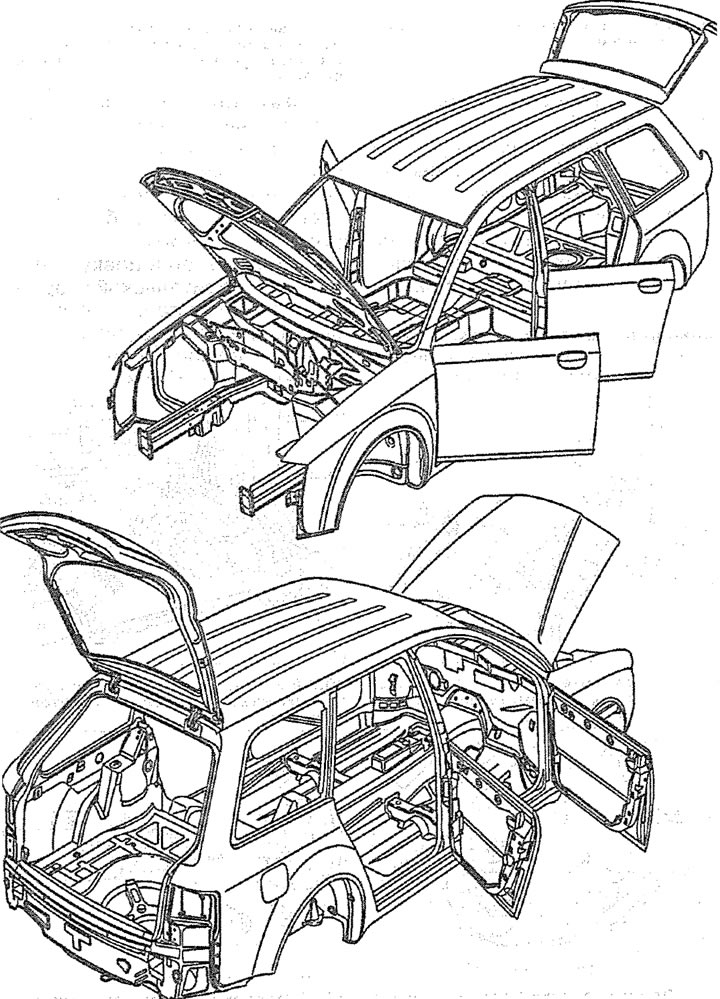
1.0. AIDI ALLROAD car body
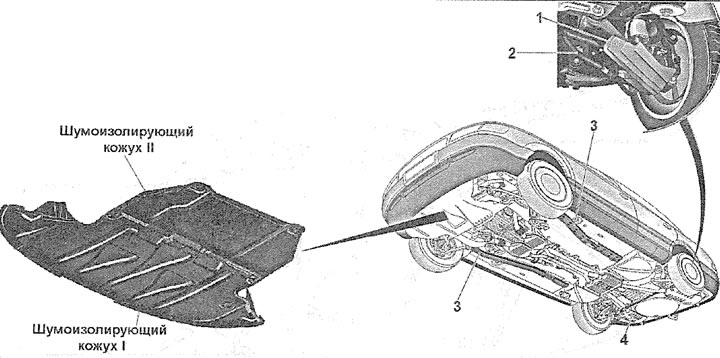
1.0a. The bottom of the body and the protective shields on it?
1 - lower wishbone shield
2 - Parking brake cable protection
3 - protection of brake pipes
4 - muffler
The original version is on the portal AUDIMANUAL.RU