



Table of contents: Front section of the intake manifold ↓ Left section of the intake manifold ↓ Right section of the intake manifold ↓ Left cylinder head cover ↓ Right cylinder head cover ↓ Left cylinder head ↓ Right cylinder head ↓ Preparing the head for installation ↓ Installing the cylinder head ↓
Front section of the intake manifold
Turn off the ignition and disconnect the ground wire from the battery.
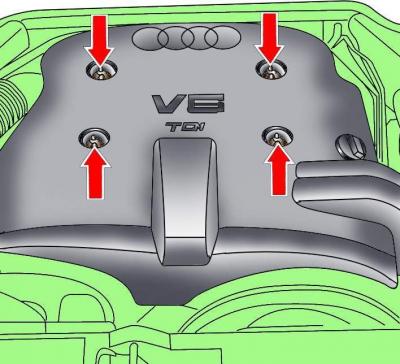
Fig. 3.3–24. Location of engine casing mounting screws
Remove the screws and remove the engine casing (see Fig. 3.3–24).
Disconnect the flap control vacuum hose if equipped.
Disconnect the air intake hose from the flap and move the hoses to the side.
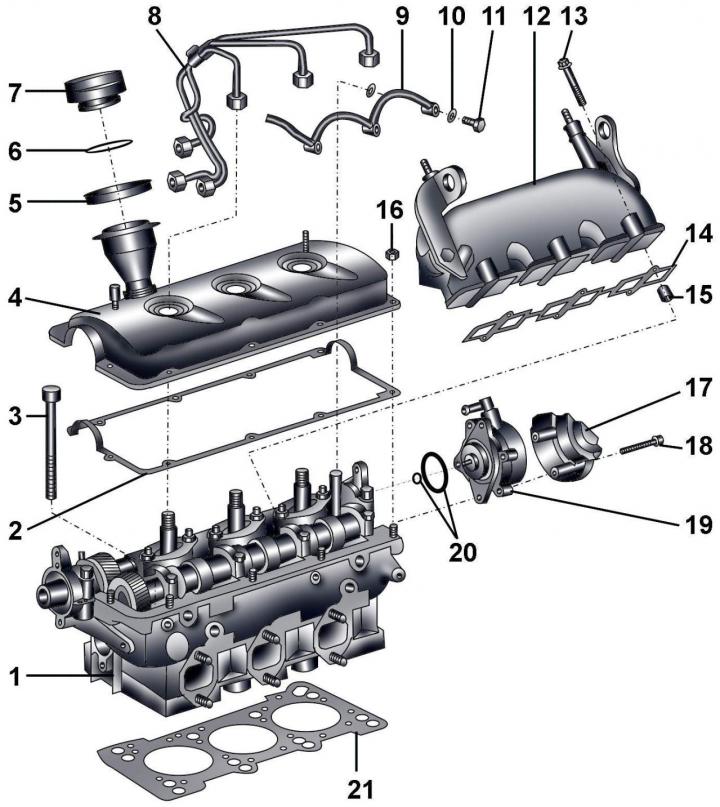
Fig. 3.3–51. Cylinder head: 1 – cylinder head; 2 – cylinder head cover gasket; 3 – cylinder head mounting bolts; 4 – cylinder head cover; 5 – oil deflector ring; 6 – gasket; 7 – lid; 8 – fuel injector pipes; 9 – fuel return pipes; 10 – sealing ring; 11 – hollow bolt, 5 Nm; 12 – intake manifold; 13 – bolt, 10 Nm; 14 – gasket; 15 – centering sleeve; 16 – nut, 10 Nm; 17 – vacuum pump heat shield; 18 – bolt; 19 – vacuum pump, 10 Nm; 20 – sealing rings; 21 – cylinder head gasket
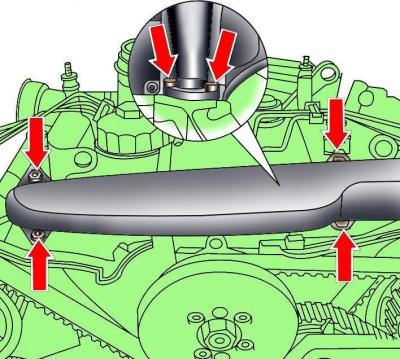
Fig. 3.3–52. Location of the intake manifold front section mounting bolts
Unscrew the bolts and remove the front section of the intake manifold (Fig. 3.3–52).
Installation is carried out in the reverse order of removal.
Left section of the intake manifold
Remove the front section of the intake manifold.
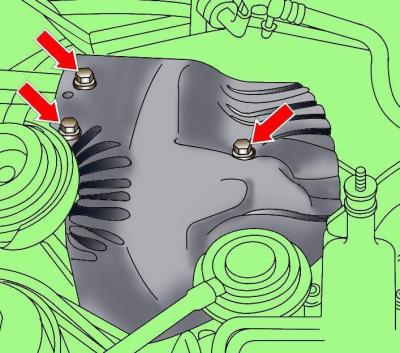
Fig. 3.3–4. Location of bolts securing the heat shield above the turbocharger
Unscrew the bolts and remove the heat shield above the turbocharger (see Fig. 3.3–4).
Label and disconnect the fuel lines from the injectors.
Release and move aside the wiring harness from the left section of the intake manifold.
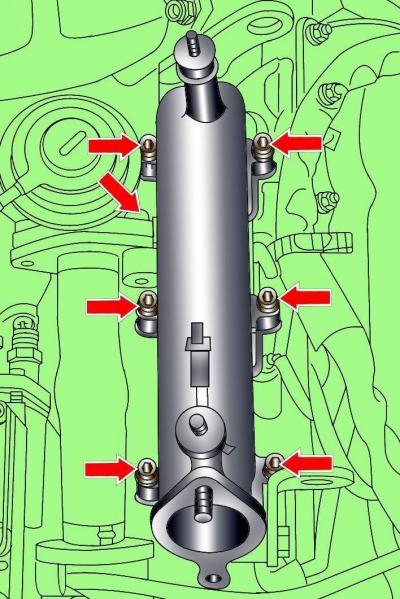
Fig. 3.3–53. Location of the bolts securing the left section of the intake manifold
Unscrew the bolts and remove the left section of the intake manifold (Fig. 3.3–53).
Installation is carried out in the reverse order of removal.
Right section of the intake manifold
Remove the front section of the intake manifold.
Disconnect the vacuum hoses from the turbocharger and mechanical EGR valve and move the hoses to the side.
Label and disconnect the fuel lines from the injectors.
Release the fuel lines and move them away from the right section of the intake manifold.
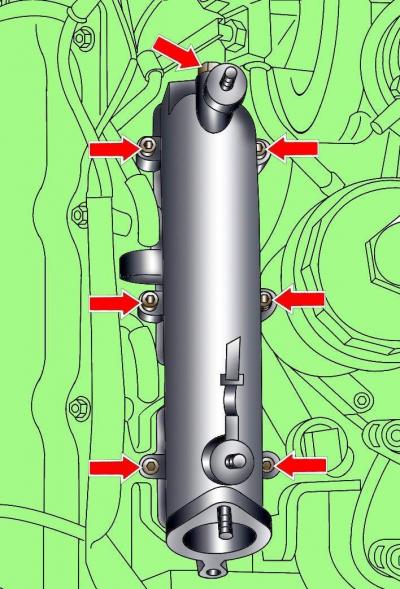
Fig. 3.3–54. Location of the bolts securing the right section of the intake manifold
Remove the bolts and the right section of the intake manifold (Fig. 3.3–54).
Installation is carried out in the reverse order of removal.
Left cylinder head cover
Remove the front section of the intake manifold.
Release and move aside the wiring harness from the left cylinder head cover.
Label and disconnect the fuel lines from the injectors.
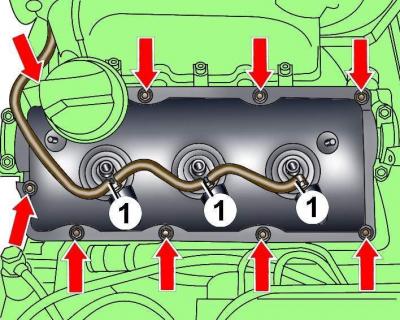
Fig. 3.3–55. Location of the nuts securing the left cylinder head cover and the fuel return pipe (1)
Unscrew the hollow bolts and remove the fuel return pipes 1 (Fig. 3.3–55) from the injectors.
Unscrew the nuts and remove the left cylinder head cover.
Installation is carried out in the reverse order of removal, taking into account the following.
Replace the fuel return line seals.
Replace the damaged cylinder head cover gasket.
If the fuel injector seals are damaged, the cylinder head cover must be replaced.
Degrease the surface that mated with the cylinder head cover gasket.
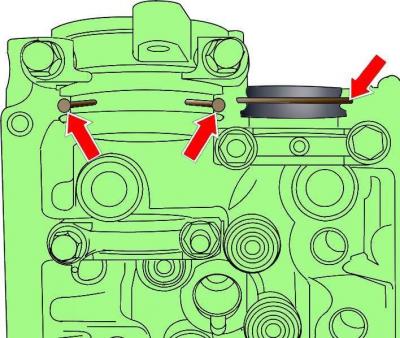
Fig. 3.3–56. Places to apply sealant before installing the cylinder head cover
Apply a thin, continuous layer of sealant to the semicircular surface (Fig. 3.3–56) at the end of the cylinder head.
Apply a 3 mm diameter layer of sealant to the outer camshaft covers in 5 mm long sections (see Fig. 3.3–56).
Tighten the cylinder head cover nuts gradually and crosswise.
Connect the fuel pipes.
Install the front section of the intake manifold.
Right cylinder head cover
Warning: Any clamps or clips that are damaged or cut when removing the cylinder head cover must be replaced with new ones when installing the cylinder head cover.
Loosen the screws and remove the engine casing (see Fig. 3.3–24).
Loosen the clamps and remove the air duct from the air filter.
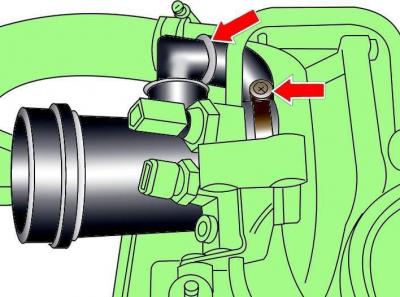
Fig. 3.3–57. Fastening pipes to the turbocharger
Loosen and remove the pipes from the turbocharger (Fig. 3.3–57).
Label and disconnect the fuel lines from the injectors.
Release and move aside the wiring harness from the right cylinder head cover.
Unscrew the bolts and remove the pipe connecting the turbocharger to the air cooler.
Unscrew the bolt securing the engine oil dipstick tube.
Remove the hollow bolts and fuel return pipes.
Unscrew the nuts and remove the cylinder head cover.
Installation is carried out in the reverse order of removal, taking into account the following.
Replace the fuel return line seals.
Replace the damaged cylinder head cover gasket.
If the fuel injector seals are damaged, the cylinder head cover must be replaced.
Degrease the surface that mated with the cylinder head cover gasket.
Apply a thin, continuous layer of sealant to the semi-circular surface (see fig. 48) at the end of the cylinder head.
Apply a 3 mm diameter layer of sealant to the outer camshaft covers in 5 mm long sections (see Fig. 3.3–56).
Tighten the cylinder head cover nuts gradually and crosswise.
Connect the fuel pipes.
Left cylinder head
Warning: Any clamps or clips that are damaged or cut when removing the cylinder head cover must be replaced with new ones when installing the cylinder head.
Before disconnecting the battery, find out if you have a radio activation code.
Turn off the ignition and disconnect the ground wire from the battery.
Drain the coolant from the cooling system.
Remove the timing belt from the camshaft pulleys.
Remove the front section of the intake manifold.
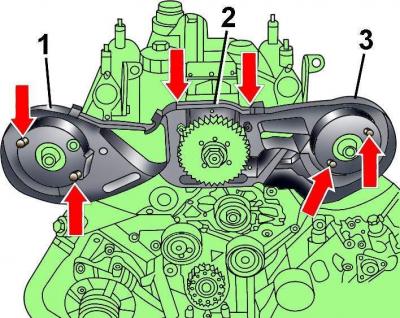
Fig. 3.3–58. Location of screws for fastening the left (1), upper (2) and right (3) toothed belt covers
Loosen the screws and remove the upper section of the timing belt cover 2 (Fig. 3.3–58).
Loosen the screws and remove the left 1 and right 3 timing belt covers.
Loosen the clamps, unscrew the three bolts and remove the coolant hoses from the front of the engine.
Disconnect the electrical wires from the glow plugs.
Remove the bolt securing the exhaust gas recirculation valve to the left section of the intake manifold.
Release and move aside the wiring harness from the left cylinder head.
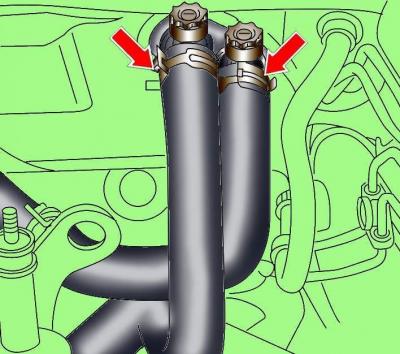
Fig. 3.3–11. Location of the clamps for fastening the cooling system hoses to the heater fittings on the engine compartment bulkhead
Loosen the clamps (see Fig. 3.3–11) and disconnect the cooling system hoses leading to the heater.
Loosen the clamps and disconnect the hoses from the coolant pipe, and also unscrew the pipe mounting bolt.
Label and disconnect the fuel lines from the injectors.
Unscrew the hollow bolts and remove the fuel return tubes 1 from the injectors (see Fig. 3.3–55).
Unscrew the nuts and remove the cylinder head cover.
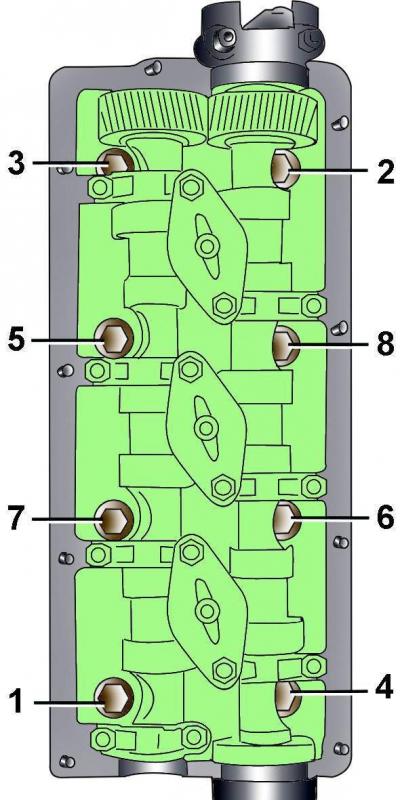
Fig. 3.3–59. Cylinder head bolt tightening sequence
In the reverse order of tightening, gradually loosen and then completely unscrew the cylinder head mounting bolts (Fig. 3.3–59).
Remove the cylinder head and place it on a soft surface.
Right cylinder head
Warning: Any clamps or bands that are damaged or cut during cylinder head removal must be replaced with new ones when installing the cylinder head.
Before disconnecting the battery, find out if you have a radio activation code.
Turn off the ignition and disconnect the ground wire from the battery.
Drain the coolant from the cooling system.
Remove the right exhaust manifold together with the exhaust inlet pipe.
Remove the timing belt from the camshaft pulleys.
Remove the front section of the intake manifold.
Loosen and remove the pipes from the turbocharger (see Fig. 3.3–57).
Unscrew the bolts and move the air filter cover to the side without disconnecting the hoses from it.
Remove the air filter housing.
Unscrew the bolts and remove the heat shield above the turbocharger (see Fig. 3.3–4).
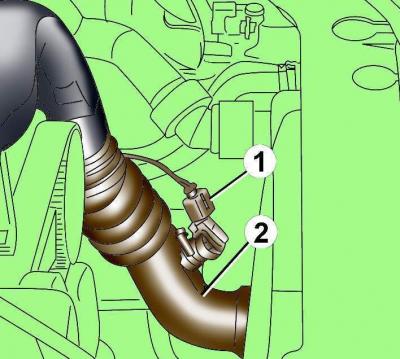
Fig. 3.3–12. Location of the sensor electrical connector (1) in the air supply hose (2) to the intake manifold
Disconnect the electrical connector from the air duct sensor 1 (see Fig. 3.3–12).
Remove air supply hose 2 to the intake manifold.
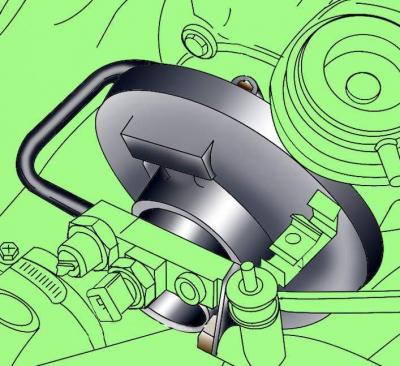
Fig. 3.3–60. Fastening the oil supply pipe to the turbocharger and intake manifold
Disconnect the oil supply pipe from the turbocharger (Fig. 3.3–60).
Disconnect the oil supply pipe from the intake manifold (see Fig. 3.3–60).
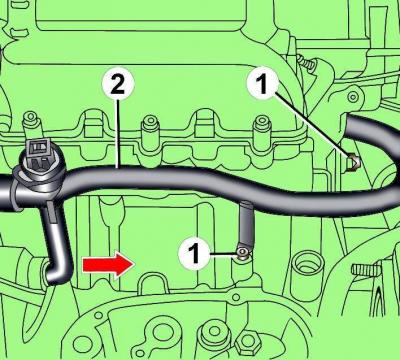
Fig. 3.3–61. Location of bolts (1) for fastening the pipe (2) of the cooling system and the direction of its movement
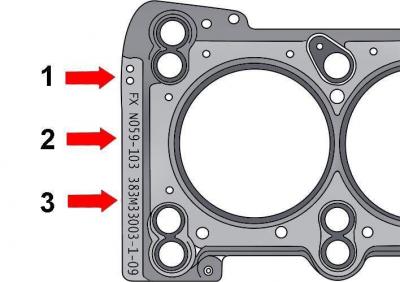
Fig. 3.3–62. Marking of the cylinder head cover gasket with holes (1), number (2) and production code (3)
Unscrew the two bolts securing the cooling system pipe, move it to the rear of the engine and leave it in this position (Fig. 3.3–61).
Unscrew the bolt securing the right coolant pipe to the intermediate protrusion without disconnecting the pipe.
Unscrew the bolts securing the right coolant pipe to the cylinder head.
Unscrew the bolts and remove the upper timing belt cover.
Remove the right one intake manifold.
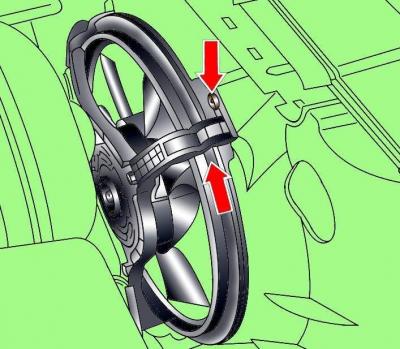
Fig. 3.3–2. Location of the shroud retainer and direction of rotation when removing the electric radiator fan
To remove the electric radiator fan, disconnect the electrical connector from the fan, remove the shroud retainer, then turn the shroud counterclockwise (see Fig. 3.3–2) and remove the fan.
Unscrew the generator mounting bolts, but do not disconnect the wires from it.
Unscrew the bolt securing the pipe for the engine oil level indicator (dipstick).
Unscrew the hollow bolts and remove the fuel return pipes 1 (see Fig. 3.3–55) from the injectors.
In the reverse order of tightening, gradually loosen and then completely unscrew the cylinder head mounting bolts (see Fig. 3.3–59).
Remove the cylinder head and place it on a soft surface.
Preparing the head for installation
The mating surfaces of the cylinder head and block must be completely clean. Use a hard plastic or wooden scraper to clean them. Be careful when cleaning, as the aluminum alloy is very easy to damage. Make sure that carbon deposits do not get into the oil and water channels. This is especially important for the lubrication system, as carbon deposits can block the supply of oil to engine parts. Clean the channels if necessary.
Check the mating surfaces of the cylinder head and block for nicks, deep scratches and other damage. Minor defects can be removed by mechanical treatment. In case of significant defects, the parts are subject to replacement.
Check the flatness of the cylinder head mating surface.
Clean the bolt holes in the block. Driving a bolt into an oil filled hole can cause the block to burst due to increased hydraulic pressure.
Installing the cylinder head
Installation is carried out in the reverse order of removal, taking into account the following.
When installing the cylinder head, it is necessary to replace the self-locking nuts and bolts, which were tightened by turning them to a certain angle, with new ones, as well as the sealing rings and gaskets.
The new cylinder head gasket must be removed from the packaging immediately prior to installation.
If new pistons are installed on the engine, it is necessary to measure the piston protrusion from the cylinder block and select the thickness of the new cylinder head gasket in accordance with this value (Fig. 3.3–59).
| Piston protrusion, mm | Number of holes |
| 0,39–0,49 | 1 |
| 0,49–0,54 | 2 |
| 0,54–0,65 | 3 |
Place the gasket on the guide pins with the "oben" lettering facing the head.
If work has been done on the valve train, turn the engine over manually two full revolutions to ensure that the pistons have not hit the valves.
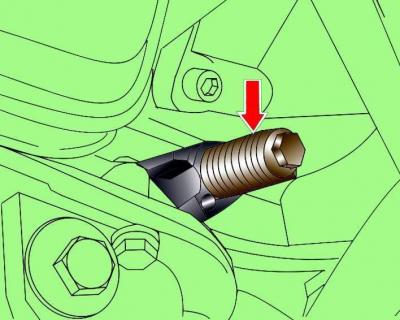
Fig. 3.3–37. Location of the 3242 set screw for fixing the crankshaft
Before installing the cylinder head, set the piston of the first cylinder and the camshaft to TDC in the compression stroke. Fix the crankshaft in this position by unscrewing the fuel injection timing sensor from the cylinder block and screwing in the set screw 3242 instead (see Fig. 3.3–37).
Insert the cylinder head mounting bolts and tighten them by hand, then in the sequence shown in Figure 3.3–59 in four stages:
- 1st - 35 Nm;
- 2nd - 60 Nm;
- 3rd - turn to an angle of 90°;
- 4th - turn to an angle of 90°.
Further tightening of the cylinder head mounting bolts is not required.
Install the cylinder head cover.
When installing the guide tube for the engine oil level indicator (dipstick), a new sealing ring must be installed.
Install the timing belt.
Install the exhaust manifold.
Install the poly V-belt.
Fill with fresh coolant.
Remove air from the fuel system.
Connect the ground wire to the battery.
Turn on radio and enter the code into it.
Raise the power windows all the way up. Then press all the power window switches again for at least 1 second to the closed position to activate the power window control unit.
Set the time on the clock.
[The text is based on materials from the website AUDImanual.ru]