



Note
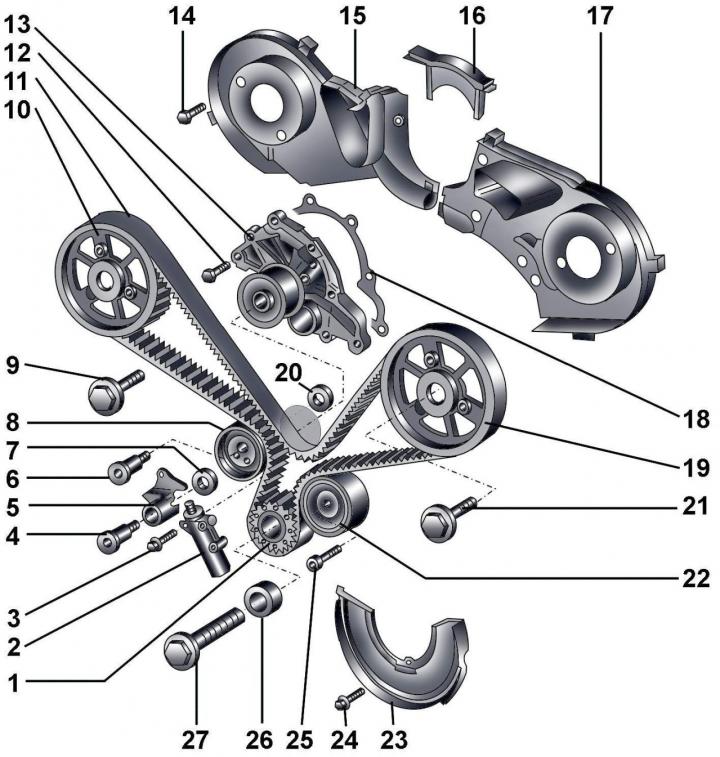
Fig. 3.3–32. Toothed belt: 1 – crankshaft pulley; 2 – timing belt tensioning mechanism; 3 – bolt, 10 Nm; 4 – bolt, 42 Nm; 5 – tension mechanism lever; 6 – bolt, 42 Nm; 7 – washer; 8 – tension roller; 9 – bolt, 75 Nm; 10 – intake camshaft pulley; 11 – toothed belt; 12 – bolt, 10 Nm; 13 – water pump; 14 – bolt, 10 Nm; 15 – right rear part of the casing; 16 – central rear part of the casing; 17 – left rear part of the casing; 18 – gasket; 19 – exhaust camshaft pulley; 20 – washer; 21 – bolt, 75 Nm; 22 – guide roller; 23 – timing belt cover; 24 – bolt, 10 Nm; 25 – bolt, 45 Nm; 26 – bushing; 27 – bolt, 200 Nm + turn by 180°
When installing, it is necessary to use a new gasket 18 (Fig. 3.3–32) and bolt 27.
Removal
Remove the oil filler cap.
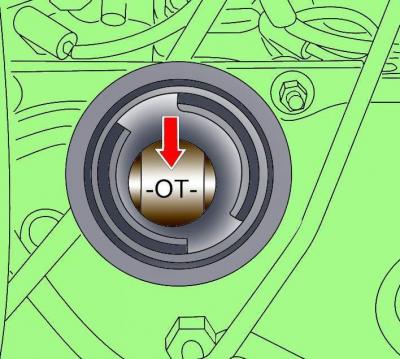
Fig. 3.3–33. Mark on the camshaft when setting the piston of the first cylinder to TDC of the compression stroke
Using the pulley mounting bolt, turn the crankshaft in the direction of working rotation until the "OT" (TDC) mark appears on the camshaft in the oil filler neck hole (Fig. 3.3–33).
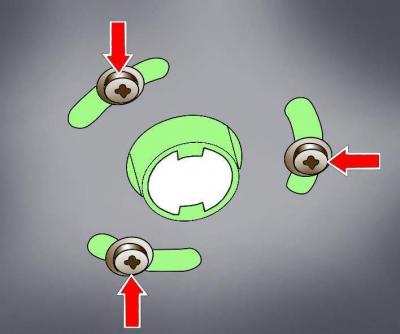
Fig. 3.3–34. Location of the exhaust pipe heater mounting screws and additional heater sound insulation
Remove the screws securing the exhaust pipe heater and the additional heater sound insulation (Fig. 3.3–34).
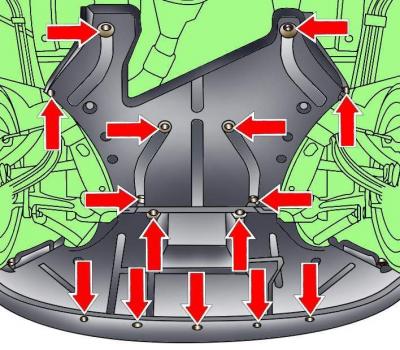
Fig. 3.3–35. Location of engine compartment lower mudguard mounting fasteners
Release the fasteners and remove the front section of the lower engine compartment mudguard (Fig. 3.3–35).
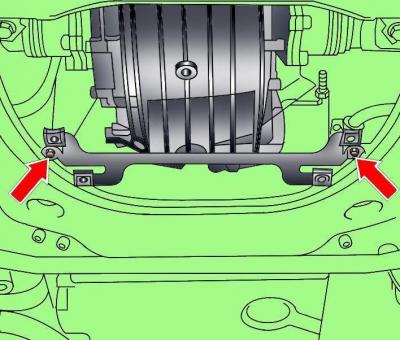
Fig. 3.3–36. Location of engine compartment lower mudguard bracket mounting bolts
Unscrew the two bolts and remove the lower engine compartment mudguard bracket (Fig. 3.3–36).
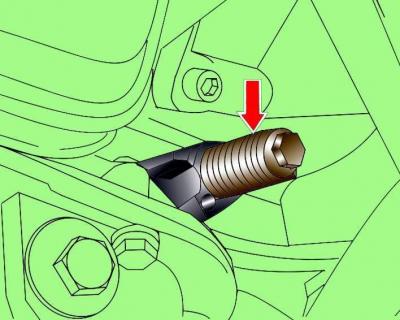
Fig. 3.3–37. Location of the 3242 set screw for fixing the crankshaft
Fix the crankshaft in this position. To do this, unscrew the plug from the cylinder block and screw in the set screw 3242 instead (Fig. 3.3–37).
Remove the cover located behind the expansion tank.
Remove the vacuum hose from the vacuum pump.
Loosen the vacuum pump mounting bolts and turn the pump counterclockwise.
Loosen the clamps and remove the air duct from the air filter.
Disconnect the electrical connectors from the solenoid valve and exhaust gas recirculation (EGR) valve.
Disconnect the vacuum hoses from the turbocharger and mechanical EGR valve and move the hoses out of the way.
Unscrew the bolts and remove the pipe connecting the turbocharger to the air cooler.
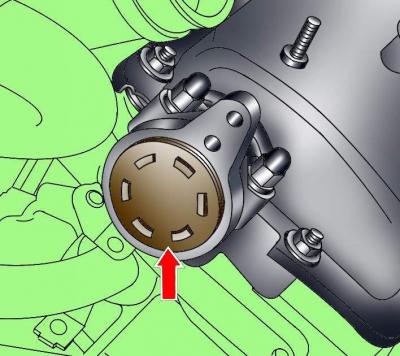
Fig. 3.3–38. Location of the cover covering the end of the camshaft on the right cylinder head
Using a screwdriver blade as a lever, remove the cover that covers the end of the camshaft on the cylinder head (Fig. 3.3–38).
Install camshaft position locks 3458 instead of the covers.
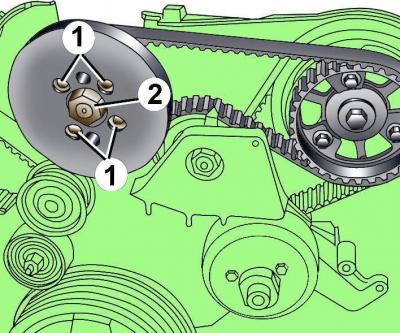
Fig. 3.3–39. Location of bolts (1) for fastening the vibration damper and nuts (2) for fastening the fuel pump pulley
Remove the vibration damper from the fuel pump pulley (Fig. 3.3–39). Do not unscrew nut 2 securing the fuel pump pulley, otherwise the fuel pump injection timing will change.
Warning: Before removing, mark the direction of rotation of the timing belt with chalk, marker or paint. If a used timing belt is installed with the opposite direction, it will cause damage to the belt.
Loosen the fuel pump timing belt tensioner and remove the belt.
Unscrew the eight bolts and remove vibration damper from the crankshaft pulley.
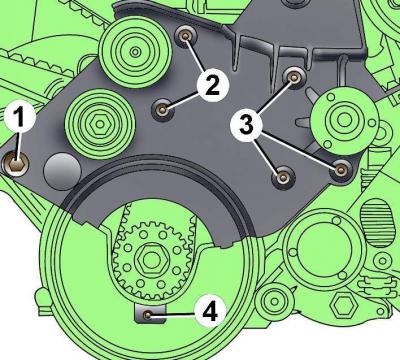
Fig. 3.3–40. Location of the toothed belt cover and radiator fan bracket mounting bolts: 1 – bolt, 45 N·m; 2 – bolts, 10 Nm; 3 – bolts, 22 Nm; 4 – bolt, 10 Nm
Unscrew the lower timing belt cover mounting bolt 4 (Fig. 3.3–40).
Remove the viscous coupling radiator fan pulley bolt.
Unscrew bolts 1–3 securing the radiator fan bracket with viscous coupling and idler pulleys.
Remove the timing belt pulley mounting bolts from the fuel pump pulley.
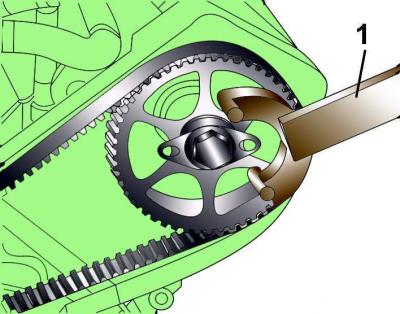
Fig. 3.3–41. Using special tool 3036 (1) to prevent the camshaft pulley from turning
Using special tool 3036 (Fig. 3.3–41), secure the camshaft pulley from turning and unscrew it one turn at a time (but don't unscrew it completely) camshaft pulley mounting bolts.
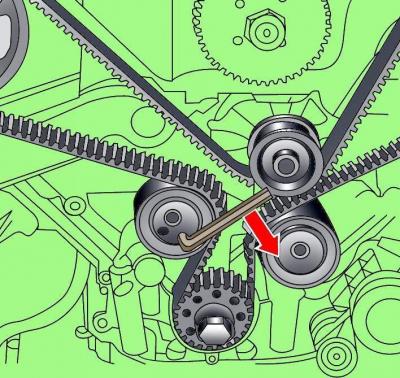
Fig. 3.3–42. Releasing the toothed belt tension
Using an 8 mm socket wrench, turn the timing belt tension roller clockwise and secure it with a 2 mm diameter pin (Fig. 3.3–42).
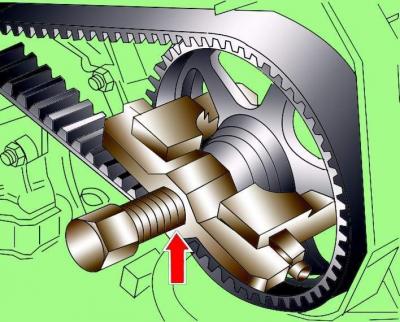
Fig. 3.3–43. Using the T40001 puller to remove the timing belt pulley from the camshaft
Using the T40001 puller (Fig. 3.3–43), remove both camshaft pulleys from the camshaft mounting cones. The puller should rest against the camshaft pulley mounting bolts. The camshaft pulleys should rotate freely, but not dangle on their mounting cones.
Remove the bolt and remove the timing belt pulley from the left cylinder head.
Remove the timing belt.
Installation
Check that the position of the camshafts is fixed with clamps 3458 and the crankshaft is in the TDC position of the first cylinder in the compression stroke.
The camshaft pulleys must turn freely.
The toothed belt can be installed on both a cold and a warm engine.
There should be no grease between the pulley and the crankshaft.
First install the timing belt on the crankshaft pulley, then the right camshaft pulley, tensioner pulley, idler pulley and water pump pulley.
After this, install the timing belt on the left camshaft pulley, then the pulley on the camshaft and secure it with a bolt.
Using an 8 mm socket wrench, turn the timing belt tension roller clockwise, remove the 2 mm diameter locking pin (see Fig. 3.3–42) and release the wrench.
Pre-tension the timing belt by turning the tension roller counter-clockwise with an 8mm socket wrench.
Using special tool 3036 (see Fig. 3.3–41), secure the camshaft pulley from turning and tighten the camshaft pulley mounting bolts one by one.
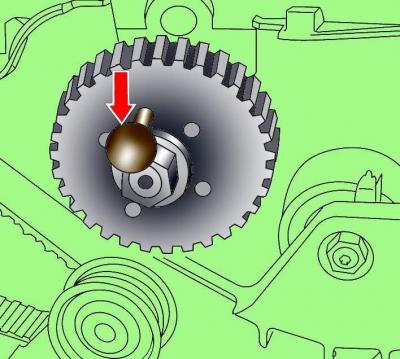
Fig. 3.3–44. Securing the fuel pump pulley with pin 3359
Secure the fuel pump pulley with pin 3359 (Fig. 3.3–44).
Install the fuel pump drive pulley so that the bolts are centered in the elongated holes in the pulley and tighten the bolts just enough to allow the fuel pump drive pulley to rotate on the camshaft pulley.
Install the fuel pump timing belt.
Adjust the tension of the fuel pump toothed belt by using a hex key to turn the tensioning mechanism counterclockwise until the marks align, and tighten the nut with a second key.
Remove camshaft retainers 3458.
Remove pin 3359 that secures the fuel pump pulley.
Remove the set screw 3242 that secures the crankshaft.
Remove the set screw 3242 and the locks 3458, turn the crankshaft two full turns, set it to the TDC position of the first cylinder in the compression stroke and check the correct installation of the crankshaft and camshafts. To check the position of the crankshaft, unscrew the plug from the cylinder block and screw in the set screw 3242 instead (see Fig. 3.3–37). To check the position of the camshafts, install the locks 3458, which fix the position of the camshafts. If the set screw 3242 and the locks 3458 are installed, then the crankshaft and camshaft are installed correctly.
Notes
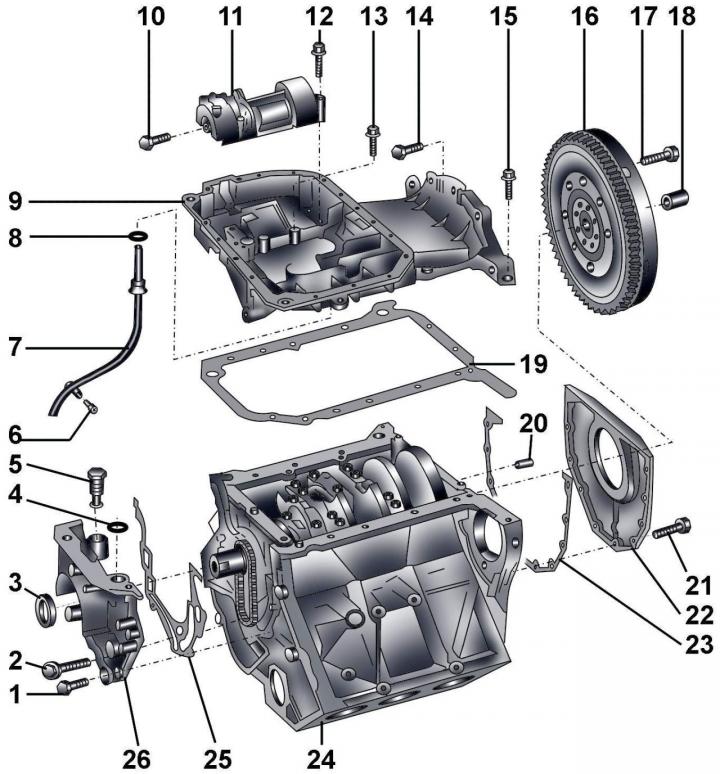
Fig. 3.3–46. Oil pan, front and rear engine covers: 1 – bolt M6, 10 Nm; 2 – bolt M8, 30 Nm; 3 – crankshaft sealing ring; 4 – O-ring round section; 5 – chain tensioner; 6 – bolt, 10 Nm; 7 – guide tube of the engine oil level indicator (dipstick); 8 – O-ring round section; 9 – Upper section of the oil pan; 10 – bolt, 45 Nm; 11 – casing; 12 – bolt, 22 Nm; 13 – M6 bolt to cylinder block, 13 Nm; M6 to cover, 10 Nm; 14 – bolt, 45 Nm; 15 – M6 bolt to cylinder block, 13 Nm; M6 to cover, 10 Nm; 16 – dual mass flywheel; 17 – flywheel mounting bolt; 18 – needle bearing; 19 – gasket; 20 – mounting pin; 21 – bolt, 10 Nm; 22 – back cover with sealing ring; 23 – gasket; 24 – cylinder block; 25 – gasket; 26 – front cover
1. When installing, it is necessary to use new sealing rings 4, 8 (Fig. 3.3–46) and gaskets 19, 23, 25.
2. The tightening torque of bolt 17 for fastening the flywheel is 60 N·m + tighten by an additional 180°, and the tightening torque of the friction lining bolts for cars with an automatic transmission is 60 N·m + tighten by an additional 90°. New bolts 17 must be used during installation.
3. Needle bearing 18 is installed only on vehicles with a manual transmission and is pressed into the end of the crankshaft.
4. Gasket 19 does not require the use of additional sealing means during installation.
5. When installing the sealing ring in the rear cover 22, it is necessary to lubricate its working edge with a thin layer of oil.
Install vibration damper onto the fuel pump pulley and secure it with bolts.
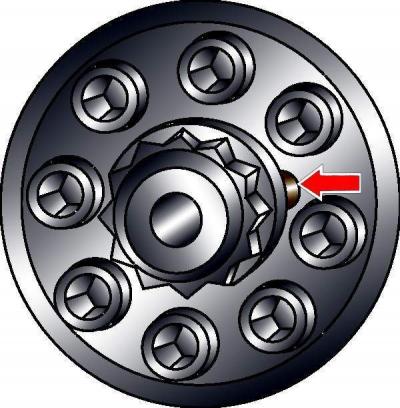
Fig. 3.3–45. Location of the mark on the vibration damper
Install the vibration damper on the crankshaft pulley, making sure that the mark (Fig. 3.3–45) is aligned with the mark on the timing belt pulley, and tighten the vibration damper mounting bolts to a torque of 22 N·m.
Install a vacuum pump on the left cylinder head.
Further installation is carried out in the reverse order of removal.
(Information obtained from this resource: «AudiManual»)