



Table of contents: Calculation of the maximum allowance… ↓ Example for the inlet valve ↓ Refinement of the intake valve ↓ Refinement of the exhaust valve seat ↓
If the required quality of the valve seat contact belt is not achieved during grinding, the seat must be reworked.
Instructions. When repairing engines with leaky valves, it is not enough to simply rework or replace the valve seats and valves. It is necessary to check the degree of wear of the valve guide bushings, especially in engines with a long service life. Valve seats should be reworked only to the extent that a perfect seating belt is achieved. Before reworking, the maximum allowable rework allowance should be calculated. If the rework allowance is exceeded, the hydraulic clearance adjustment function in the valve drive may be impaired (hydraulic compensators), which will entail replacing the cylinder head.
Calculation of the maximum allowance for rework
Insert the valve and press it firmly against the seat. If the valve is replaced during repair, a new valve should be used for measurements.
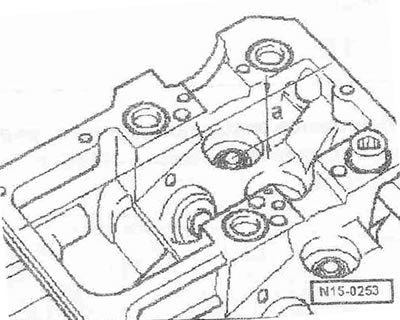
Measure the distance "a" between the valve end and the upper surface of the cylinder head using a depth gauge. Based on the measured distance and the minimum size, calculate the maximum allowable rework allowance. Minimum size for the intake valve: 43.4 mm. Minimum size for the exhaust valve: 43.2 mm. Measured distance minus minimum size = maximum allowable rework allowance.
Example for the inlet valve
- Measured distance: 44.1 mm
- Minimum size: 43.4 mm
- Maximum allowance for finishing = 0.7 mm
Instructions: If the maximum allowable reworking allowance is 0 mm or less than 0 mm, repeat the measurement with a new valve. If the result is still 0 mm or less than 0 mm, the cylinder head should be replaced.
Refinement of the intake valve
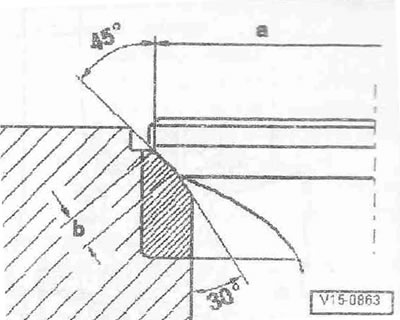
a. 35.7 mm
b. 1.6 mm
45° - Valve seat chamfer angle
30° - Upper correction angle
Instructions. Calculate the maximum allowance for reworking - Symbol defining the position of the illustration. A 30° valve seat chamfer is absolutely necessary for the flow organization conditions in the intake channel.
Refinement of the exhaust valve seat
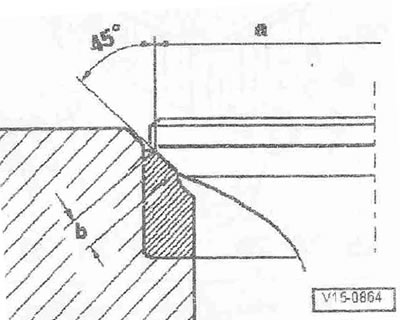
a. 31.4 mm
b. 2.7 mm
45° - Valve seat chamfer angle
30° - Upper correction angle