



That is, part of the engine power is constantly spent on driving the pump. At times when maximum power is required in the steering drive (when changing lanes), the engine speed is minimal. The pump performance is designed specifically for such moments. The faster the driver turns the steering wheel, the higher the pump speed, and therefore the volume of liquid pumped by it. At high engine speeds, excess liquid is removed through a bypass channel. In the new hydraulic booster, the same hydraulic pump provides assistance to the driver (gear), but it is driven by a separate electric motor, and therefore, is not mechanically connected to the car engine. In addition, the amplification now depends on the steering wheel angle. For this purpose, a steering wheel angle sensor is additionally installed above the steering mechanism, which transmits information about the angular velocity of the steering wheel to the control unit. The B/U receives information about the steering wheel angle via a direct wire. When assessing the situation, the control unit also takes into account the speed of the car. This information comes via the CAN bus. The design of the system is shown in the diagram next to it.
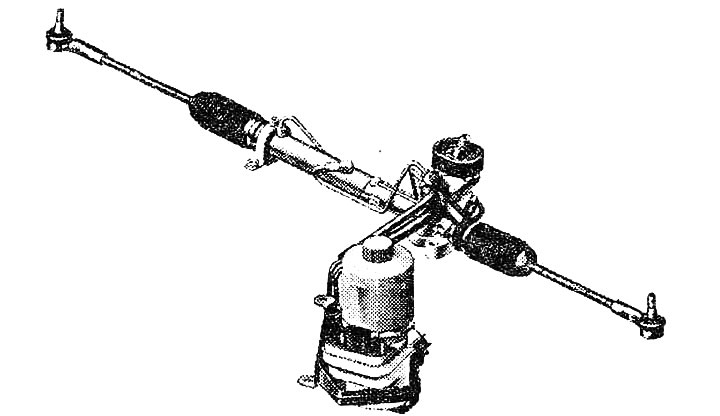
The power steering fluid reservoir is located in the engine compartment on the left under the headlight.
The original publication in its entirety is posted on the website: audimanual.ru