



Table of contents: Cruise control ↓ Temporary cruise control disabling ↓ Remembering the selected speed. ↓ Turning off cruise control ↓
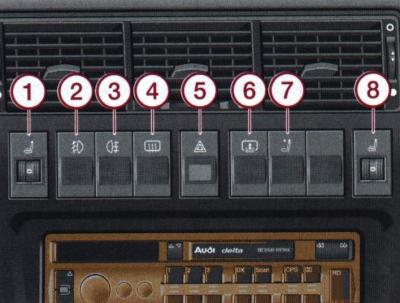
Fig. 1–43. Location of switches and controls on the instrument panel: 1, 8 – seat heating controls; 2 – fog lights; 3 – rear fog light; 4 – rear window heating; 5 – hazard warning lights; 6 – rear window sunshade; 7 – moving the rear headrests
The seat back and cushion can be heated electrically when the ignition is on.
Regulator 1 switches on and smoothly regulates the heating of the driver's seat, regulator 8 regulates the heating of the front passenger seat.
The rear seat heating is switched on and smoothly changed using the controls located at the rear of the central console: a - on the left and b – on the right (Fig. 1–44).
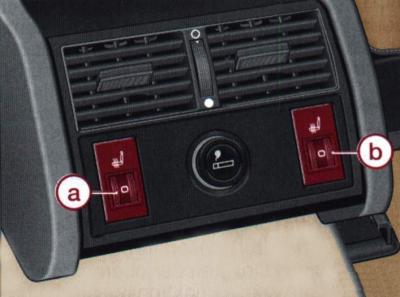
Fig. 1–44. Location of rear seat heating controls: a – left, b – right
The seats are heated only when they are loaded with body weight.
When the heating is on, the number marking on the controller flashes.
To turn off the heating, turn the control dial to its original position.
2 – fog lights light up when the high or low beam headlights are on.
When the fog lights are turned on, the indicator lamp in the switch lights up.
3 – rear fog light lights up when the high or low beam headlights are on, and on vehicles with fog lights, also when the fog lights are on.
When the rear fog lights are turned on, the indicator lamp in the switch lights up.
Due to the strong glare effect, the rear fog lights should only be switched on when visibility is poor.
4 – rear window heating functions only when the ignition is on. When the heating is on, the control lamp in the switch lights up.
On vehicles with electric adjustment of the position of the outside mirrors, the heating of their surfaces is switched on simultaneously with the switching on of the rear window heating.
As soon as the rear window is free of fog or ice, you should immediately turn off the heating: reducing power consumption has a positive effect on fuel consumption.
In vehicles with air conditioning, the rear window heating automatically switches off after 10 minutes.
If the vehicle is equipped with heated mirrors, then when the rear window heater is turned on, the mirror heating is also turned on.
5 – hazard warning lights functions even when the ignition is off.
The emergency alarm is activated in the following cases:
- vehicle stop due to technical fault;
- road traffic accident;
- upon reaching the end of a traffic jam.
When the hazard warning lights are switched on, all direction indicators, as well as the direction indicator indicator lights and the indicator light in the switch, flash simultaneously.
6 – rear window sunshade. Press the switch briefly - the curtain will open and then turn off automatically. While the curtain is moving, you can change the direction of movement by pressing the switch in the opposite direction.
7 – moving the rear headrests. The electrically adjustable rear head restraints can be adjusted in height by pressing the corresponding switch on the instrument panel.
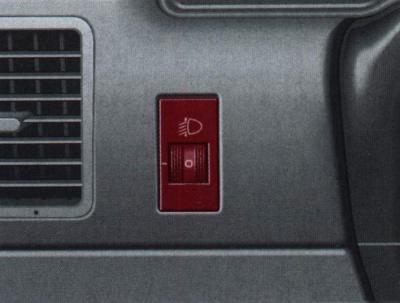
Fig. 1–45. Location of headlight beam corrector
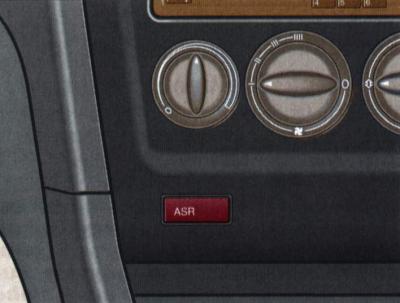
Fig. 1–46. Location of the traction control system (ASR) switch with engine torque reduction
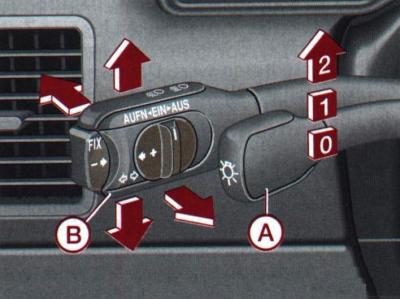
Fig. 1–47. Steering column switches for direction indicators (B) and headlights (A)
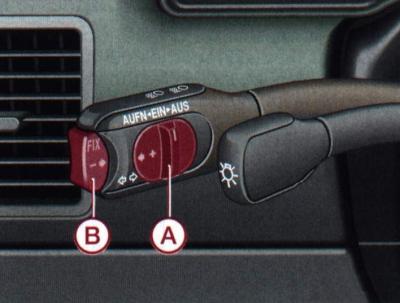
Fig. 1–48. Location of cruise control switch (A) and button (B)
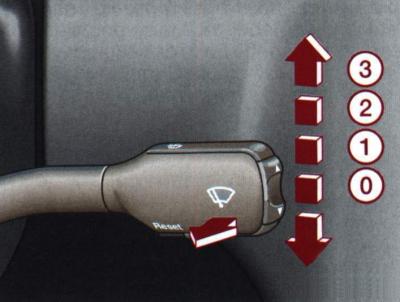
Fig. 1–49. Windscreen wiper and washer switch positions: 0 – off; 1 – intermittent movement of brushes; 2 – slow movement of brushes; 3 – fast movement of brushes
Headlight beam corrector. The electric adjustment mechanism allows for smooth adjustment of the headlight beam angle according to the vehicle load. This reduces the glare of the headlights on oncoming drivers and improves visibility.
To lower the light beam, turn the regulator from the main position (0) downwards.
The regulator positions correspond to the following vehicle load:
- 0 - passengers in front seats, trunk empty;
- 1 - passengers in all seats, trunk empty;
- II - passengers in all seats, trunk loaded;
- III - driver only, trunk loaded.
Note: On vehicles with gas discharge (xenon) when the ignition is turned on, the position of the headlights is automatically adjusted depending on the vehicle load.
Traction control system (ASR) with engine torque reduction prevents wheel slippage during acceleration of all-wheel drive vehicles by reducing engine power. The system operates in the entire speed range in conjunction with the anti-lock braking system. If there is a malfunction in the ABS, the system does not function.
The traction control system is activated automatically when the engine is started. It can be switched on and off at will by pressing the switch.
When the system is switched off, the ASR indicator lamp lights up.
Normally, the system should always be switched on. The system is switched off only in exceptional cases when wheel slip is necessary, for example when driving with anti-skid chains, when driving on deep snow or loose ground, when rocking a stuck car.
After passing such sections, it is necessary to turn on the traction control system again.
Note: To ensure trouble-free operation of the traction control system, it is necessary to install the same tires on all wheels.
Steering column switches for direction indicators and headlights
A – light switch can occupy the following positions:
- 0 - lighting off;
- 1 - side lights on;
- 2 - high or low beam is on.
External lighting only works when the ignition is on.
B – direction indicator and headlight switch. The direction indicators only work when the ignition is on.
To turn on the right turn signal, move the switch up; to turn on the left turn signal, move the switch down.
When the direction indicator is on, the indicator lamp flashes.
After turning the corner, the turn signal turns off automatically.
Signaling a turn before changing lanes. The switch should be pressed up or down until the counterpressure increases and held in this position - the indicator lamp should flash simultaneously with the turn signal.
Light signal. Move the steering column switch towards the steering wheel, and the high beam indicator lamp will light up.
Switching to high or low beam headlights. Switching between low and high beam is done by moving the switch forward. When switching to high beam, the high beam indicator lamp lights up.
Parking light. The parking lights only light when the ignition is off.
Parking light bulbs on the right – switch up.
Parking light bulbs on the left - switch down.
After removing the key from the ignition with the driver's door open, a buzzer sounds.
Cruise control
Cruise control ensures a constant set speed (over 30 km/h), if the engine can provide it, and frees the driver from the need to maintain it by pressing the accelerator pedal.
Warning: Cruise control should not be used in heavy traffic or adverse road conditions (icy or wet road, gravel surface).
Cruise control is controlled using a sliding switch A and keys IN, located on the steering column stalk for direction indicators and headlights.
To turn on cruise control, slide the switch A in position EIN.
When the desired speed of movement is reached, it is enough to press the key briefly IN (FIX). Now you can take your foot off the accelerator pedal. The speed of movement is increased in the usual way - by pressing the accelerator pedal. After releasing the pedal, the cruise control will reduce the speed to the set value. If the set speed has been exceeded by more than 10 km/h in 5 minutes, the required speed should be set again.
Warning: Return to your original speed only if the speed is appropriate for the specific driving conditions.
The set speed is reduced by pressing the key IN.
With every light press of the key IN the speed decreases stepwise. If you hold down the key IN pressed, the speed is reduced by automatically moving the accelerator rod. When the key is released, the achieved speed is entered into memory.
If you release the key at a speed below 30 km/h, the drive is cleared and must be reset with the key IN the desired speed after the car reaches a speed of over 30 km/h.
The set speed can be increased without pressing the accelerator pedal by moving the switch A in position AUFN.
Each time the sliding switch is lightly pressed to the left, the speed increases in steps. If you slide the switch to the left and hold it in this position, the speed increases automatically by moving the accelerator rod. When you release the switch, the achieved speed is stored in memory.
Temporary cruise control disabling
Cars with manual transmission
To temporarily disable cruise control, press the brake or clutch pedal or move the switch A in position AUS (without fixing it).
The value of the set speed entered into the memory at this point is saved.
To return to the previously set speed, move the switch after releasing the clutch or brake pedal A all the way to the left.
Warning: You should only return to the previously set driving speed if this speed is not too high for the immediately upcoming driving conditions.
Cars with automatic transmission
Cruise control can be temporarily deactivated by pressing the brake or clutch pedal or by sliding the switch A in position AUS (without fixing it).
The value of the set speed entered into the memory at this point is saved.
To return to the previously set speed, move the switch after releasing the clutch or brake pedal A all the way to the left.
Warnings: You should only return to a previously selected driving speed if that speed is not too high for the immediately upcoming driving conditions.
In addition, cruise control is temporarily deactivated when the selector is moved to position N or 1 (4-speed gearbox), and also in position 2 (5-speed gearbox).
The value of the set speed entered into the memory at this point is erased from the memory.
Remembering the selected speed.
If there was no speed in the memory during a short-term shutdown, or the set speed was erased, you can set a new desired speed in one of the following ways:
slide the switch A all the way to the left and hold it in this position until the desired speed is reached;
press the key quickly IN. The speed at the moment the key is pressed will be saved into memory.
Turning off cruise control
Cars with manual transmission
The cruise control is finally switched off by sliding the switch Aall the way to the right (lock in positionAUS) or on a stationary vehicle – by turning off the ignition.
Cars with automatic transmission
The cruise control is finally switched off by moving the selector:
- in position P, N or R;
- in position 1 or 2 (4-speed gearbox);
- on a parked vehicle by turning off the ignition.
(Material republished from the website: «AUDIMANUAL.ru»)