



Table of contents: Jacking up ↓ Support points for lifting with a… ↓ Execution order ↓ Place a jack under the car ↓ Support points for lift and garage… ↓ Towing ↓ Cars with AT ↓ All-wheel drive vehicles ↓ Starting a car by towing (emergency… ↓
Jacking up
To jack up the front of the car, you should set the parking brake and, for safety, place wedges under the rear wheels.
When jacking up the rear of the vehicle, it is necessary to engage the gear and place wedges under the front wheels.
Place reliable supports under the sides of the body. If one side rises first and then the other, it is necessary to ensure that the supports are reliable.
Support points for lifting with a car jack
Warning: Do not start the engine of a raised vehicle - it is dangerous.
Execution order
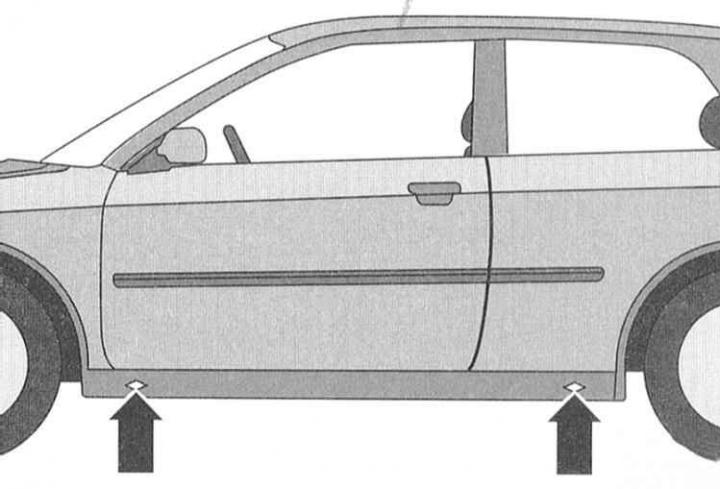
Car jacking points
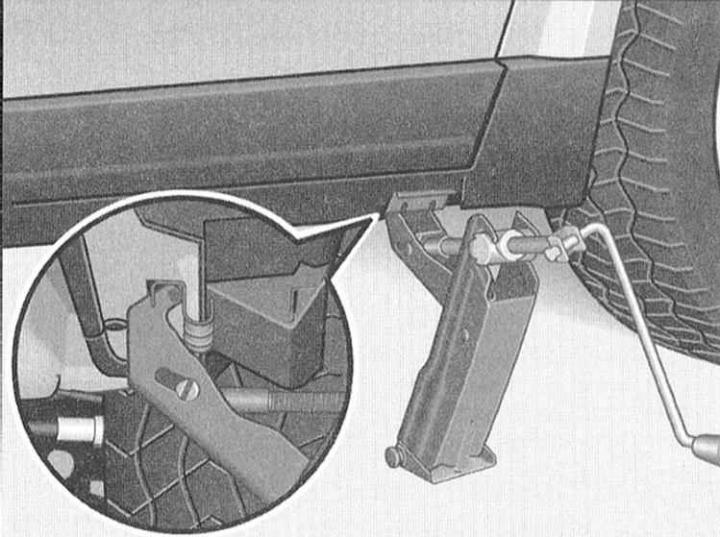
Installing the jack
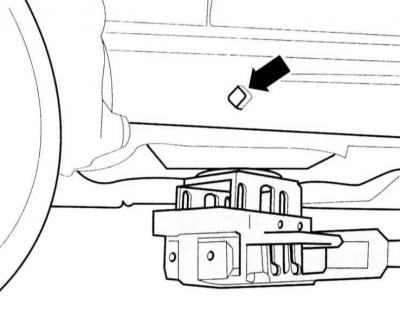
The location of the jack paw installation is at the front of the vehicle. The center of the jack support plate must match the marking (arrow)
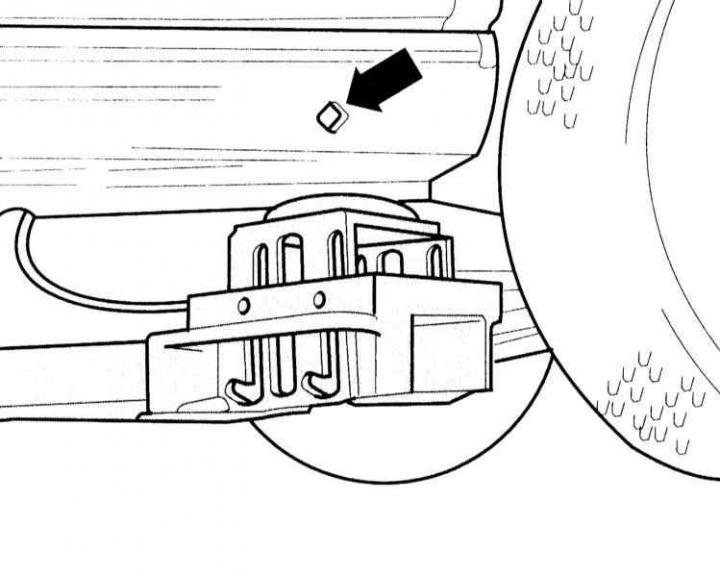
The location of the jack stand is at the rear of the vehicle. The center of the jack support plate must match the marking (arrow)
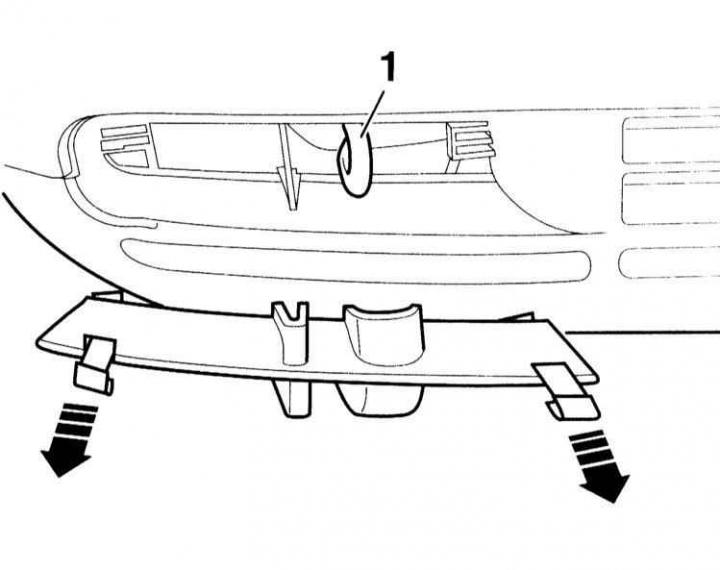
To release the front towing eye, remove the cover
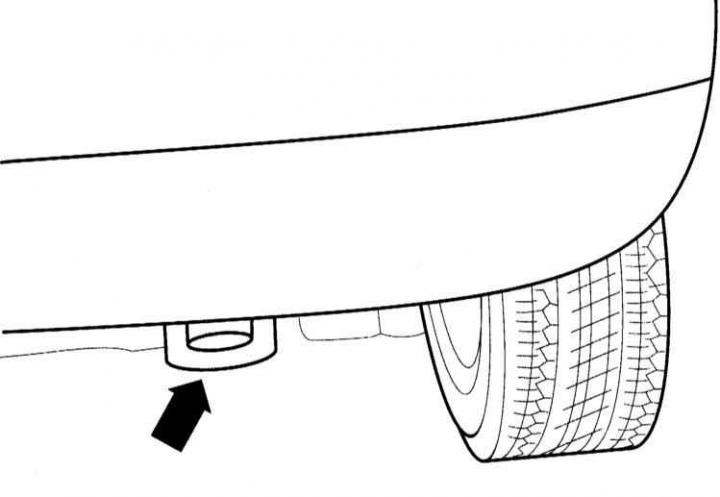
The rear towing eye is located on the right side under the bumper
To lift the car, it is necessary to use a jack installed under the support points of the car body, which are located on the lower beam of the body, 13 cm in front and 22 cm behind the corresponding wheel arch.
Warning: If the jack is not positioned under the supporting point of the vehicle body, damage to the vehicle body may occur. In addition, there is a risk of injury.
Place a jack under the car
The jack's foot must tightly grip the vertical edge of the side member so that the jack cannot slip off when lifting the vehicle.
At the same time, you should align the position of the jack and raise the jack paw until it fits snugly against the vertical edge.
Warning: When installing the jack on soft ground, the vehicle may fall off the jack. Therefore, it is necessary to place the jack on hard ground. If necessary, use a stable and relatively large support.
To lift the car, you need to use a lift.
To avoid damage to the underside of the vehicle, it is essential to use appropriate rubberized pads.
Warning: The vehicle must never be lifted under the oil pan, under the gearbox, under the rear or front axles, otherwise serious damage to components and assemblies may occur.
The jack support plate must not touch the trailing arm mounting bar, otherwise the steering may be damaged.
Before entering the lift, make sure that there is sufficient distance between low-lying points of the vehicle and the lift elements.
Support points for lift and garage lift
- At the front of the vertical stiffener of the lower beam.
- At the rear of the vertical stiffening element of the lower beam, in the area of the stamped marking.
The lower beam stiffener should lie in the middle on the lift support plate.
Towing
The vehicle can only be towed using the towing eyes provided for this purpose.
Securing the towing rope/rod
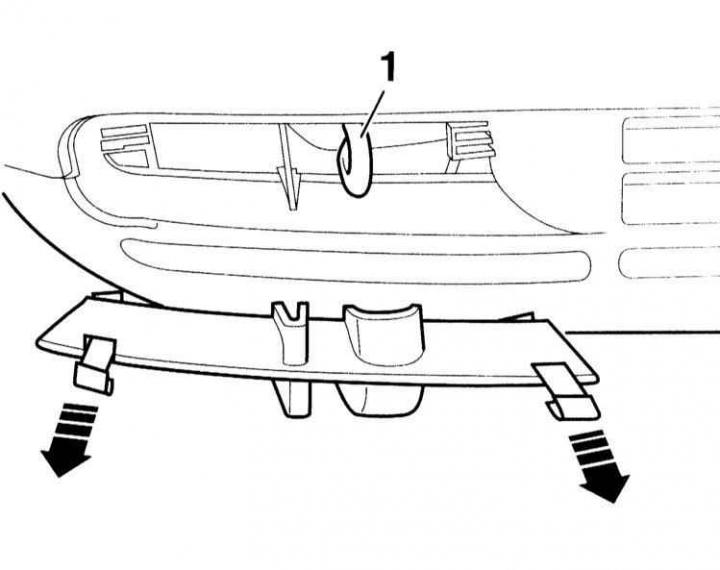
1. Remove the grille at the bottom of the bumper. To do this, press on the top edge (arrow on the illustration) down and remove the lid at the same time.
2. The towing eye is located under the cover.
3. When installing the cover, insert the lower part into the bumper. Then insert the upper part of the cover into the bumper until it is fixed.
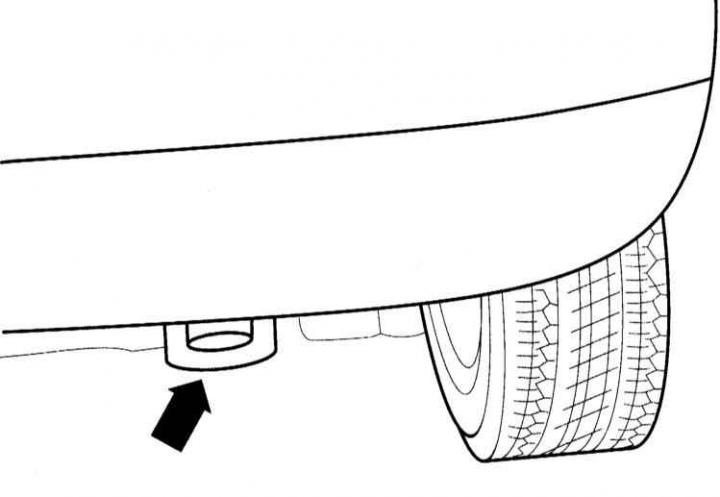
4. The rear towing eye is located on the right side under the bumper.
Towing rules
5. Turn on the ignition so that the steering wheel is unlocked and the turn signals, horn, windshield wipers and washers can be operated.
6. Set the manual transmission to neutral position.
7. Turn on the hazard warning lights on both vehicles.
8. The power steering and brake booster only work when the engine is running. Therefore, when the engine is not running, turning the steering wheel and pressing the brake pedal require more effort!
9. When using a towing rope, the driver of the towing vehicle must engage the clutch gently. The driver of the towed vehicle must ensure that the rope is always taut.
10. Without oil in the manual transmission and, accordingly, in the automatic transmission, the vehicle may only be towed with the drive wheels raised.
11. It is recommended to use a towing rod. The cable must be elastic, which helps to preserve the towing and towed vehicles. Only plastic cables or cables with elastic intermediate links should be used.
Cars with AT
Set the selector to position "N" Maximum towing speed 50 km/h!
Maximum towing distance 50 km!.
12. For long distances the vehicle must be towed with the front wheels raised or loaded onto a transporter.
Warning: To avoid damage to the manual transmission, do not transport the vehicle by partially loading the rear part with the drive wheels rotating.
All-wheel drive vehicles
Please refer to the subsection All-wheel drive.
Starting a car by towing (emergency start)
Tow Launch (starting the engine by moving the car) for vehicles with automatic transmission it is not possible.
Before starting the engine by towing the vehicle, it is recommended to use the battery of another vehicle for starting.
Warning: When the petrol engine is hot, the vehicle must not be towed for more than 50 m, otherwise there is a risk of damage to the catalytic converter.
13. Before towing, engage second or third gear, press and hold the clutch pedal.
14. Turn on the ignition.
15. Slowly shift into gear if both vehicles have moved.
16. Once the engine has started, press the clutch pedal and shift out of gear to avoid running into the leading vehicle.
[The original article is located on the online resource AUDImanual.ru]