



Carefully inspect the fuse to see if it has blown. If the fuse looks normal but you still suspect it is defective, check the continuity between the blade terminals protruding from its body.
Replacement
1. Before replacing a fuse, be sure to turn off the corresponding consumer and the ignition.
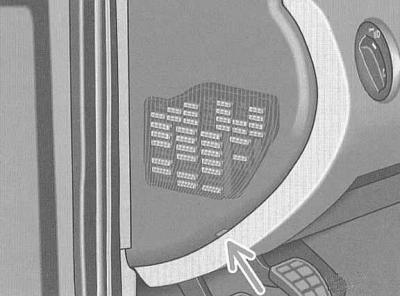
2. The fuses are located in the fuse box on the left end side of the instrument panel behind the cover.
3. Open the cover by inserting a flat-head screwdriver into the gap from below (arrow on the illustration) and squeeze the lid.
4. The fuse box layout diagram is located on the inside of the fuse box cover.
5. Additional fuses are located in the relay panel, as well as on the additional relay carrier behind the relay panel and in the battery holder.
6. On diesel vehicles, the pre-heating fuse is located in the fuse box on the battery.
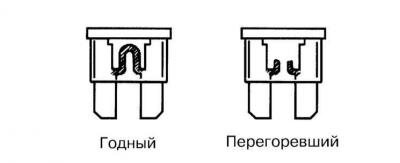
7. A sign of a blown fuse is a melted metal strip.
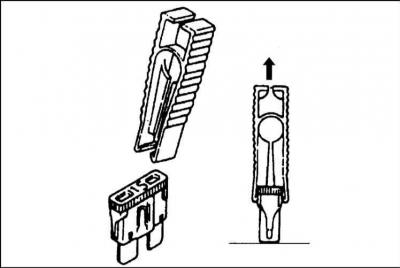
8. Remove the plastic clips from the inside of the cover and take out the defective fuse.
9. Insert a new fuse of the same amperage. The fuse's amperage rating is indicated on the back of the handle. The fuse handle is also color-coded, which also indicates the amperage rating.
10. Reinstall the fuse box cover.
11. If after some time the new fuse blows again, the corresponding electrical circuit must be checked.
12. Never replace a fuse with wire or similar material, as this may cause serious damage to the electrical equipment.
13. It is recommended to always have spare fuses in your vehicle.
(This article was previously published on the resource: AUDImanual.ru)